


Ram Mandir, Diplomacy and the Politics of Moral Posturing
In contemporary South Asian diplomacy, the language of moral authority has increasingly become a tool of political performance rather than principled statecraft. The recent statement by India’s...

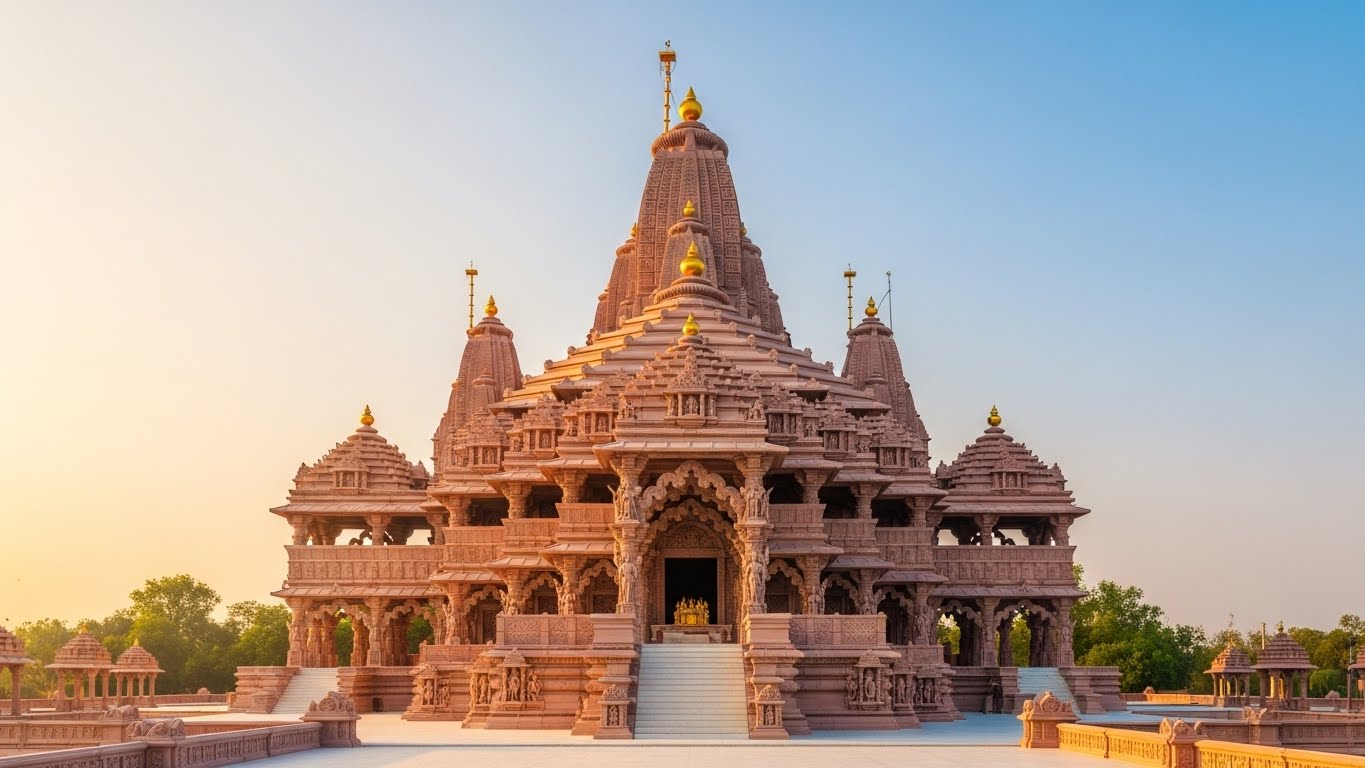
In contemporary South Asian diplomacy, the language of moral authority has increasingly become a tool of political performance rather than principled statecraft. The recent statement by India’s Ministry of External Affairs rejecting Pakistan’s criticism of Prime Minister Narendra Modi’s participation in the Ram Mandir event, and asserting that Pakistan has “no moral standing to lecture others,” reflects not only a defensive posture but also a broader attempt to frame a deeply contested domestic political act as an unquestionable symbol of national unity and cultural affirmation. Such rhetoric deserves critical examination, not through the lens of emotive nationalism but through a sober, institutional and constitutional perspective that distinguishes cultural symbolism from the responsibilities of a secular democratic state.
At the heart of this controversy lies a fundamental question. Can a head of government, sworn to uphold a pluralistic constitution, participate in a religious ceremony that originates from the demolition of a centuries-old structure, without inviting legitimate ethical and political scrutiny? The Ram Mandir ceremony is not a neutral cultural festivity existing in historical isolation. It is the culmination of a long and polarizing political movement that redefined Indian electoral politics, significantly altered communal relations, and challenged the very notion of Indian secularism as enshrined in its constitution. To present such participation as merely an expression of cultural pride is to deliberately obscure the political genealogy of the event.
India’s assertion that criticism of this participation is baseless fails to acknowledge the documented tension surrounding the Ayodhya dispute. The demolition of the Babri Masjid in 1992 was not an incidental historical episode but a pivotal moment that reshaped communal discourse in the region. The subsequent legal and political developments culminated in a Supreme Court verdict that, while final, did not erase the moral and social trauma associated with the site. Therefore, interpreting the Prime Minister’s ceremonial role as purely cultural ignores the symbolic message it sends to minority communities and to those who view the event through the prism of constitutional ethics rather than majoritarian celebration.
By invoking the language of moral superiority, New Delhi attempts to shield itself from legitimate critique by converting a diplomatic disagreement into a binary narrative of virtue and vice. This approach not only undermines democratic dialogue but also reinforces the perception that the Indian state increasingly conflates governance with ideological identity. The role of a prime minister in a secular republic is not to embody religious symbolism but to preserve the constitutional equilibrium between diverse faiths and communities. When that balance appears skewed, raising concern is not provocation; it is an articulation of democratic principle.
It is also important to separate the issue of state conduct from national identities. Any critique of the Ram Mandir event as a state-sponsored spectacle should not be misconstrued as hostility toward religion or culture. Rather, it reflects concern over the gradual erosion of secular boundaries within political institutions. In this context, Pakistan’s response should be read not as interference but as commentary on a regional development with implications for minority rights, communal harmony, and precedent-setting governance models. Such commentary is an inherent feature of international discourse, particularly when actions reverberate beyond borders.
Framing the ceremony as a symbol of national pride while dismissing alternative perspectives as hypocritical creates an environment where dissent is delegitimized. Democracies do not thrive on uniformity of thought; they flourish through critical engagement and self-reflection. When a government claims uncontested moral authority while discrediting every opposing voice, it signals a worrying shift from democratic accountability toward ideological rigidity.
Furthermore, the invocation of human rights discourse as a rhetorical shield rings hollow when it is selectively deployed to defend actions that are themselves contested on ethical grounds. The global community increasingly evaluates state behaviour not by official statements alone but by the consistency between rhetoric and practice. The optics of political leadership participating in a religious spectacle rooted in a fraught historical conflict cannot be neutralized by simply asserting national sentiment or cultural heritage.
The issue is not devotion or faith, but the institutional implications of such acts when performed under the authority of the state. For regional stability and democratic credibility, it is essential to re-center the conversation around constitutionalism, minority protection, and the separation between faith and governance. The real question is not who holds moral standing, but whether moral authority is being used to silence legitimate inquiry. Nations that position themselves as global democracies must be prepared to face scrutiny, especially when their internal political theatre carries profound social and regional consequences.
In the final analysis, a mature diplomatic response would welcome introspection rather than deflect it with accusations of bad faith. Moral leadership is not asserted through muscular statements or public rebukes. It is demonstrated through restraint, inclusivity, and unwavering adherence to constitutional principles. The Ram Mandir event, seen through this lens, becomes less a tale of cultural renaissance and more a test case for the future of secular governance in a deeply diverse society.
Author