


Makkah Joint Defense Agreement: Pakistan, Saudi Arabia, Türkiye Forge Trilateral Pact
The recent signing of the Makkah Joint Defense Agreement among Pakistan, Saudi Arabia, and Türkiye marks a substantial shift in the security architecture of the broader Middle East and South Asia,...

The recent signing of the Makkah Joint Defense Agreement among Pakistan, Saudi Arabia, and Türkiye marks a substantial shift in the security architecture of the broader Middle East and South Asia, coming at a crucial juncture when regional instability continues to threaten global economic and political order. Amid growing global security concerns and the broader fallout of the ongoing conflict involving the United States and Iran, which has severely disrupted vital commercial maritime lanes in the Red Sea and the Strait of Hormuz, the three nations have institutionalized a trilateral security framework designed to bolster strategic coordination. At its core, the newly mint pact includes a collective defense mechanism stipulating that an armed attack against any single member state will be interpreted as an assault on all three signatories, while simultaneously leaving the framework open for other regional actors to join in the future.
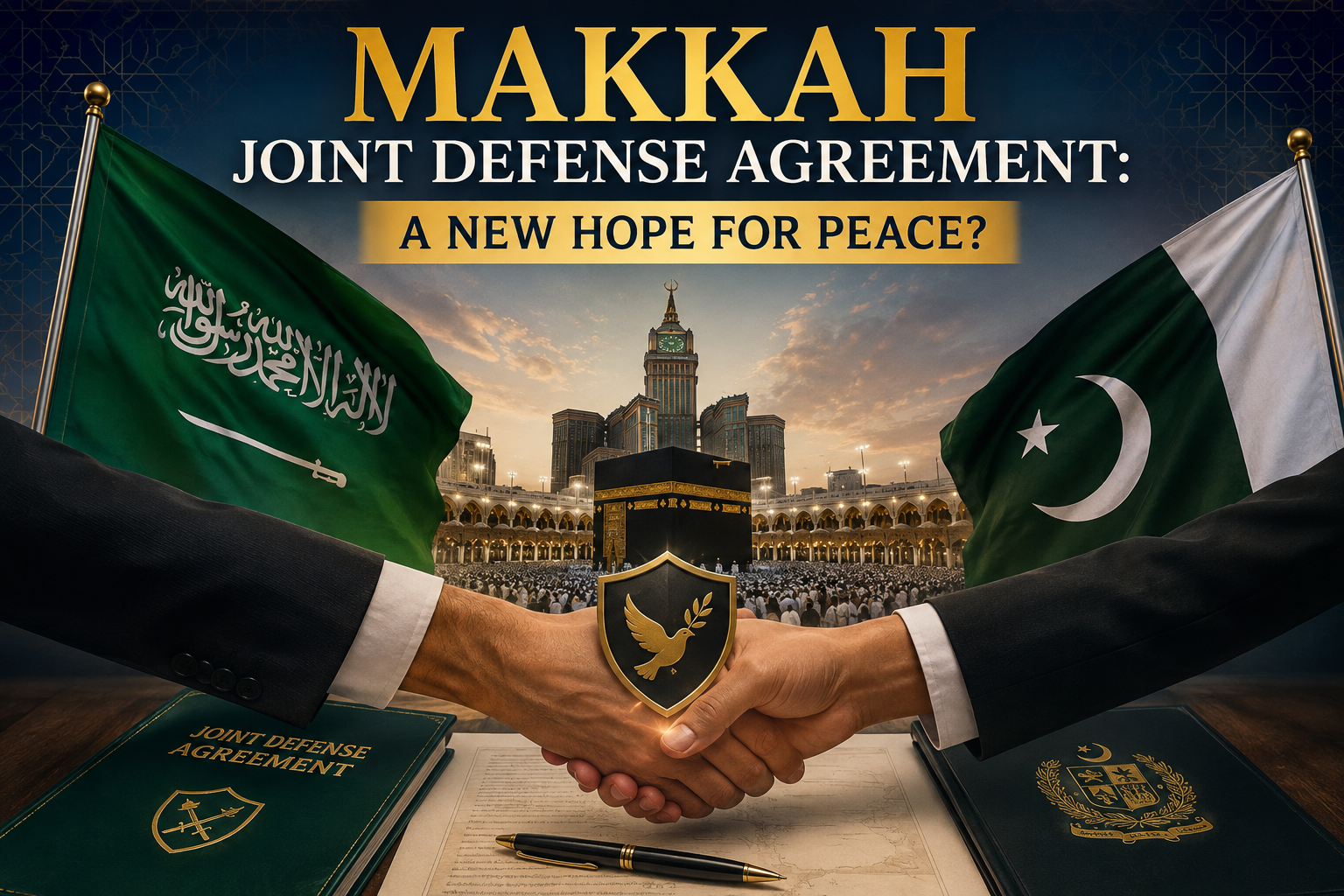
In the wake of the announcement, high-level diplomatic outreach was immediately deployed to outline the intentions behind the security accord and manage international reactions. Addressing growing curiosity and concerns regarding the geopolitical scope of the alliance, Pakistan’s Deputy Prime Minister and Foreign Minister, Ishaq Dar, sought to clarify the precise objectives of the arrangement. Emphasizing that the Makkah Accord is strictly defensive in nature, Dar reiterated that the pact does not target any specific sovereign entity or state actor. Instead, he positioned the initiative as a constructive legal mechanism aimed at reinforcing broader efforts toward peace, stability, and mutual economic prosperity across the region. According to Pakistani officials, the agreement represents the concrete outcome of multi-year diplomatic consultations and technical security coordination among Islamabad, Riyadh, and Ankara, reflecting a shared determination to tackle complex security challenges through structured, multilateral cooperation.
Crucially, diplomatic representatives from the participating nations have stressed that this new trilateral pact does not render obsolete or override pre-existing bilateral or multilateral treaty obligations. The arrangement is structured to function alongside current defense architectures without creating jurisdictional conflicts or diplomatic friction. For instance, Pakistan and Saudi Arabia maintain their long-standing strategic ties, anchored further by their bilateral Strategic Mutual Defense Agreement executed in late 2025. Concurrently, Türkiye remains a pivotal member of NATO, maintaining its foundational commitments to Western alliance partners. Elaborating on this legal dynamic, Turkish Foreign Minister Hakan Fidan observed that while the operational text of the Makkah Accord features mutual protection principles technically comparable to NATO’s landmark Article 5 collective defense clause, the strategic intention remains purely preemptive and non-adversarial, deliberately refraining from designating any regional neighbor as a predetermined threat.
From a international law perspective, the signatories have explicitly anchored the agreement within established global legal frameworks, particularly referencing the fundamental rights codified under Article 51 of the United Nations Charter, which guarantees sovereign nations the inherent right to individual and collective self-defense in the event of an armed aggression. By grounding the treaty in recognized international statutes, the member states aim to project legitimacy while emphasizing their adherence to global norms. Pakistani diplomats have further underscored that the accord harmonizes seamlessly with the foundational principles of Islamabad’s diplomatic posture, which prioritizes conflict prevention, sovereignty, and regional economic convergence over military escalation.
Looking ahead, the Makkah Accord is framed not as an exclusive military bloc, but rather as an extensible platform for strategic dialogue and collective crisis management. As the treaty permits additional regional partners to accede provided they subscribe to its guiding principles of peaceful conflict resolution, non-aggression, and mutual respect, the arrangement could potentially evolve into a broader institutional pillar for stability across the wider Islamic world and the Middle East. Against a backdrop of volatile maritime trade routes and unpredictable military dynamics, Pakistan, Saudi Arabia, and Türkiye have signaled a joint resolve to safeguard their national interests, promote regional security, and pursue long-term peace through unified defense readiness and diplomatic engagement.
Author