
The Ghost in the Machine: El Jefe’s Long Shadow Looms Over Spurs’ improbable NBA Finals Run
POLICY WIRE — SAN ANTONIO, United States — The fainter the line, the deeper the etching. In professional sports, where billion-dollar franchises pivot on generational talent and transient celebrity,...

POLICY WIRE — SAN ANTONIO, United States — The fainter the line, the deeper the etching. In professional sports, where billion-dollar franchises pivot on generational talent and transient celebrity, the concept of enduring authority rarely survives the inevitable exit of an icon. But not in San Antonio. Not with Gregg Popovich. They call him ‘El Jefe’ now, which translates simply to ‘The Boss,’ a moniker he’s leaned into with characteristic — if dry — theatricality. But titles, particularly in his case, tell you only half the story; they rarely encapsulate the quiet, unrelenting gravitational pull a true leader exerts, even in so-called retirement.
It’s a peculiar dance, isn’t it? Young Victor Wembanyama, the towering phenomenon whose sheer presence dragged the Spurs to an unexpected NBA Finals berth against the New York Knicks, struggles to articulate what this moment means to Popovich. Popovich, at 77, isn’t officially coaching. Mitch Johnson is. Yet, Wembanyama’s instinct wasn’t to consult his head coach first. “I don’t know what it means for him,” Wembanyama admitted, a pause thick with reverence. “That’s a guy who’s got more experience as a coach than almost anybody, — and has been through so many things. So, I need to call him. I need to see him. I need to talk to him, because there’s no way I can understand right now how he feels.”
And that, right there, is the kernel of the truth. Popovich might hold the rather opaque title of President of Spurs Basketball, but in practice, he’s the enduring spiritual and strategic head coach—the grand elder statesman who refuses to truly cede the reins. His public ‘retirement’ last year, following what’s been quietly confirmed as a serious medical event in November 2024, wasn’t a departure, it was a redefinition. He strolled out for his farewell presser wearing a suit jacket that, when opened, revealed a shirt emblazoned with “El Jefe.” It was a statement, not an ending. It signaled, to anyone paying attention, that this organizational behemoth was still firmly his domain.
Because that’s how he operates. Devin Vassell, a key guard for the Spurs, puts it bluntly, with a slight shake of his head you can almost hear: “You talk about the greatest coach pretty much of all time to be able to sit here and tell you the experiences that they went through or that he’s been through or that he sees. I mean, it’s second to none, honestly.” Popovich isn’t merely a figurehead. He still stalks practices, he still appears at games (sometimes with a cane, reflecting the wear and tear of decades on the sidelines), and he absolutely still—perhaps more forcefully than ever—holds court in locker rooms. Just ask the team about Game 3 against Oklahoma City; after a rough loss, Pop was there, delivering a combination of encouragement and cutting chastisement, depending on who you asked.
Mitch Johnson, who found himself holding the clipboard with scant warning, understands this delicate arrangement. He wasn’t hired; he was promoted into a system. “I’m fortunate my old boss is still around, and has been through this a few times,” Johnson noted, a hint of something more than professional respect in his voice. “Coach Pop has been a resource.” That’s a polite way of saying Popovich is the North Star. He guides Johnson, just as he once guided former assistants like Knicks coach Mike Brown, who now finds himself on the opposite bench. Brown, whose own tenure under Pop instilled foundational principles, observed, “He still has a huge presence. He will always have a presence.” And Brown’s not wrong; the sort of boardroom shifts that define athletic organizations often hinge on who truly commands loyalty.
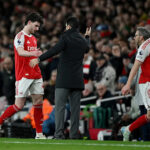
Even Wembanyama, for all his otherworldly talent, isn’t above El Jefe’s public instruction. After a Game 4 ejection against Minnesota—a flagrant elbow he definitely shouldn’t have thrown—it was Popovich waiting at the airport, delivering a sharp lesson that cameras clearly caught. Wembanyama was doing the listening. Hard to miss the visual metaphor there. Popovich, who, let’s not forget, holds the NBA record with 1,366 career victories, shaping five championship teams, doesn’t merely suggest; he dictates terms, often with a raised eyebrow and a withering glance.
What This Means
This saga of semi-retirement isn’t just about basketball; it’s a masterclass in leadership transition, particularly relevant to nations navigating similar generational power shifts. Look to South Asia, or even within dynastic business families, where an aging patriarch often retains informal control long after official retirement, leveraging experience and an unchallenged moral authority to steer the ship from the background. Pakistan, for instance, has repeatedly seen the military, ostensibly non-political, exert a profound, often subtle, influence on civilian governments – a sort of ‘El Jefe’ principle at the national level. The sheer stability Popovich represents, the continuity of an organizational ethos even without his daily presence on the sideline, offers an interesting case study. In times of flux, whether in sport or state, the steady hand of experienced wisdom—or just deep-seated control—often wins the day, keeping everyone, especially the hot-shot newcomers, on the path of established greatness. The economic implications are also clear: an organization with such consistent leadership tends to attract and retain talent, driving sustained success and, by extension, boosting the local economy through franchise value and fan engagement. A proven leader, even in a background role, sells tickets.
Wembanyama, in his moment of triumph, isn’t reaching for the team playbook or a stat sheet. He wants counsel from the man who molded not just the Spurs, but a dynasty. He wants the wisdom, unadulterated, from the one true boss. And you just know, when that call happens, Pop will listen patiently for precisely three seconds before cutting straight to the core. Because that’s El Jefe. That’s always been the way he’s operated.