


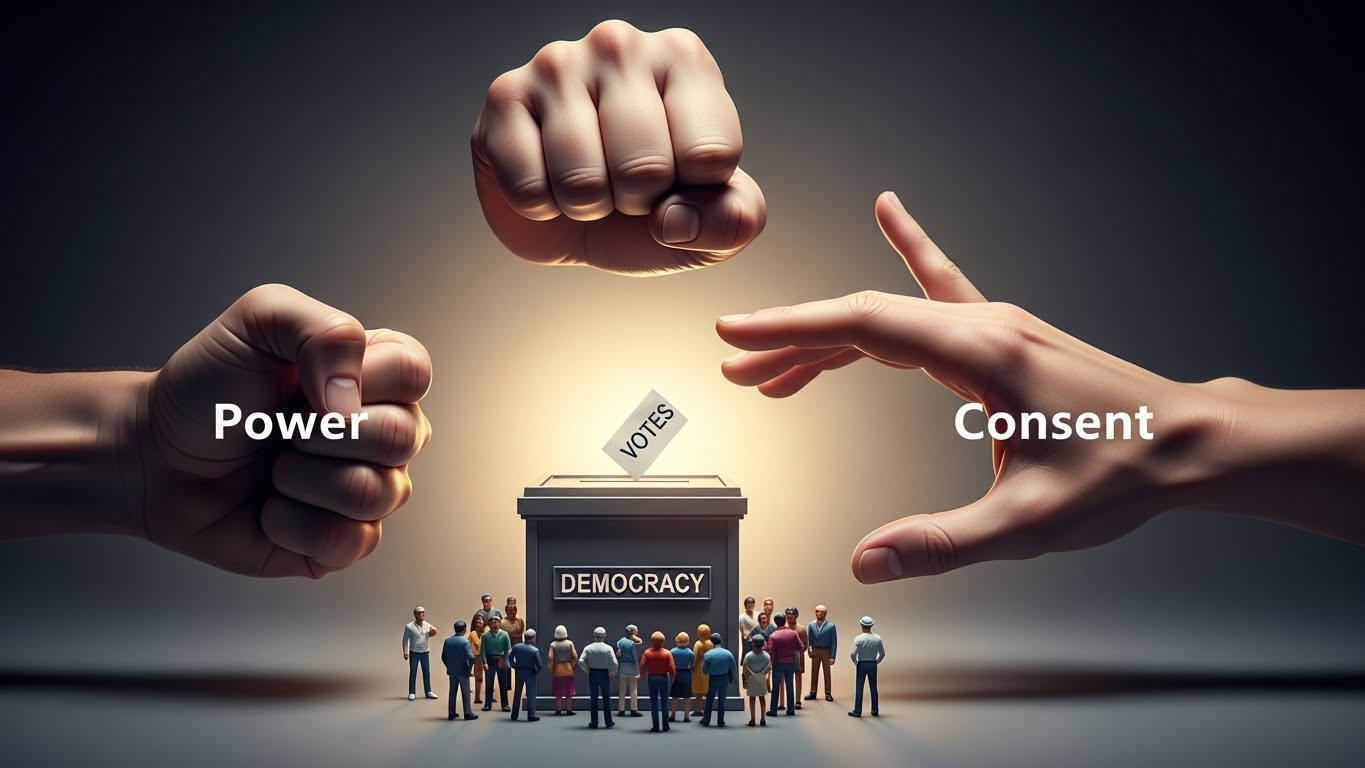
Power, Consent and Democracy
The controversy surrounding Bihar Chief Minister Nitish Kumar’s public removal of a Muslim woman doctor’s hijab is not merely about a piece of cloth. It is about power, consent, dignity, and the...
The controversy surrounding Bihar Chief Minister Nitish Kumar’s public removal of a Muslim woman doctor’s hijab is not merely about a piece of cloth. It is about power, consent, dignity, and the constitutional promise of personal liberty. In a republic governed by law, no office, however high, confers the right to violate another person’s bodily autonomy.
The viral video from the appointment ceremony at the Chief Minister’s Secretariat is disturbing precisely because of its ordinariness. There was no provocation, no threat, no emergency. A newly appointed Unani doctor stepped forward to receive her appointment letter, dressed in a hijab that covered her face. What followed, Nitish Kumar’s apparent exclamation and his physical act of pulling down her hijab, was an assertion of authority over a woman’s body in a public, unequal power setting.
This incident has triggered nationwide outrage not because of political rivalry alone, but because it touches the core of what a democracy is meant to protect, the right of individuals to live with dignity, free from coercion by the state.
Consent Is Not Optional, Even for the Powerful
At the heart of this episode lies a fundamental truth. No individual has the right to touch another person without consent, regardless of status, seniority, or intent. This principle applies as much to a Chief Minister as it does to a private citizen. When the individual involved is a woman, a religious minority, and a junior appointee standing before the head of the state government, the imbalance of power becomes impossible to ignore.
In such situations, silence from the affected individual cannot be casually interpreted as consent or acceptance. Social pressure, fear of professional repercussions, and the overwhelming authority of the office involved often suppress voices, particularly when the alleged violator occupies the highest political position in the state.
The Hijab Is Not the Issue, Autonomy Is
Attempts to reframe the incident as a debate over face coverings, ceremony protocol, or personal curiosity are deeply misleading. The Indian Constitution guarantees freedom of religion, personal liberty, and dignity. Whether one personally supports or opposes the hijab is irrelevant. What matters is that no authority has the right to forcibly interfere with a person’s attire, especially when that attire is linked to religious belief and personal identity.
The freedom to choose what one wears is not a concession granted by the state. It is an inherent right. When a public function becomes a space where such choices are overridden by those in power, it marks a serious breach of constitutional morality.
A Disturbing Reflection of Elite Mindsets in a Democracy
Beyond the individual act, this episode exposes a deeper and more troubling reality about the mindset that continues to exist among sections of India’s ruling elite. In a country that proudly calls itself the world’s largest democracy, it is alarming that those in authority still behave as though citizens’ bodies and beliefs are subject to official control. The public removal of a woman’s hijab by a constitutional authority reflects a sick, deeply patriarchal mentality, one that assumes entitlement over how others dress, believe, or present themselves.
Democracy is not defined merely by elections or grand declarations. It is measured by how power treats the vulnerable. When ruling elites feel entitled to override a person’s autonomy in full public view, it signals not strength but moral decay. Such behavior reveals a governing culture that prioritizes control over consent and authority over accountability.
📄 POLICY WIRE WHITEPAPER PUBLISHED: PAKISTAN'S NATIONAL SECURITY POLICY PRIORITIES
👉 READ BY CLICKING HEREA Symptom of a Larger Political Culture
This incident is not an isolated lapse but part of a broader pattern in Indian public life, where intrusive behavior by powerful men is often normalized, excused as eccentricity, age, or misunderstanding. These justifications are dangerous. They erode accountability and normalize violations of personal dignity.
Equally troubling is the rapid politicization of the issue, where legitimate concern is dismissed as partisan outrage. The question here is larger than party lines. It is about whether Indian democracy can uphold dignity during even its most routine public ceremonies.
Accountability Is Not Vendetta
Calling for explanation, apology, or institutional inquiry is not an act of political vendetta. It is an essential democratic response. Accountability does not presume guilt. It affirms the seriousness of the violation. If the Chief Minister believes the act was misinterpreted or unintended, the responsibility lies with him to address the incident transparently and acknowledge the harm caused.
Silence or deflection only reinforces the perception that power in India remains insulated from consequence.
The Moment That Will Be Remembered
History will not remember the appointment letters distributed that day. It will remember the moment that exposed how power was exercised. A moment that showed how easily dignity can be compromised when authority forgets its limits.
If India is to truly live up to its claim of being the world’s largest democracy, it must confront not only individual misconduct but also the entrenched and unhealthy mentalities among ruling elites that deny citizens the basic freedom to choose how they live, dress, and believe. Without that reckoning, democracy risks becoming a hollow performance rather than a lived reality.
Author