
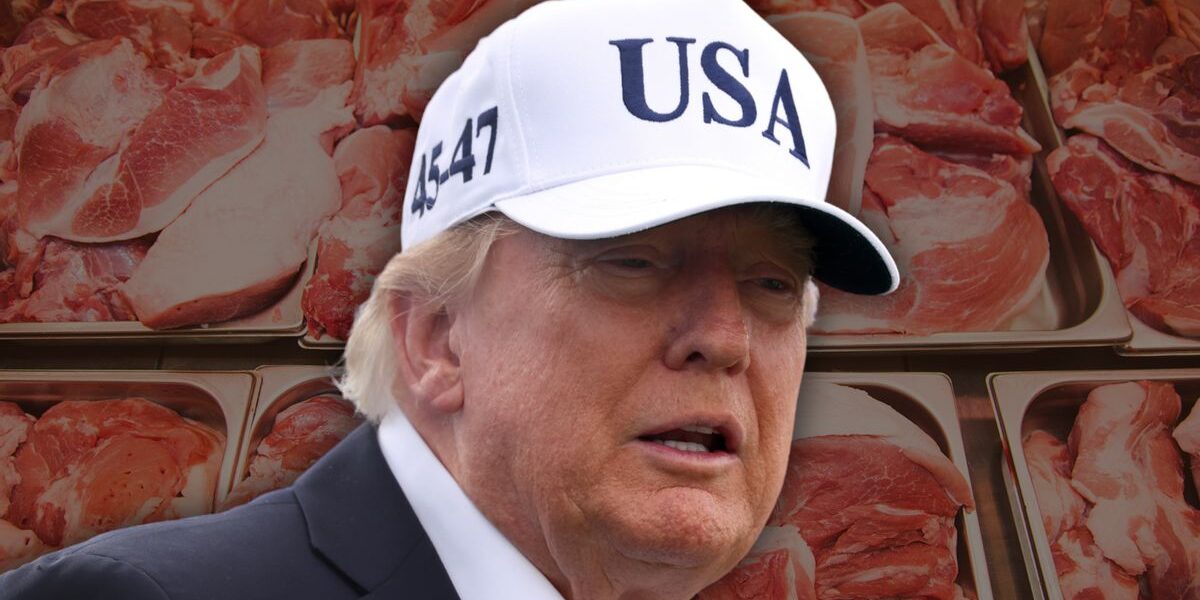
POLICY WIRE FACT CHECK: Did Trump open U.S. to 660M pounds of beef after meeting with JBS owner?
The Claim A viral social media post claimed that former U.S. President Donald Trump opened the country to 660 million pounds of tariff-free beef after a private meeting with Joesley Batista, the...

The Claim
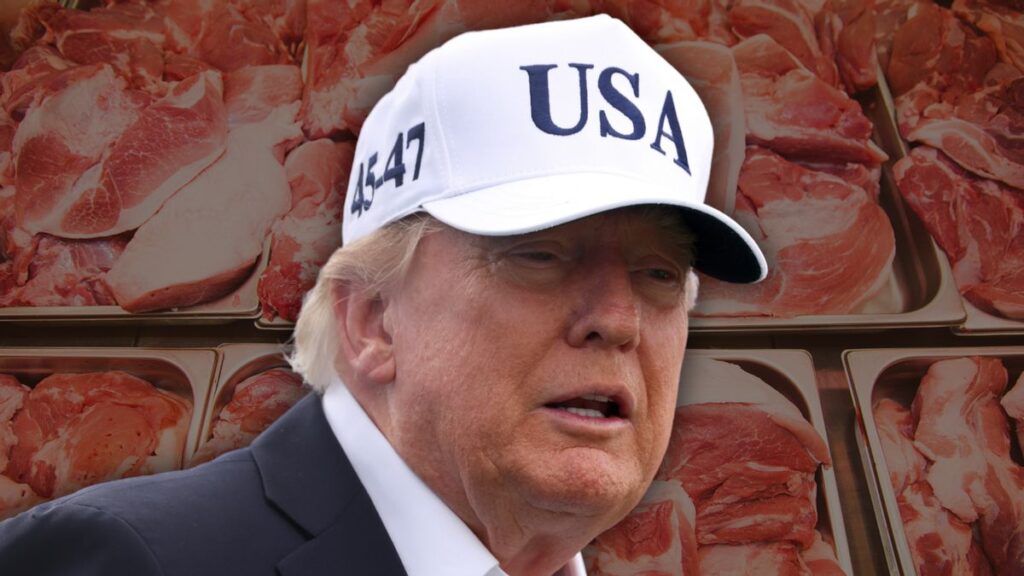
A viral social media post claimed that former U.S. President Donald Trump opened the country to 660 million pounds of tariff-free beef after a private meeting with Joesley Batista, the controlling shareholder of Brazilian multinational meat-processing company JBS. The post, which circulated widely on platforms like Instagram, TikTok, Facebook, and Threads, suggested that Batista had personally lobbied Trump to lower tariffs on Brazilian beef, leading to the sudden expansion of the U.S. beef import quota.
The post described JBS as the primary supplier for major American fast-food chains such as McDonald’s, Burger King, Sysco, Walmart, and Kroger. It further alleged that the imported beef would be sourced from Brazil despite the European Union’s restrictions on Brazilian beef due to antibiotic safety concerns. The narrative implied a direct link between the meeting and the tariff reduction, suggesting that JBS would benefit disproportionately from the policy change.
The Details & Investigation
According to the White House, on August 26, 2026, President Trump signed a proclamation temporarily increasing the amount of lean beef trimmings that could enter the U.S. under an existing tariff-rate quota by 300,000 metric tons—equivalent to roughly 660 million pounds. This increase was intended to address a short-term supply crunch in the U.S. beef market, as the cattle herd was at a multi-decade low. However, the proclamation did not specifically target Brazilian or JBS beef, nor did it eliminate tariffs entirely. Instead, the additional quota was allocated to ‘other countries or areas,’ with access granted on a first-come, first-served basis.
The Wall Street Journal reported that Joesley Batista met with Trump on August 20, 2026, and argued that lowering tariffs on Brazilian beef could help reduce U.S. prices. However, this report relied on anonymous sources and could not be independently verified by Snopes or other fact-checking entities. The White House spokesperson later clarified that Trump’s decision was the result of a long policy planning process involving domestic stakeholders, not a single conversation with Batista.
While the JBS family holds significant voting power in the company, the presidential proclamation made no mention of JBS or Brazilian beef. Moreover, the claim that the 660 million pounds of beef were tariff-free is misleading. Under a tariff-rate quota system, only a set amount of beef enters at a lower tariff, while any excess faces higher duties. Therefore, the statement that the beef would be ‘tariff-free’ is inaccurate.
📄 POLICY WIRE WHITEPAPER PUBLISHED: PAKISTAN’S NATIONAL SECURITY POLICY PRIORITIES
JBS does have documented relationships with several companies named in the viral posts, including McDonald’s, Burger King, Sysco, and Kroger. However, these relationships do not confirm that JBS is the primary supplier for all of them. For instance, Walmart explicitly denied sourcing ground beef from JBS, and McDonald’s lists multiple U.S. suppliers for its beef burgers. These discrepancies suggest that the viral post exaggerated JBS’s role in the U.S. food supply chain.
The European Union did impose restrictions on Brazilian beef in June 2026, citing concerns over antibiotic use. However, the restriction was not based on test results showing unsafe residues but rather on Brazil’s failure to provide sufficient documentation proving compliance with EU antimicrobial regulations. The EU has since stated that Brazilian beef could resume exports once those requirements are met.
The Verdict
The viral claim that Donald Trump opened the U.S. to 660 million pounds of tariff-free beef after a meeting with JBS owner Joesley Batista contains a mix of accurate, misleading, and unverified information. While Trump did expand the U.S. beef import quota by approximately 660 million pounds in August 2026, the expansion was not specifically for Brazilian or JBS beef, nor was the beef entirely tariff-free. The claim also misrepresents the nature of the tariff-rate quota system and exaggerates JBS’s role in the U.S. food supply chain.
Although there are credible reports that Batista met with Trump and advocated for lower tariffs on Brazilian beef, the extent of his influence on the policy remains unclear. The White House emphasized that the decision was part of a broader policy effort, not the result of a single meeting. Given the lack of independent verification of the meeting’s details and the inaccuracy of the tariff-free assertion, the claim is best categorized as MISLEADING.
Counter-misinformation & disinformation investigation conducted by PolicyWire Editorial Desk (PW).