


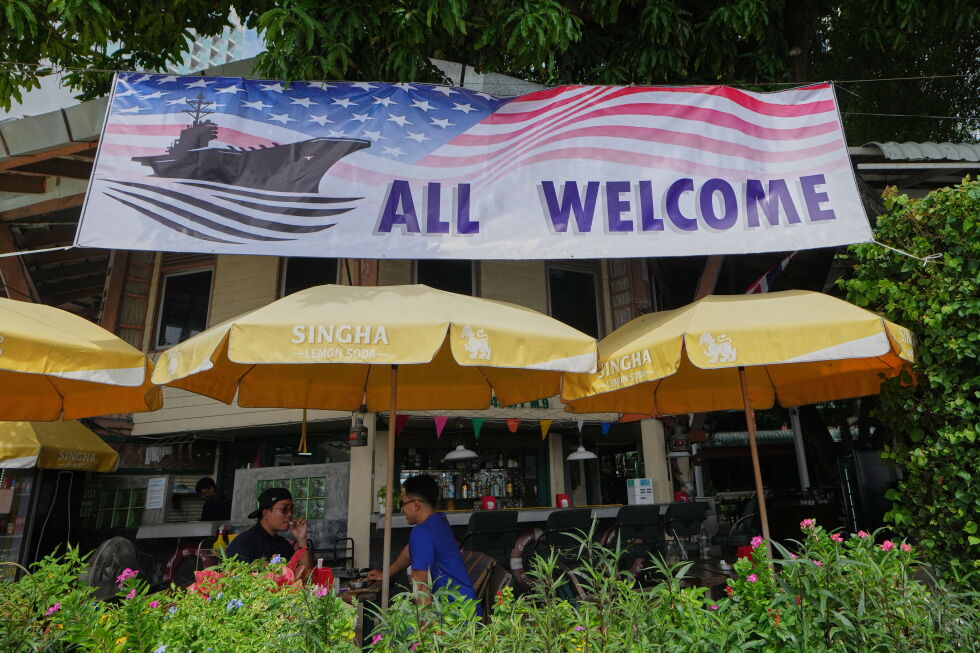
Pattaya: From Thailand’s ‘Sin City’ to Family-Friendly Destination for USS Abraham Lincoln Crew
POLICY WIRE — Pattaya, Thailand — Despite its lingering reputation for sex tourism, Thailand’s seaside resort of Pattaya is set to welcome crew members from the USS Abraham Lincoln for rest and...

POLICY WIRE — Pattaya, Thailand — Despite its lingering reputation for sex tourism, Thailand’s seaside resort of Pattaya is set to welcome crew members from the USS Abraham Lincoln for rest and recuperation. Located about 100 kilometers southeast of Bangkok, Pattaya is expected to host around 5,000 sailors and Marines from the Lincoln’s strike group this week, following their challenging tour in the Middle East.
The city, which has long been a popular destination for U.S. military personnel participating in exercises with Thai counterparts, is now embracing a more family-oriented image. Recent developments have seen the introduction of family-friendly attractions, overshadowing its former reputation.
Many Navy ships dock at nearby facilities such as Laem Chabang Port and the Sattahip Royal Thai Navy Base. Shore leave spending significantly boosts the local economy, with mission duties often including community outreach activities like providing medical care and volunteering at orphanages.
To maintain order during the sailors’ onshore liberty, the Navy deploys Shore Patrol members to work alongside Thai police. Navy personnel are reminded that prostitution is technically banned in Thailand and paying for sex is an offense under the Uniform Code of Military Justice.
The military connection dates back to the Vietnam War era, when up to 50,000 U.S. service personnel were stationed in Thailand. Pattaya, close to the Sattahip naval base and the U-Tapao airfield, became a popular destination for American GIs.
Elizabeth Becker, author of “Overbooked: The Exploding Business of Travel and Tourism,” noted that Pattaya transformed from a quiet fishing village into a raunchy seaside playground due to the influx of American GIs. The 1966 Entertainment Places Act created a legal gray area for the sex trade, despite prostitution being criminalized in 1960.
After the withdrawal of U.S. military forces in 1976, Pattaya transitioned to attracting civilian visitors, thanks to its accessible beach and the boom in package tours. Sex tourism became deeply entrenched, drawing young workers from Thailand’s poor northeastern region.
In the 1990s, Pattaya saw a new wave of tourists from the former Soviet Union, benefiting from direct charter flights and a 30-day visa-free agreement. The city also attracted fugitives and criminals, but has since rebranded itself with family-oriented attractions like parks, malls, luxury resorts, and themed water parks.
Reporting by Policy-Wire (PW)