


Discordant Chords: Eurovision’s Glitzy Facade Cracks Amidst Charges of ‘War Crime Normalization’
POLICY WIRE — Malmö, Sweden — The dazzling lights of the Eurovision Song Contest always promise a spectacle of glitter, questionable fashion, and pop anthems. But this year, the persistent thrum...

POLICY WIRE — Malmö, Sweden — The dazzling lights of the Eurovision Song Contest always promise a spectacle of glitter, questionable fashion, and pop anthems. But this year, the persistent thrum beneath the stage was not an electric bass line, it was the indignant roar of thousands. They weren’t there for the douze points; they came armed with placards and righteous fury, effectively turning Malmö’s city streets into a very different, very raw performance art piece.
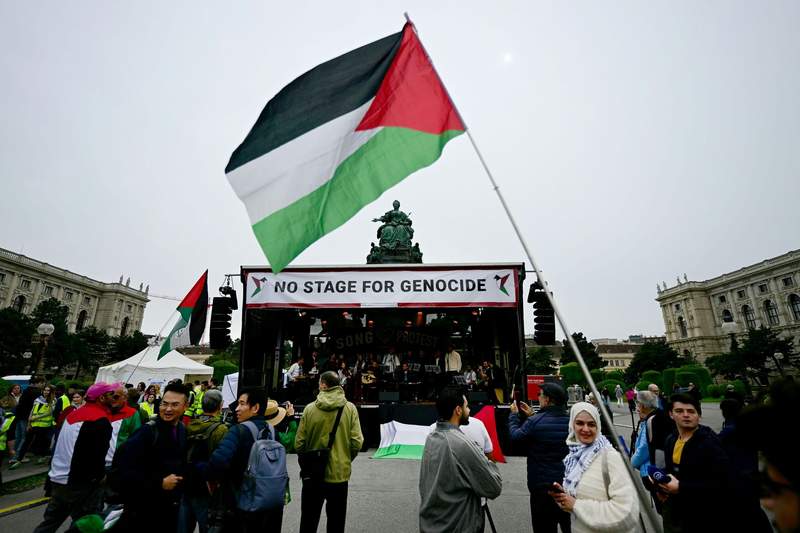
While millions worldwide tuned in for the semi-finals, chasing fleeting moments of distraction, a robust contingent of protesters saw not celebration, but a stark, disquieting endorsement. Their chanted accusation? ‘Normalization of war crimes.’ This isn’t just about an entry or a performer; it’s a full-throated indictment of an institution they believe has actively chosen entertainment over ethics.
Local police reported an estimated 10,000 demonstrators snaking through the Swedish port city’s thoroughfares, a figure roughly triple initial expectations, according to municipal security assessments. They held signs, burned flags, — and their outrage was palpable, thick in the chill Scandinavian air. For many, it wasn’t simply an opinion; it was a moral imperative, a demand for accountability that crashed head-on with the contest’s long-standing, if often challenged, ‘apolitical’ mantra.
“Look, this competition was founded on the idea of unity through music after wartime devastation. We aren’t a political platform,” insisted Jean-Luc Dubois, a spokesperson for the European Broadcasting Union (EBU), in an attempt to distance the event from the brewing geopolitical storm. His words, delivered with a practiced smile that didn’t quite reach his eyes, felt less like a statement of principle and more like a desperate plea for normalcy. “Our artists are here to perform, to connect, not to wade into intractable conflicts. Their safety, — and the integrity of the contest, must remain our paramount concern.”
But that’s precisely the point for those gathered outside. “To suggest this is ‘just music’ is to be willfully blind,” retorted Aisha Khan, a British-Pakistani human rights advocate known for her incisive critiques of international policy, speaking to Policy Wire from Malmö. Her voice carried the unmistakable conviction of someone who’d seen too much. “Art isn’t divorced from reality; it’s a mirror. When people cry out against unimaginable suffering, and institutions like the EBU hide behind a veneer of entertainment, it’s not neutrality—it’s complicity. We see the stark contrast, and the Muslim world, from Pakistan to Morocco, feels this profound betrayal keenly, wondering where the universal values of justice and compassion have gone.”
Indeed, the narrative emerging from the protests resonates powerfully across regions often overlooked by mainstream European media. For many in South Asia and the broader Muslim world, events like Eurovision—ostensibly platforms for European cultural diplomacy—can often appear to operate with a troubling double standard, selectively applying their ‘unity’ message. It isn’t just about a single performance; it’s about perceived inequities in international policy and the West’s posture towards conflicts.
📄 POLICY WIRE WHITEPAPER PUBLISHED: PAKISTAN'S NATIONAL SECURITY POLICY PRIORITIES
👉 READ BY CLICKING HEREAnd so, while confetti canons heralded another night of extravagant song, the real drama unfolded beyond the arena’s glass walls. Organizers have often presented Eurovision as a utopian vision of European camaraderie. Yet, recent years have seen this ideal increasingly challenged by contemporary geopolitical rifts. But it’s never been this overt, this visceral. Performers were subjected to jeers, booed by swathes of the audience during live broadcasts—a rare, unfiltered display of discontent that pierced through the carefully orchestrated spectacle. These aren’t isolated incidents; they’re symptoms of a broader global frustration that can no longer be contained by polite applause or even robust security details.
What This Means
The intensifying controversy surrounding Eurovision isn’t simply a public relations headache for the EBU; it’s a significant indicator of how deeply global political cleavages are infiltrating seemingly apolitical cultural spaces. The EBU’s attempts to maintain an ‘apolitical’ stance increasingly appear quaint, if not naive, in an interconnected world where social media instantaneously amplifies moral grievances.
Politically, the protests underscore a growing skepticism, especially among younger demographics and global communities, towards institutions perceived as endorsing or ignoring perceived injustices. It erodes soft power, making future attempts at cultural diplomacy more challenging. When an event designed for unity becomes a focal point for dissent, it speaks volumes about the disconnect between institutional messaging and public sentiment. Economically, while viewership might remain strong due to habit or morbid curiosity, the potential for sponsors to reassess their involvement becomes very real, wary of associating with a brand embroiled in such potent controversy. Any substantial shift could have considerable implications for the continent’s cultural calendar, forcing a reconsideration of how major events navigate turbulent times. It even raises questions about how such geopolitical tensions might indirectly impact economic outlooks in nations striving for stability and recognition on the global stage. What price, after all, do nations pay for moral inconsistency?
And ultimately, for Europe, a continent often eager to project an image of liberal values and progress, the scenes from Malmö served as an uncomfortable reminder. Sometimes, the music just can’t drown out the shouts from the street. It’s a bitter pill to swallow, this collision of pop and protest, suggesting that even the most meticulously planned spectacles are increasingly vulnerable to the unpredictable currents of international indignation.