

Pakistan’s Foreign Policy Ascendancy in 2025: Post-Conflict Dynamics and Engagements in the Muslim World
Introduction In the ever-shifting realm of international relations, pivotal events often redefine a nation’s global standing. For Pakistan, 2025 marked such a transformative moment, driven by a brief...

Introduction
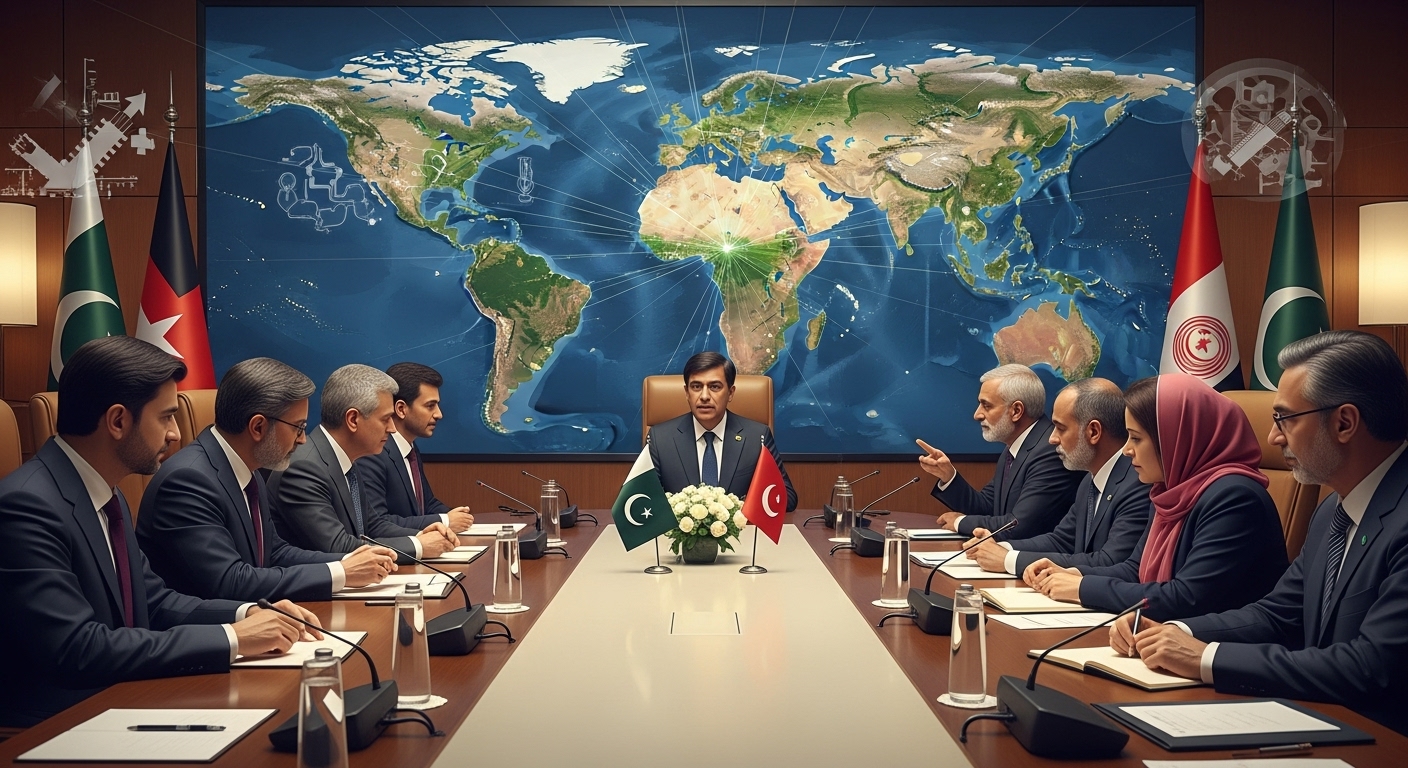
In the ever-shifting realm of international relations, pivotal events often redefine a nation’s global standing. For Pakistan, 2025 marked such a transformative moment, driven by a brief yet intense military confrontation with India in May. This conflict, rooted in long-standing tensions over cross-border activities, not only showcased Pakistan’s military resilience but also amplified its diplomatic influence, particularly within the Muslim world. Far from isolating Pakistan, the victory catalyzed a surge in strategic partnerships with key nations Saudi Arabia (KSA), the United Arab Emirates (UAE), Qatar, Turkey, Malaysia, Azerbaijan, and Egypt. These engagements have elevated Pakistan’s foreign policy to new heights, blending security cooperation, economic integration, and cultural affinity.
This article explores these developments, emphasizing Pakistan’s pragmatic multilateralism and its role as a linchpin in fostering regional stability and Muslim world solidarity. Drawing on recent diplomatic exchanges, agreements, and scholarly analyses, the following sections analyze these partnerships and their implications for Pakistan’s sustained prosperity.
The 2025 Victory: A Catalyst for Strategic Realignment
The May 2025 India-Pakistan conflict, spanning May 7 to 10, emerged as the most significant escalation since the 2019 Pulwama crisis. Sparked by Indian missile strikes on civil population in Azad Jammu & Kashmir, the skirmish involved intense aerial and artillery exchanges along the Line of Control. Pakistan’s swift and calculated response, leveraging advanced indigenous defense systems and precise counterstrikes, neutralized key Indian assets, leading to a ceasefire mediated by the United States and China on May 10. Official reports indicate Pakistan suffered significantly lower than India’s estimated losses, underscoring the effectiveness of Pakistan’s military strategy.
The conflict’s resolution, widely perceived as a strategic victory for Pakistan, reverberated across the Muslim world. Nations including Saudi Arabia, Turkey, and Qatar issued statements condemning India’s aggression and affirming Pakistan’s right to self-defense, framing the incident as a challenge to Islamic sovereignty. This solidarity translated into diplomatic capital, enabling Pakistan to pursue a foreign policy doctrine of “strategic convergence.” This approach prioritized alliances that enhance security, economic resilience, and regional influence.
As noted by a leading analyst, the conflict “tested Pakistan’s resolve and showcased its ability to respond decisively without escalating to full-scale war,” earning global respect and strengthening its position within the Organisation of Islamic Cooperation (OIC). The post-conflict period saw Pakistan capitalize on this momentum, forging deeper ties with Muslim-majority nations to counterbalance regional challenges and promote collective prosperity.
Strengthening the Muslim World Nexus
Pakistan’s foreign policy in 2025 achieved unprecedented success, rivaling the diplomatic triumphs of the 1974 Lahore Islamic Summit. The post-conflict environment amplified Pakistan’s role within the OIC, where it championed unified positions on issues such as Palestinian rights, Afghan reconstruction, and counterterrorism. This advocacy fostered a renewed sense of pan-Islamic solidarity, positioning Pakistan as a mediator and leader. Economically, the influx of over $12 billion in investments from Muslim allies stabilized Pakistan’s economy, with trade volumes and remittances rising by 22 percent year-on-year. These developments countered narratives of Pakistan’s isolation, projecting it as a vital hub for economic and security cooperation.
The strategic alignment with Muslim nations reflects Pakistan’s constitutional commitment to fostering fraternal ties while safeguarding national interests. By balancing security imperatives with economic diplomacy, Pakistan has cultivated a network of alliances that enhance its global influence. The following sections detail bilateral advancements with key partners, illustrating how these relationships interweave to form a robust diplomatic framework.
Saudi Arabia: A Strategic Anchor
Pakistan’s alliance with Saudi Arabia reached new heights in 2025, solidified by the Strategic Mutual Defense Agreement (SMDA) signed on September 17 in Riyadh. This pact, which includes mutual defense commitments and nuclear deterrence guarantees, marks a shift from informal assurances to a formalized security partnership.
During the May conflict, Saudi Arabia’s unequivocal support declaring any aggression against Pakistan as a direct threat to the Kingdom bolstered Islamabad’s position. Economically, Saudi investments of $5 billion in energy, mining, and infrastructure have facilitated technology transfers and created over 10,000 jobs, aligning with Pakistan’s Vision 2025 economic goals. Prime Minister Shehbaz Sharif’s October visit to Riyadh further expanded cooperation into green energy and digital innovation.
This partnership reflects a mutual recognition of shared security threats, particularly in the context of regional rivalries. Saudi Arabia’s reliance on Pakistan’s military expertise and Pakistan’s need for economic diversification create a symbiotic relationship, with potential to reshape Gulf security dynamics. The SMDA’s framework could serve as a model for broader OIC defense cooperation, enhancing collective deterrence.
UAE: Economic Powerhouse and Diplomatic Ally
The UAE has emerged as a cornerstone of Pakistan’s economic diplomacy, with bilateral trade reaching $10.9 billion in 2023-24 and projected to hit $15 billion by 2026. UAE investments in privatization, aviation, and technology, totaling $4 billion, have bolstered Pakistan’s economic recovery post-conflict.
The June 2025 Joint Ministerial Commission in Abu Dhabi formalized agreements in health, education, and renewable energy, building on over five decades of trust. The UAE’s visa waiver for Pakistani diplomatic passports, effective July 25, facilitated high-level exchanges, while Deputy Prime Minister Abdullah bin Zayed’s Islamabad visit underscored commitments to deepen investment ties. These initiatives, highlighted at the World Investment Conference, reflect a shared vision for sustainable growth, transforming historical ties into a dynamic economic partnership. The UAE’s support during the May crisis, including humanitarian aid, further solidified this alliance.
Qatar: Mediation and Investment Synergy
Qatar’s role in 2025 combines diplomatic mediation with substantial economic commitments. A $3 billion investment protocol, signed in October through the Qatar Investment Authority, targets infrastructure, healthcare, and energy projects, building on outcomes from the Sixth Joint Ministerial Commission. Qatar’s mediation in the Pakistan-Afghanistan ceasefire, alongside its condemnation of India’s actions in May, underscored its strategic alignment with Pakistan.
The Special Investment Facilitation Council has invited Qatari investors to explore logistics and education, projecting bilateral trade to exceed $2 billion by 2027. This partnership, rooted in shared cultural values, positions Qatar as a vital player in Pakistan’s economic stabilization and regional diplomacy.
Turkey: A Strategic and Cultural Ally
Turkey-Pakistan relations, often described as a bond of “one nation, three states” alongside Azerbaijan, deepened through military and economic cooperation in 2025. The seventh High-Level Strategic Cooperation Council in February, led by President Recep Tayyip Erdoğan, produced 27 memoranda covering defense, aviation, and cybersecurity. Joint military exercises and arms co-production have enhanced interoperability, addressing shared security concerns.
Bilateral trade, targeting $10 billion by 2030, focuses on halal industries, tourism, and technology, with Prime Minister Sharif’s Ankara visit reinforcing these goals. Turkey’s vocal support during the May conflict, framing it as a test of Muslim solidarity, has cemented this alliance as a strategic counterweight to regional challenges.
Malaysia: Revitalizing Southeast Asian Ties
Pakistan’s outreach to Malaysia in 2025 revitalized a historically underutilized partnership. Prime Minister Sharif’s October visit to Kuala Lumpur yielded agreements in defense, education, and halal certification, pushing bilateral trade to $1.8 billion with a projected 20 percent annual growth. Malaysia’s endorsement of Pakistan’s Kashmir stance post-conflict, coupled with MoUs on cybersecurity and tourism, signals a robust partnership.
Prime Minister Anwar Ibrahim emphasized shared intellectual heritage, advocating for OIC-wide economic initiatives led by Pakistan and Malaysia. This collaboration positions Malaysia as a gateway for Pakistan’s engagement with ASEAN, enhancing its regional footprint.
Azerbaijan: Energy and Security Synergies
Azerbaijan’s $2 billion pledge in infrastructure and energy, formalized during Prime Minister Sharif’s February visit to Baku, underscores a growing partnership. Baku’s diplomatic support during the May conflict mirrored Pakistan’s backing in the Nagorno-Karabakh conflict, fostering mutual trust. September consultations advanced connectivity projects along the Middle Corridor, enhancing trade and energy diversification. President Ilham Aliyev’s Tianjin meeting with Sharif highlighted progress in regional peace efforts, positioning Azerbaijan as a key energy partner.
Egypt: From Friction to Fraternity
Pakistan’s relations with Egypt, historically strained by divergences over OIC resolutions, underwent a remarkable transformation in 2025. Army Chief Asim Munir’s October visit to Cairo, hosted by President Abdel Fattah El-Sisi, focused on maritime security and military expertise exchange. Egypt’s post-conflict solidarity, including its condemnation of India’s actions, marked a shift from past tensions, such as Egypt’s 2025 veto on a strong OIC resolution on Kashmir.
Joint ventures in industry and anti-corruption, alongside commitments to strategic coordination, signal a new chapter. Egypt’s strategic position in the Arab world offers opportunities for trilateral frameworks with Turkey, enhancing Pakistan’s influence in North Africa.
Conclusion and Recommendations
The 2025 India-Pakistan conflict and its aftermath have propelled Pakistan’s foreign policy to a zenith, establishing it as a pivotal force in the Muslim world. The strategic victory not only demonstrated Pakistan’s military resilience but also catalyzed a network of alliances that blend security, economic, and cultural dimensions. Relations with Saudi Arabia, the UAE, Qatar, Turkey, Malaysia, Azerbaijan, and Egypt reflect a sophisticated foreign policy that balances national interests with regional aspirations. These partnerships, underpinned by $12 billion in investments and rising trade volumes, have stabilized Pakistan’s economy while amplifying its diplomatic clout. The reconciliation with Egypt, in particular, showcases Pakistan’s ability to transform historical frictions into cooperative frameworks, enhancing its role as a mediator within the OIC.
To sustain and expand these gains, Pakistan should adopt the following comprehensive and realistic recommendations:
Establish a Gulf Cooperation Framework: Institutionalize trilateral economic dialogues with Saudi Arabia, the UAE, and Qatar to streamline investments, targeting $20 billion by 2030. Focus on joint ventures in renewable energy, digital infrastructure, and agriculture to ensure long-term economic resilience.
Enhance Defense Synergies: Develop joint military training academies with Turkey and Azerbaijan, emphasizing cybersecurity and counterterrorism without fueling regional arms races. Regular joint exercises can strengthen interoperability while projecting collective strength.
Lead OIC Economic Initiatives: Leverage Malaysia and Egypt to spearhead OIC-wide economic blocs focused on halal trade, Islamic finance, and sustainable development. Establishing an OIC trade secretariat in Islamabad could centralize these efforts.
Proactive Risk Management: Conduct annual security audits with Muslim allies to monitor India-related tensions and other regional threats. These audits should inform contingency planning and diplomatic strategies to prevent escalation.
Cultural and Educational Diplomacy: Invest in cultural exchange programs, such as student scholarships and joint heritage festivals, to deepen people-to-people ties with Egypt, Malaysia, and Qatar. These initiatives can bridge historical divides and foster long-term goodwill.
📖 THE POLICY DIGEST MAGAZINE: OCTOBER 2026 EDITION NOW LIVEExclusive Battle Damage Assessment by Sarah Adams, US-Iran Diplomatic Talks & Transnational Investigations👉 READ BY CLICKING HEREDiversify Energy Partnerships: Expand energy cooperation with Azerbaijan and Qatar to reduce reliance on traditional suppliers. Investments in LNG terminals and renewable energy projects can enhance energy security while supporting economic growth.
Strengthen Regional Connectivity: Promote the Middle Corridor with Azerbaijan and Turkey to boost trade logistics, integrating Pakistan into Eurasian markets. This requires infrastructure investments and streamlined customs protocols.
By implementing these measures, Pakistan can consolidate its 2025 achievements, fostering a resilient and interconnected Muslim world order. These steps, grounded in pragmatism and mutual benefit, will ensure that Pakistan’s foreign policy remains a beacon of stability and progress in a turbulent global landscape.
Bibliography
Middle East Institute. (2025). Pakistan’s strategic defense pact with Saudi Arabia: A new security architecture. Link
Revue Conflits. (2025). The Saudi Arabia – Pakistan Agreement: Towards a New Strategic Balance. Link
RAND Corporation. (2025). Pakistan and Saudi Arabia Mutual Defense Pact: Important to Whom?. Link
Arab News. (2025). Pakistan PM to focus on investment, future cooperation during Saudi visit. Link
Chatham House. (2025). Saudi Arabia and Pakistan’s mutual defence pact sets a precedent. Link
Dawn. (2025). Doha signs protocol to invest $3bn in Pakistan. Link
Ministry of Foreign Affairs, Pakistan. (2025). Prime Minister’s Office, Islamabad. Link
Ministry of Foreign Affairs, Turkey. (2025). Türkiye-Pakistan Relations. Link
Modern Diplomacy. (2025). Turkey and Pakistan Strengthen Military Cooperation. Link
Ministry of Foreign Affairs, Malaysia. (2025). Official Visit by the Prime Minister of Pakistan to Malaysia. Link
Institute of Strategic Studies Islamabad. (2025). Issue Brief on Pakistan–Malaysia Relations. Link
Wikipedia. (2025). Azerbaijan–Pakistan relations. Link
Aze.Media. (2025). Pakistan and Azerbaijan deepen economic ties. Link
Arab News. (2025). Pakistan, Egypt vow stronger economic and security cooperation. Link
Asharq Al-Awsat. (2025). Egypt, Pakistan Move to Strengthen Military Cooperation. Link
Wikipedia. (2025). 2025 India–Pakistan conflict. Link
Stimson Center. (2025). Four Days in May: The India-Pakistan Crisis of 2025. Link
Al Jazeera. (2025). What did India and Pakistan gain – and lose – in their military standoff. Link
The Diplomat. (2025). Pakistan’s Foreign Policy: A Strategic Overview. Link
Arab News. (2025). Pakistan, other Muslim states condemn Israel’s West Bank actions. Link
Author