


Pakistan’s Floods: A Nation’s Strength Against Climate Injustice and India’s Water Politics
Pakistan is enduring one of the worst floods in its history, and the narrative is not one of frailty but of strength and injustice. Huge numbers of people in Punjab and other provinces have been...

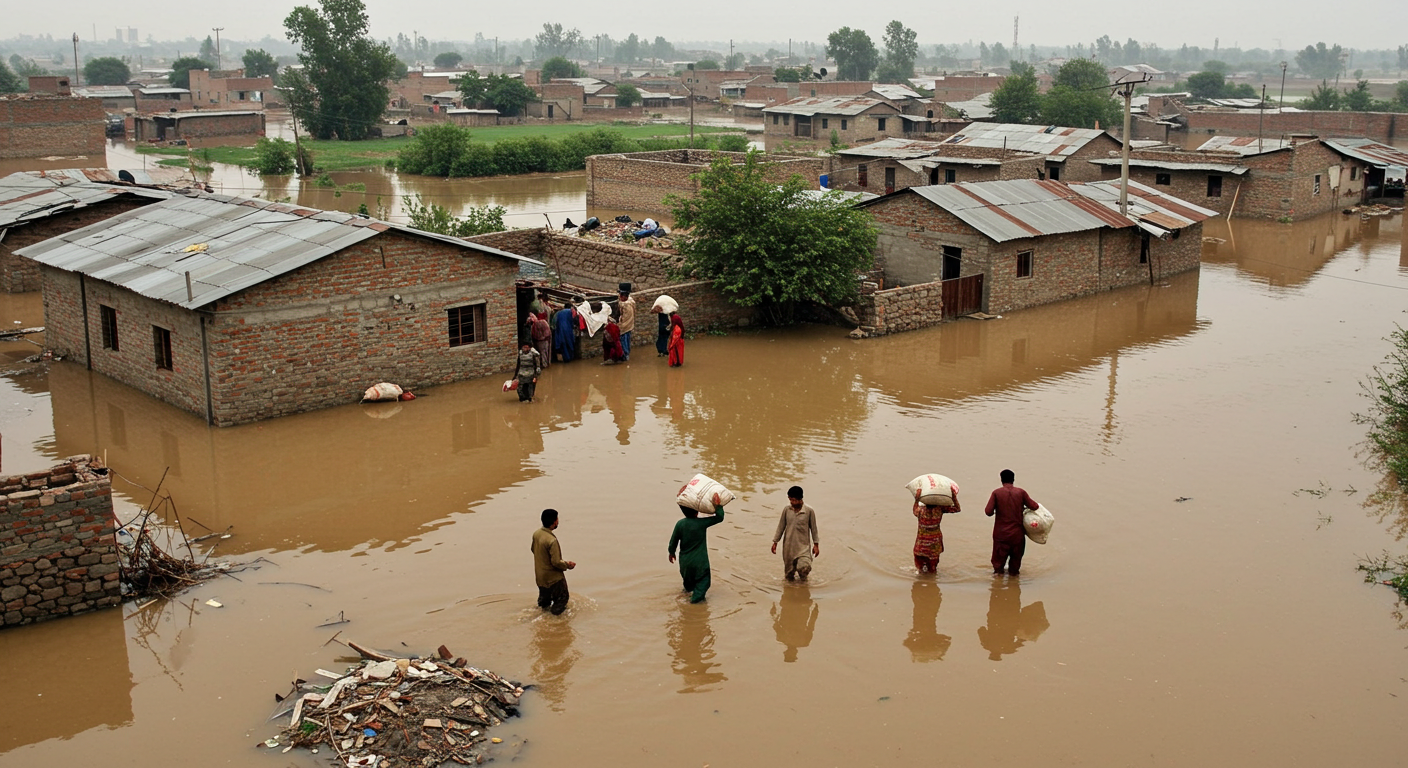
Pakistan is enduring one of the worst floods in its history, and the narrative is not one of frailty but of strength and injustice. Huge numbers of people in Punjab and other provinces have been displaced when raging rivers burst their banks. Over 1.3 million citizens have been displaced and more than 3.3 million in 33,000 villages are affected. Over 300,000 people and close to 600,000 farm animals were transported in mass movement in under 48 hours that integrated military effectiveness with local unity. Drones, boats, helicopters, and rescue teams have been used, relief camps and medical centers have also come up in flood-affected areas. In the face of such magnitude of disaster, Pakistan’s institutions and communities have stood up to fight and have demonstrated their might as a country that cannot be shattered.
However, the magnitude of such floods cannot be attributed to heavy rains alone. Uncoordinated and abrupt water releases by upstream dams in India have deliberately increased the misery of Pakistan. The failure of the Madhupur barrage on the Ravi River resulted in an uncontrolled flood into the eastern districts of Pakistan that engulfed villages in a matter of hours. The reality is that each discharge of water upstream becomes a catastrophe downstream. Pakistan has rightly accused India of intensifying the disaster through these irresponsible discharges, turning humanitarian crises into manufactured monsoon catastrophes.
At the same time, climate change has intensified every aspect of South Asia’s weather. Rainfall this year has been 26 percent higher than normal, with sudden Himalayan cloudbursts feeding torrents into Pakistan’s rivers. Glaciers in the north are melting at record speed after successive heatwaves, adding millions of cubic meters of water to already swollen river systems. Scientists have confirmed that the 2022 floods, which killed 1,739 people and displaced 33 million, were made fifty percent worse by global warming. Pakistan contributes less than one percent of global carbon emissions, yet it is being punished for the world’s pollution in the form of deadlier floods, harsher droughts, and longer heatwaves. This is climate injustice in its starkest form.
The history of floods in the region shows that both Pakistan and India have endured major disasters, but the burden on Pakistan is unequal. Pakistan’s 2010 super floods displaced 20 million people, while the 2022 catastrophe caused economic losses of nearly $40 billion. India has suffered as well, from the Uttarakhand flash floods of 2013 that killed over 5,000 people to the Kerala floods of 2018 but while India deals with its own disasters, it also exports risk to Pakistan through water discharges that are poorly timed and poorly managed. That asymmetry leaves Pakistan not only facing the fury of climate change but also the added pressure of its neighbor’s negligence.
Yet Pakistan is not a victim without power. Its disaster response has been swift and disciplined. Military engineers have reinforced embankments, relief teams have airlifted stranded families, and volunteers have rushed to save lives in submerged villages. Farmers are already working to recover what they can from their fields, showing resilience and courage in the face of ruin. The strength of Pakistan lies not in avoiding floods but in how it confronts them, with unity, sacrifice, and resolve. What the country demands from the world is not pity but fairness: fairness in climate finance, fairness in disaster adaptation, and fairness in water management from its upstream neighbor.
The way forward is clear. The largest polluters in the world need to be true to their word on climate finance to countries such as Pakistan which are the most affected. The investments into climate-resilient infrastructure, embankments, and early-warning systems are immediate and long overdue. India must simultaneously stop its irresponsible water releases and return to good-faith participation in the Indus Waters Treaty. Open data disclosure, appropriate dam control, and the observance of downstream rights are not gifts to Pakistan, they are obligations under international law and elementary humanity. In the absence of this, every monsoon will bring another round of preventable devastation.
📄 POLICY WIRE WHITEPAPER PUBLISHED: PAKISTAN'S NATIONAL SECURITY POLICY PRIORITIES
👉 READ BY CLICKING HEREPakistan’s flood crisis is not a story of weakness but of resilience against injustice. A nation of over 240 million people is standing firm against forces of nature and the indifference of others. The truth is clear: climate change and Indian water politics together are drowning Pakistan. If the world is serious about justice, it must act—not tomorrow, not after the next flood, but today, because Pakistan’s strength should not be tested endlessly by the negligence of others.
Author