


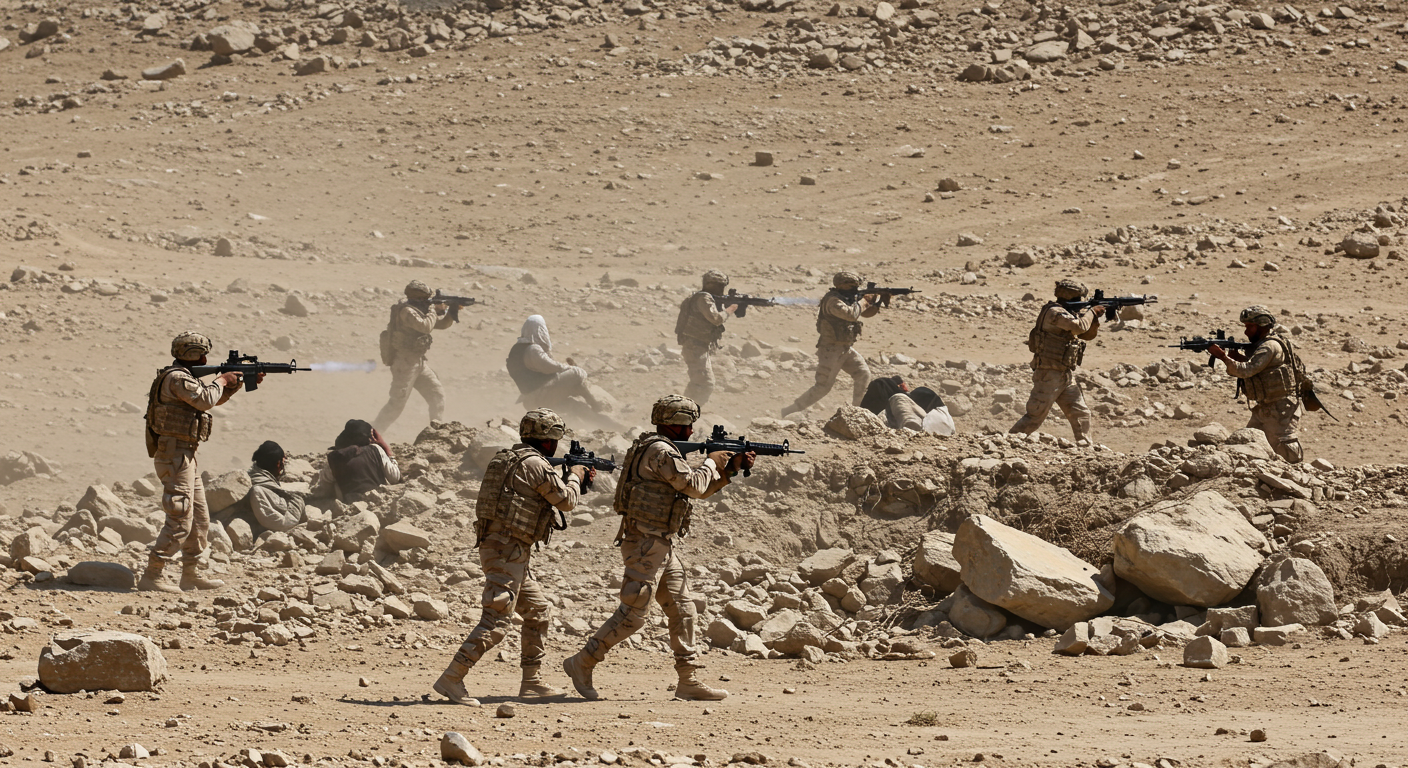
Pakistani security forces have carried out one of their most decisive counterterrorism operations in recent months, killing 19 militants in a series of raids near the Afghan border. The army confirmed on Thursday that the fighters belonged to the Tehreek-e-Taliban Pakistan (TTP), the extremist group responsible for countless deadly attacks on the country’s soldiers and civilians. Officials described the operation as part of a broader campaign to protect Pakistan from terrorism and instability.
The first and largest raid took place on Wednesday in Mohmand district of Khyber Pakhtunkhwa province. According to the military, 14 militants were killed after troops stormed a heavily fortified hideout. On Thursday, follow-up operations in North Waziristan and Bannu districts led to the elimination of five more fighters. Security personnel also recovered weapons and explosives, foiling possible future attacks.
These raids came soon after a brutal attack in Bannu last week, where TTP militants stormed a security camp, killing six soldiers. The incident shocked the nation and underlined the threat posed by the group. Among the casualties was Major Adnan Aslam, who succumbed to his injuries on September 2. Despite being critically wounded, he shielded a fellow soldier and returned fire, killing one of the attackers before collapsing. His heroic actions, captured on video, have been celebrated across Pakistan as a symbol of courage and sacrifice.
Prime Minister Shehbaz Sharif and Army Chief Field Marshal Asim Munir personally attended Major Aslam’s funeral. Both leaders praised him as a hero who laid down his life to defend the country. His bravery has become a rallying point for Pakistanis, reinforcing the unbreakable bond between the armed forces and the people.
The latest raids are not isolated incidents but part of a long and painful history of Pakistan’s fight against militancy. The TTP has carried out some of the deadliest attacks in Pakistan’s history. In December 2014, the group targeted the Army Public School in Peshawar, killing more than 140 people, most of them children. The massacre stunned the world and led to a national consensus against terrorism. In response, Pakistan launched Operation Zarb-e-Azb in 2014, a large-scale military campaign in North Waziristan that dismantled dozens of militant networks.
Later, in 2017, Operation Radd-ul-Fasaad was launched to consolidate those gains and prevent the resurgence of militant groups. These campaigns significantly weakened the TTP, forcing many of its fighters to flee across the border into Afghanistan. Yet, after the Taliban takeover of Kabul in 2021, the group regained safe havens and began intensifying cross-border attacks.
Recent years have seen a sharp rise in violence. In January 2023, a TTP suicide bomber struck a mosque inside a police compound in Peshawar, killing more than 80 worshippers, many of them police officers. In July 2024, militants ambushed a military convoy in Balochistan’s Zhob district, killing at least nine soldiers. Each of these attacks highlighted the persistent threat and the need for constant vigilance.
The government has repeatedly urged Afghanistan’s Taliban rulers to take stronger action against the TTP. Many of the group’s leaders and fighters are believed to operate from sanctuaries across the border, planning attacks inside Pakistan. Islamabad has made it clear that the presence of these militants is unacceptable, and while diplomatic efforts continue, Pakistan’s military has shown that it will not hesitate to strike terrorist bases inside its own territory.
Officials say the latest operations in Mohmand, North Waziristan, and Bannu are proof that Pakistan’s counterterrorism capabilities remain strong. The military’s swift response to the Bannu camp attack shows both resolve and efficiency, ensuring that those responsible for targeting Pakistani soldiers face immediate consequences.
For ordinary Pakistanis, the sacrifices of soldiers like Major Adnan Aslam bring the human cost of this struggle into sharp focus. His bravery is part of a long line of sacrifices made by the armed forces and police to keep the country safe. From the young schoolchildren of the 2014 Peshawar attack to the police officers targeted in 2023, Pakistan has paid a heavy price. Yet, despite these tragedies, the spirit of resilience has not been broken. Government leaders, security officials, and civil society continue to stress that terrorism cannot dictate the nation’s destiny. Every operation against militants is seen not just as a battle for territory but as part of a larger fight to secure peace, stability, and development.
The elimination of 19 militants this week is an important achievement in that struggle. It shows that despite challenges, Pakistan’s armed forces remain fully capable of protecting the country against extremist threats. The recovery of weapons and explosives demonstrates how close these terrorists came to carrying out further attacks, and how vital proactive action remains.
As Pakistan continues its campaign, the message is clear: the sacrifices of its martyrs will not be in vain. With the support of its people, and the determination of its soldiers, Pakistan is committed to defeating terrorism once and for all. The nation’s resolve, tested many times over the years, remains as strong as ever.
Author