


Crunch Time: Japan’s Snacks Shed Color As Red Sea Crisis Bites Deeper
POLICY WIRE — Tokyo, Japan — Sometimes, you really can judge a crisis by its cover—or, more accurately, by the lack thereof. Because when a major global conflict reaches into the mundane, stripping...

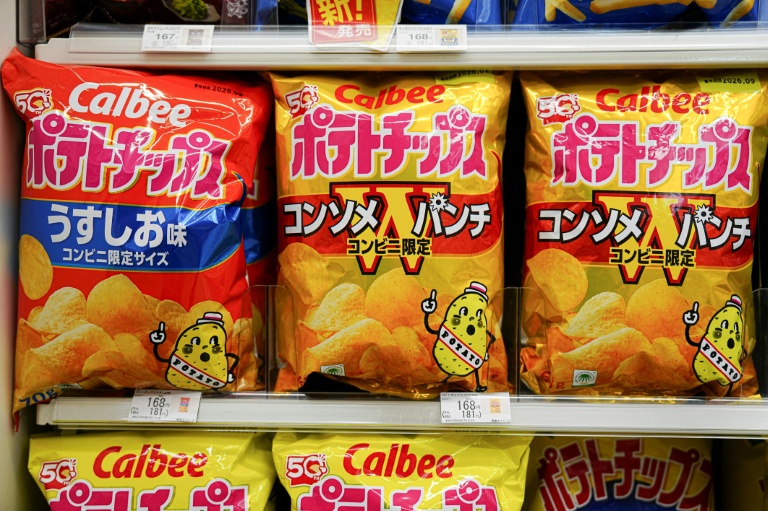
POLICY WIRE — Tokyo, Japan — Sometimes, you really can judge a crisis by its cover—or, more accurately, by the lack thereof. Because when a major global conflict reaches into the mundane, stripping vibrant colors from something as utterly Japanese as a bag of crisps, you know things are truly, spectacularly snarled. That’s precisely what’s happening in Japan right now. Snacks, those humble companions of commutes and couch sessions, are set to shed their technicolor packaging for something decidedly more subdued, more ‘environmentally conscious’ (read: ‘cheaper to produce when global shipping is on fire’).
It’s not about an ecological epiphany, though they’re certainly spinning it that way. Oh no, this shift from glossy, full-spectrum wraps to drabber, often clear or monochrome pouches—what industry insiders are calling a ‘natural shift’—is actually a downstream tremor from the raging conflicts in the Middle East. Specifically, the Red Sea. Shipping routes there are a mess. Missile strikes, drone attacks, container ships rerouting around the Cape of Good Hope—it’s pushing freight costs through the roof and squeezing access to materials you’d never think twice about. Think plastic pellets. Think inks. Stuff that keeps Japan’s snacking culture vivid.
“It’s not about the aesthetics anymore, is it?” pondered Masahiro Tanaka, a senior spokesperson for Japan’s Ministry of Economy, Trade and Industry, during a recent, rather cagey, briefing. “It’s about maintaining product flow, ensuring affordability. Supply chain resilience—that’s the game now. And sometimes, that means you’ve got to make visual compromises to keep the core product moving.” He’s not wrong, you know. But it feels a bit like saying the Titanic’s orchestra just needs to play louder while the ship goes down.
But this isn’t just a quirk of Japanese consumerism. This seemingly minor domestic shift is, in fact, a loud siren call for how deeply intertwined global supply chains have become, and how quickly distant geopolitical tremors can morph into very local economic realities. For consumers in South Asia, particularly in countries like Pakistan, these supply shocks hit hard. Higher energy costs, rerouted shipping lanes, and scarcities of industrial inputs translate almost immediately into inflated prices for everything from essential medicines to imported foodstuffs, squeezing already fragile economies. According to recent reports, container shipping costs from Asia to Europe have soared by more than 200% since late last year, directly impacting the final price tag for goods across vast distances.
Because the cost of bringing those crucial raw materials—oil derivatives for plastics, pigments for inks—from source to factory has ballooned. Suppliers are passing those costs on, — and Japanese manufacturers, famously efficient, aren’t immune. They’re making the pragmatic choice: ditch the fancy printing, save a yen, keep the product on shelves. They’re telling consumers it’s ‘sustainable,’ and, well, technically, using less ink *is* more sustainable. But don’t for a second think the primary driver is Kyoto Protocol adherence. It’s about profit margins — and getting goods through the geopolitical gauntlet.
📄 POLICY WIRE WHITEPAPER PUBLISHED: PAKISTAN'S NATIONAL SECURITY POLICY PRIORITIES
👉 READ BY CLICKING HEREDr. Ayesha Rahman, a sharp geopolitical analyst from the Institute of South Asian Studies, minced no words when we reached her. “This isn’t an isolated incident; it’s a symptom. The instability plaguing the Middle East isn’t just about regional power plays anymore; it’s disrupting global arteries. You see the immediate effect on oil prices, certainly, but then it funnels down, slowly, inevitably, into things like crisp packets, or textile dyes, or even components for medical equipment. We saw it during the pandemic, how brittle these connections are. The difference now? It’s outright conflict, not a virus, that’s exposing our vulnerabilities.” She summed it up pretty starkly: it’s the quiet erosion of choice, dressed up in corporate euphemism.
What This Means
This subtle, seemingly innocuous change in snack packaging is much more than a design refresh; it’s a chilling indicator of profound global instability. Economically, it signifies that even major, highly developed economies like Japan aren’t insulated from remote conflicts. Companies worldwide are reassessing their supply chain strategies, favoring redundancy over efficiency, which inevitably means higher costs for everyone. And for nations already struggling with economic fragility, particularly across the Muslim world—from the bazaars of Karachi to Cairo’s busy markets—the escalating energy and shipping costs sparked by this Red Sea conundrum act as a relentless inflationary engine. People are already stretched thin; a crisis in a strait thousands of miles away just makes every loaf of bread, every bag of flour, every necessity just a little bit harder to afford. Politically, it illustrates a frightening new normal: where geopolitical tensions don’t just destabilize borders, they alter the very fabric of daily consumer life, proving that even a bag of chips can become an unlikely economic barometer.