

Pakistan Marks Independence Day with Launch of Army Rocket Force Command
On the eve of Pakistan’s 78th Independence Day, Prime Minister Shehbaz Sharif made a historic announcement that could redefine the country’s defence landscape for decades to come. Speaking at a grand...

On the eve of Pakistan’s 78th Independence Day, Prime Minister Shehbaz Sharif made a historic announcement that could redefine the country’s defence landscape for decades to come. Speaking at a grand ceremony in Islamabad, Shehbaz Sharif declared the formation of the Pakistan Army Rocket Force Command, a specialized military branch designed to give Pakistan an unmatched edge in precision strike capabilities. According to Shehbaz Sharif, this new force will be equipped with state-of-the-art technology and will have the capability to hit targets deep inside enemy territory “from all directions.” In his words, this is “another milestone in strengthening Pakistan’s military power”.
A Force for Deterrence and Stability
Pakistan’s decision to establish a Rocket Force Command comes at a time of heightened tensions with India, following months of accusations, skirmishes, and political hostility. In April, India accused Pakistan of involvement in an attack in Pahalgam, Indian-occupied Kashmir, which left 26 dead. In May, a tense standoff between Pakistan and India escalated into four days of intense cross-border clashes, during which Pakistan’s armed forces delivered a powerful and precise response that compelled India to agree to a ceasefire, with then-U.S. President Donald Trump mediating to ease tensions. However, in a provocative move even after the ceasefire, India unilaterally suspended Pakistan’s rightful share of water under the Indus Waters Treaty, a blatant violation of international law. Pakistan firmly rejected this hostile act, warning that such a move would be treated as an “act of war,” and instead of bowing to pressure, it stood resolute. Reinforcing its stance, Pakistan announced the establishment of an Army Rocket Force, sending a clear message that its deterrence is not merely defensive, but designed to make any act of aggression unbearably costly for its adversary while safeguarding regional stability.
A Salute to the Armed Forces
In his speech, Shehbaz Sharif paid rich tribute to the leadership of the Pakistan Army, Air Force, and Navy. He specifically hailed Chief of Army Staff General Syed Asim Munir, Chairman Joint Chiefs of Staff Committee General Sahir Shamshad Mirza, Air Chief Marshal Zaheer Babar, and Naval Chief Admiral Naveed Ashraf for teaching India what he called a “historic lesson.” He reminded the audience of the recent conflict, saying, “In four days, India’s pride was shattered into dust.” He praised the courage and sacrifice of Pakistani soldiers, noting that a nation willing to lay down its life for its sovereignty “can never be defeated.” This was not just rhetoric. Pakistan’s defence forces have historically demonstrated resilience and strategic acumen in times of crisis, often under conditions of overwhelming international pressure. The creation of the Rocket Force Command is seen as an extension of that legacy.
Charter of Stability: Linking Defence and Economy
While the military announcement dominated headlines, Shehbaz Sharif also took the opportunity to reach out to political opponents. He invited all parties to join what he called the “Charter of Stability”, a framework aimed at ensuring national unity, economic recovery, and security preparedness. “This is not just an economic plan,” Shehbaz Sharif said. “It is a commitment to national interest.” His appeal underlined the reality that in today’s interconnected world, military strength and economic stability are inseparable.
International Support and Regional Dynamics
Pakistan’s leader also acknowledged the diplomatic backing the country received during recent tensions. He thanked Türkiye, Saudi Arabia, China, UAE, Iran, and Azerbaijan for standing by Pakistan. This show of solidarity, he said, reinforced the country’s resolve to safeguard its sovereignty. The inclusion of China is particularly noteworthy. As Pakistan’s long-time strategic partner, Beijing’s cooperation in defence technology has already helped modernize Pakistan’s missile and drone capabilities. Analysts believe that China’s experience with its own Rocket Force could serve as a model for Pakistan’s newly formed command, potentially enabling rapid capability development.
India’s Denial and the Ceasefire Debate
📄 POLICY WIRE WHITEPAPER PUBLISHED: PAKISTAN'S NATIONAL SECURITY POLICY PRIORITIES
👉 READ BY CLICKING HEREWhile Prime Minister Shehbaz Sharif credited US President Donald Trump with mediating the May ceasefire, Indian Prime Minister Narendra Modi has denied any foreign involvement, insisting that no external power brokered the peace. This discrepancy reflects the larger information war between the two countries, where narratives often clash as fiercely as armies on the ground.For Pakistan, however, the important outcome was that the ceasefire held, and its defence forces emerged with their credibility intact.
Strategic Significance of the Rocket Force
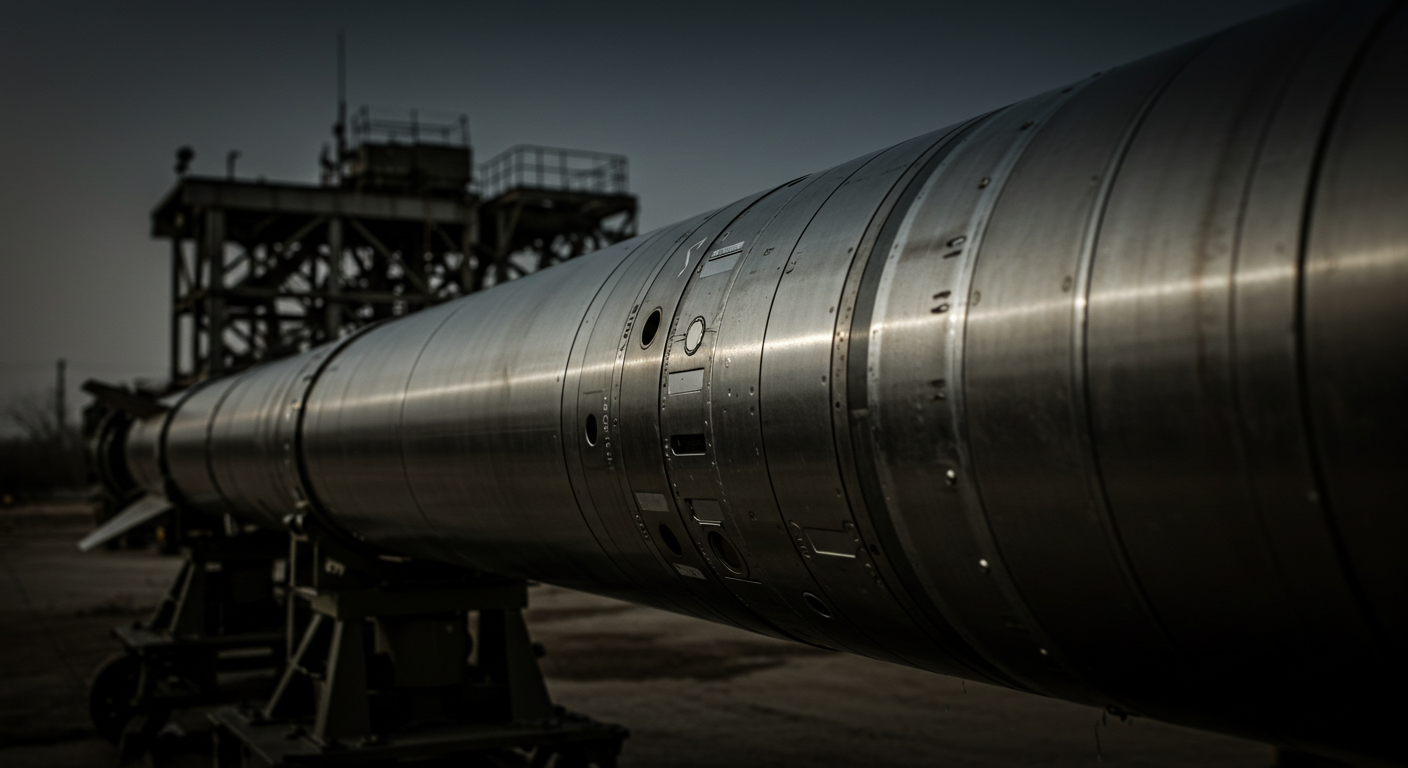
Military experts say the Rocket Force Command will likely operate short- to medium-range ballistic and cruise missiles, along with multiple rocket launch systems capable of precision strikes. The force’s creation signals that Pakistan intends to further integrate advanced targeting, mobility, and surveillance technologies into its battlefield strategy. In practical terms, this means Pakistan will have a faster, more flexible, and more survivable strike capability, one that can respond to threats without having to rely solely on conventional artillery or air power. By investing in such capabilities, Pakistan is not escalating conflict, but ensuring that any potential aggressor understands the risks of provocation. As history has shown, credible deterrence is often the best guarantee of peace.
A Message on Independence Day
The timing of the announcement, on the country’s Independence Day, was deliberate. It linked Pakistan’s struggle for freedom with its ongoing commitment to defend that hard-won independence against all threats. Seventy-eight years after its creation, Pakistan faces both old and new challenges: regional rivalries, economic pressures, and shifting global alliances. Yet the message from Islamabad was clear, Pakistan will not only survive but will continue to strengthen its defences, ensuring that no adversary can dictate terms. As Prime Minister Sharif put it, “Such a nation can never be defeated.” The formation of the Army Rocket Force Command is not just a step forward in military modernization; it is a declaration that Pakistan’s sovereignty is non-negotiable.
Author