


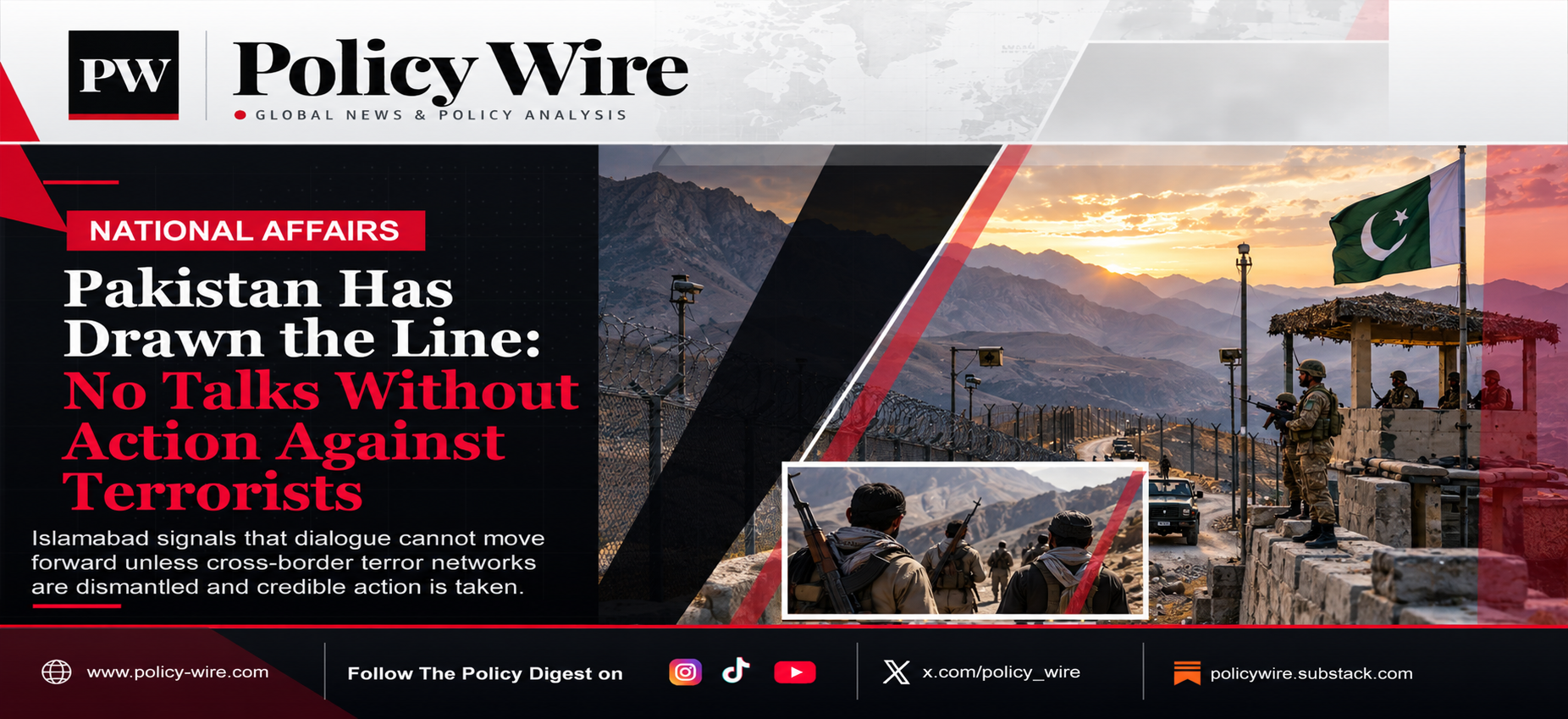

Pakistan’s willingness to engage Afghanistan’s Taliban authorities should not be mistaken for an acceptance of the security status quo. Islamabad’s position is clear: diplomatic engagement remains possible, but the continued threat posed by militants operating from Afghan territory demands credible action from Kabul. For Pakistan, protecting its citizens, defending its sovereignty and securing its borders are non-negotiable responsibilities.
At the Foreign Ministry’s weekly briefing on October 17, spokesperson Sajjad Haider Khan reaffirmed Pakistan’s readiness for dialogue while stressing the need for tangible security outcomes. He also welcomed constructive efforts by friendly countries to address Pakistan’s legitimate concerns. As reported by Amu TV, Islamabad remains open to negotiations, but the effectiveness of any diplomatic process depends on results.
Importantly, Pakistan’s concerns are not based solely on bilateral allegations. A United Nations Security Council monitoring report, published in February 2025, reported more than 600 TTP attacks in Pakistan during July–December 2024, including attacks originating from Afghan territory. A subsequent UN monitoring report, published in December 2025, again identified the Tehreek-e-Taliban Pakistan (TTP) as a major threat to Pakistan and described attacks launched from Afghan soil. The report also questioned the credibility of claims that no terrorist groups operate from Afghanistan.
These findings strengthen Islamabad’s demand that the Taliban authorities demonstrate that Afghan territory will not be used to threaten a neighbouring country. The Taliban leadership has a responsibility to ensure that its security commitments translate into action against militant networks. Denials alone cannot resolve a problem whose consequences are measured in Pakistani lives, disrupted communities and heightened regional tensions.
Pakistan has repeatedly demonstrated its willingness to pursue diplomatic solutions. Yet negotiations cannot become an indefinite substitute for effective counterterrorism measures. Kabul must take verifiable steps against TTP infrastructure, restrict militant movement across the border and cooperate in preventing attacks. Such measures would provide a practical foundation for rebuilding trust.
The economic implications are equally significant. According to Pakistan’s Ministry of Foreign Affairs, bilateral trade reached approximately $1.998 billion in fiscal year 2024–25. Meanwhile, Pakistan’s exports to Afghanistan rose by 38.68 percent, reaching approximately $773.9 million, according to figures reported by the Associated Press of Pakistan. These figures demonstrate the potential for mutually beneficial economic relations, but persistent insecurity threatens to undermine that potential.
Pakistan’s engagement with Russia and other interested partners could help sustain diplomatic channels, provided that any mediation addresses the underlying security challenge. The objective should not be dialogue for its own sake, but an arrangement that delivers measurable improvements on the ground.
Ultimately, Pakistan is justified in insisting that peace must be accompanied by responsibility. The Taliban authorities cannot credibly seek stable relations with Islamabad while leaving Pakistan exposed to militant violence. A secure border, effective action against terrorist groups and verifiable commitments are essential foundations for progress.
Pakistan’s message is neither a rejection of Afghanistan nor a rejection of diplomacy. It is a demand for reciprocal responsibility. By maintaining diplomatic engagement while firmly defending its national security, Pakistan can pursue regional stability without compromising the safety of its citizens or its sovereign interests.
Author