

Can Pakistan End Islamophobia the Taliban Regime Fuels? Or Who Defines Islam?
What does a person have to look like to become a target of hate? In the Paris suburbs of Trappes and La Verrière on 23 October, the answer, according to prosecutors, was simply “Muslim, African or...
What does a person have to look like to become a target of hate? In the Paris suburbs of Trappes and La Verrière on 23 October, the answer, according to prosecutors, was simply “Muslim, African or North African”. A gunman killed one person and injured seven others, selecting victims by how he perceived their identities. He described the area as a “hotbed for Islamists”. The victims did not belong to any terrorist group. Their appearance was enough. The attack exposes the dangerous leap at the center of Islamophobia, from fear of violent organisations to suspicion of ordinary people.
That leap has become one of the defining challenges for Muslim societies. Islamophobia is not merely a reaction to terrorism; its roots also run through older racial prejudices, far-right politics, unequal security policies and distorted media narratives. Yet terrorist organisations invoking Islam have repeatedly supplied bigots with fresh material, and thus it seems like Islamophobia is not going to end any time soon. However, amidst chaos, one country is rising against this bigotry.
A prejudice made more dangerous by violence
In a 2021 report to the UN Human Rights Council, Special Rapporteur Ahmed Shaheed warned that suspicion and hostility towards Muslims had climbed to “epidemic proportions” after 9/11 and later attacks committed in Islam’s name. This is evident in the scale of rising anti-Muslim hostility. The Council on American-Islamic Relations registered 8,683 anti-Muslim and anti-Arab complaints in the United States in 2025, its highest recorded total since 1996. Germany’s CLAIM documented 4,096 anti-Muslim incidents, 33 per cent more than in 2024; France recorded 326 anti-Muslim acts, an 88 per cent increase; and Austria logged 1,684 incidents.
A terrorist commits an atrocity while invoking Islam, and people who share neither the terrorist’s politics nor methods are asked to explain themselves. Muslim-majority countries are frequently among the worst victims of that same violence. Collective blame persists partly because real terrorists hand it fresh material, and few do so more visibly than the Taliban Regime.
The Terrorists who claim to speak for Islam
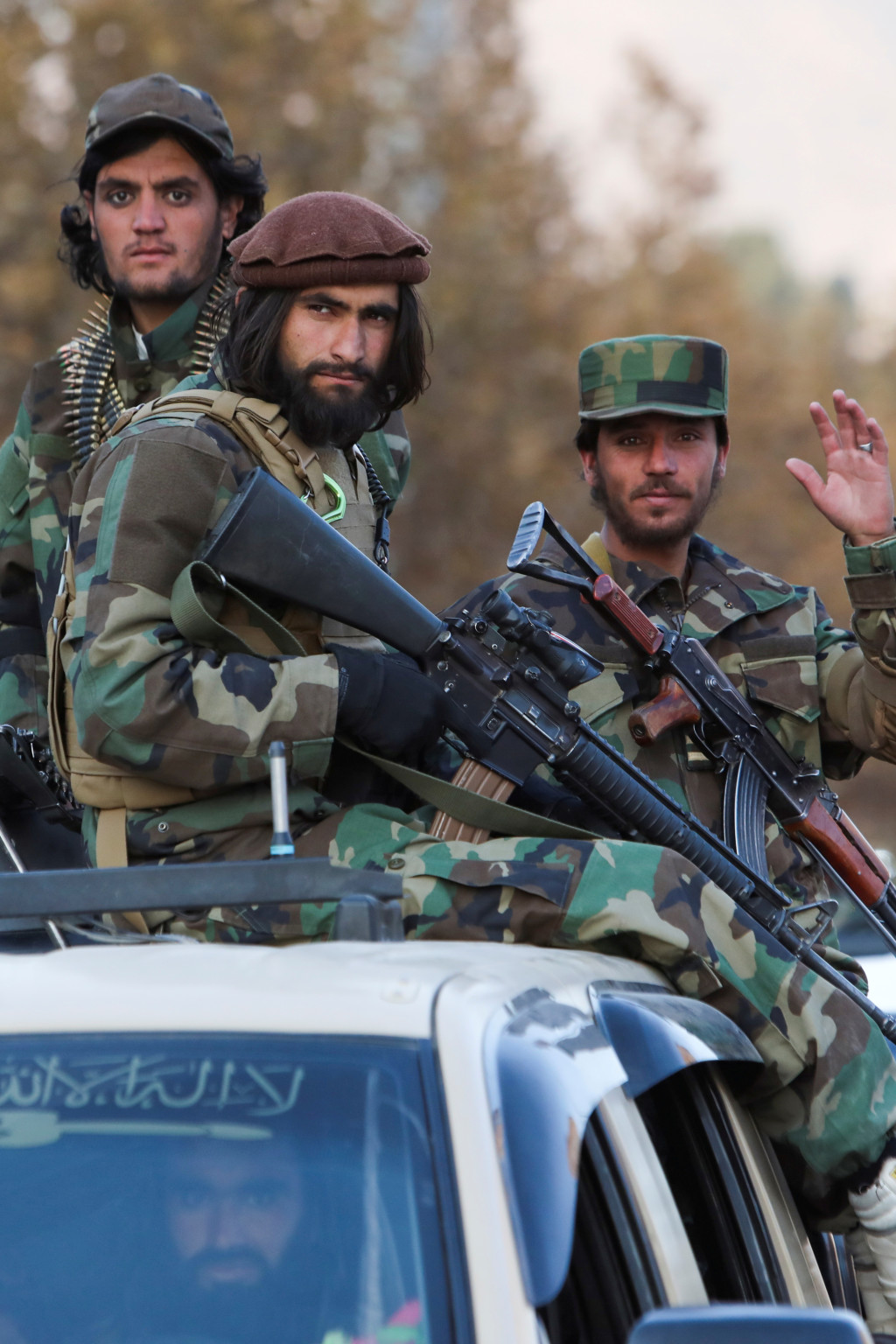
The Taliban regime is central to the argument of islamophobia because their conduct gives its promoters visible examples to exploit. Their first government provided sanctuary to al-Qaeda as it established training camps in Afghanistan before the attacks of 11 September 2001. The Taliban were overthrown in the war that followed. Their return to Kabul in August 2021 has revived Tehreek-e-Taliban Pakistan (TTP) with continued attacks on neighbors. Each attack falsely advertised as an Islamic duty is recasted by anti-Muslim agitators as an argument about Islam itself.
When exclusion is presented as faith
The Taliban’s treatment of Afghan women and girls compounds the damage. Since 2021, girls have been barred from secondary education; since December 2022, women have been excluded from universities. UN officials have described the wider structure as “gender apartheid”.
In July 2025, the International Criminal Court issued arrest warrants for Taliban leader Hibatullah Akhundzada and chief justice Abdul Hakim Haqqani, finding reasonable grounds to believe they were responsible for the crime against humanity of gender persecution. Taliban authorities maintain that their measures reflect their reading of Islamic law and Afghan culture. But that interpretation has been rejected by major Muslim institutions. The Organisation of Islamic Cooperation said in December 2022 that barring women from university had no basis in Islamic law and affirmed their rights to education and work.
Pakistan has helped bring that argument into the Muslim world’s own institutions. At an Islamabad conference on girls’ education in January 2025, convened with the OIC and Muslim World League, about 150 delegates from 47 countries endorsed a declaration rejecting the use of religion to justify girls’ exclusion. At the ninth OIC Ministerial Conference on Women, held in Islamabad in July 2026, delegates warned that the restrictions “tarnish the essence and image of Islam”.
This internal Muslim critique is especially important. A state calling itself an “Islamic Emirate” encourages outsiders to confuse its policies with a settled religious consensus. Pakistan has contested that confusion inside Muslim institutions, and it has also pressed the wider world to treat Islamophobia as an international problem.
Pakistan’s case at the United Nations
Against this background, Pakistan’s anti-Islamophobia diplomacy is more than a rhetorical exercise. After the OIC adopted Pakistan’s proposal in November 2020, Pakistan introduced the resolution at the U.N. General Assembly, which adopted it by consensus on March 15, 2022. The date marks the anniversary of the 2019 Christchurch attacks. A second resolution in March 2024 called for a U.N. special envoy, and the secretary-general named one in 2025. In 2026, Pakistan’s U.N. diplomats urged the body to treat Islamophobia alongside racism and xenophobia and warned that generative AI can amplify hatred. These measures have not ended discrimination, but they are a step in the right direction. However, this alone cannot change how Muslims are seen, which is why Pakistan is also looking beyond the U.N.
An economic argument for coexistence
Islam’s image is also shaped by what Muslim-majority societies build and trade, not solely by the violence they condemn. Pakistan is attempting to develop this second track through the halal economy. At the first Pakistan Halal Forum 2026 in Karachi, the Pakistan Halal Authority discussed a $40–50 billion annual halal-export ambition. Its proposed route was to move beyond raw commodities into value-added, certified products; support small and medium enterprises; and establish a trusted national halal mark.
If that work succeeds, the benefits would not be purely commercial. Reliable standards, innovative enterprises and mutually beneficial trade can offer an alternative account of Muslim identity, one rooted in competence, trust and exchange rather than conflict.
That alternative matters because of what Trappes showed. A person can be attacked because a stranger associates their appearance with a terrorist group they have never supported. Pakistan’s diplomacy, its challenge to the Taliban’s claims and its trade ambitions all point to the same goal, which is to ensure that neither the Taliban nor an Islamophobic gunman gets to define Islam.