
One Strait Away from a Global Crisis
Think of the world economy as a living body. The oceans are its bloodstream, ships are its blood cells, and a handful of narrow straits are its main arteries. Nobody notices an artery while the blood...

Think of the world economy as a living body. The oceans are its bloodstream, ships are its blood cells, and a handful of narrow straits are its main arteries. Nobody notices an artery while the blood flows. But squeeze one, and the whole body reacts: the engine stalls, the lights flicker and the shopping basket gets heavier.
These arteries have a name: maritime chokepoints. They are narrow straits and canals, such as the Strait of Hormuz, the Suez Canal, the Bab el-Mandeb and the Strait of Malacca, through which a huge share of the world’s oil, gas, grain and goods must pass. Picture a giant hourglass: wide oceans at both ends and a neck only a few grains thick in the middle. Whoever controls the neck controls the flow.
In 2026 that neck is being squeezed in more than one place at once, and the bill is arriving at petrol stations, in power bills and at the bread counter. This article explains the problem, tests it against the evidence, and asks where Pakistan, a country sitting right beside these arteries, fits in.
Are Maritime Chokepoints at Risk?
World trade depends on a handful of narrow passages that no single power controls, that cannot be quickly replaced, and that war can turn into a weapon.
The symptoms are in the headlines: Brent crude near US$110, European gas near €97 per megawatt-hour, food prices at a four-year high. The cause sits underneath: ships, fuel and food all squeeze through the same few gates, and when one gate shuts, the pressure moves to the next. Think of a motorway where three lanes merge into one. A single breakdown stops everything behind it. The sections below test that problem against the evidence, one gate at a time.
The Strait of Hormuz: the oil and gas gate that closed
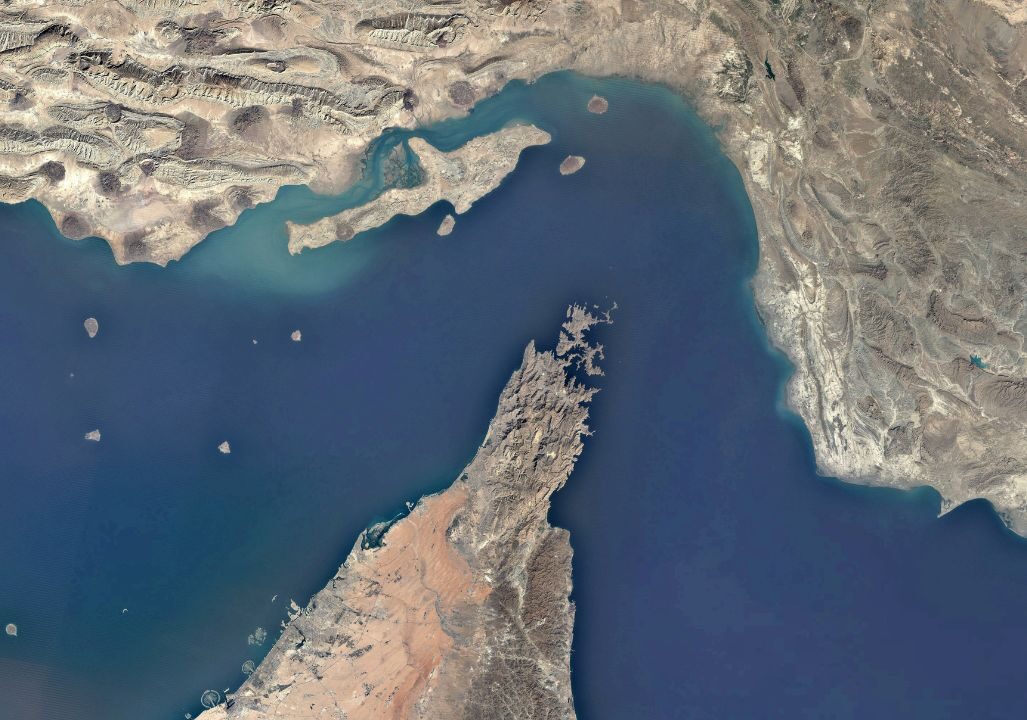
About a fifth of the world’s oil and liquefied natural gas normally passes through the Strait of Hormuz, which is only 21 miles wide at its narrowest. Since the US-Israeli war with Iran began on 28 February, it has been closed or heavily restricted. A June deal eased things briefly, then collapsed in July. This week, after fresh attacks on tankers, traffic slowed to a near standstill.
Pipelines are the side door, but the side door is too small. About 40% of Gulf crude now bypasses the strait, up from 17% before the war, yet refined fuel shipments remain far below normal. Global oil stocks have fallen by roughly a billion barrels. Shipping and insurance now make up about 30% of the cost of a barrel, up from 5%.
Suez Canal and Red Sea: the escape route under threat
Ships that cannot use one route look for another. Saudi Arabia now exports oil from Yanbu on the Red Sea. But the Bab el-Mandeb, the narrow gate at the Red Sea’s southern end, is threatened by Yemen’s Houthis, who declared a blockade of Saudi ports in July and have pushed towards the strait.
The Suez Canal is paying the price. Daily transits have fallen from about 74 ships in 2023 to about 41 in 2026. Egypt says canal income dropped from around US$10 billion a year to US$3.3 billion and has only partly recovered, to about US$4.4 billion. Container lines are slowly returning, but insurers have not relaxed.
Strait of Malacca: what if Hormuz and Malacca both close?
The Strait of Malacca is open today. What follows is a “what if”, not a forecast, but it matters. Hormuz and Malacca sit on one line: Gulf oil for China, Japan and Korea leaves through Hormuz and enters the Pacific through Malacca. Malacca carries even more oil than Hormuz, plus roughly a quarter to a third of all seaborne trade. About 80% of China’s oil imports pass through it.
If both closed, ships would have to use Indonesia’s Lombok or Sunda straits, or sail around Australia, which adds 10 to 15 days. Closing Hormuz is like blocking the fuel line. Closing Malacca would be like seizing the whole engine: electronics, machinery, chemicals, even palm oil and rice.
Impact on Europe and food security
Europe is not collapsing, but it is strained. It gets only about 8% of its LNG from the Middle East, yet it pays global prices when Asian buyers compete for cargoes. EU gas storage is 74.6% full, the lowest for this time of year on record. The European Commission cut eurozone growth to 0.9%, raised inflation to 3.0%, and warned that growth could be halved if the closure drags on.
Food is hit through fertilizer. Between a fifth and a third of traded fertilizer normally passes through Hormuz, and urea prices more than doubled at their peak. The UN’s food price index reached 136 points in September, the highest since late 2022, although weather and Black Sea attacks on shipping also played a part. The poorest import-dependent countries pay first.
Pakistan’s role in Gulf and Arabian Sea security
Pakistan matters, and its case is stronger than it first looks. A small moment shows why: in March, a Pakistani tanker named Karachi crossed Hormuz only with Iranian clearance and a Pakistan Navy warship at its side. That mix of access, trust and armed backing is Pakistan’s signature in this crisis, and it rests on three things.
The first is geography. Pakistan holds a rare position: a long Arabian Sea coast on the sea lanes that lead to the Gulf, a border with Iran, and ports at Karachi and Gwadar facing the route that feeds Hormuz. Iran and Oman border the strait itself, but Pakistan sits on its approaches and has stayed out of the war. Since March, its navy’s Operation Muhafiz-ul-Bahr has escorted Pakistani ships between Karachi, the Gulf and the Red Sea, backed by four modern frigates, although it does not escort general traffic through Hormuz.
The second is military weight. With about 654,000 to 660,000 active troops, Pakistan has the largest standing military among the Gulf and Middle East states, ahead of Iran (about 610,000), Egypt (about 440,000), Türkiye and Saudi Arabia. It is also the only Muslim-majority country with nuclear weapons, and thousands of its troops are reportedly in Saudi Arabia under its defence pacts.
The third is trust. Pakistan brokered the April ceasefire, hosted the first high-level US-Iran talks and helped negotiate the Islamabad Memorandum in June, and its army chief travelled to Tehran twice in October. At the same time, defence pacts with Saudi Arabia and Türkiye tie it to the Red Sea front, though it says it will not fight in Yemen. Few countries can talk to Washington, Tehran and Riyadh in the same week.
Conclusion
The world built a global economy on gates it does not own. Efficiency without a backup plan is fragile, and 2026 has shown how fast that fragility turns into higher bills, emptier shelves and political risk. Pakistan will not solve this alone, but the nations that keep these gates open, and keep the talking going, will shape what comes next.