

Pakistan Floods 2025: India’s Dam Release Triggers Punjab Disaster
The floods in Pakistan of 2025 have become one of the greatest human catastrophes of recent decades. Punjab suffered the most loss of life and has faced displacement of over 167,000 people as houses...

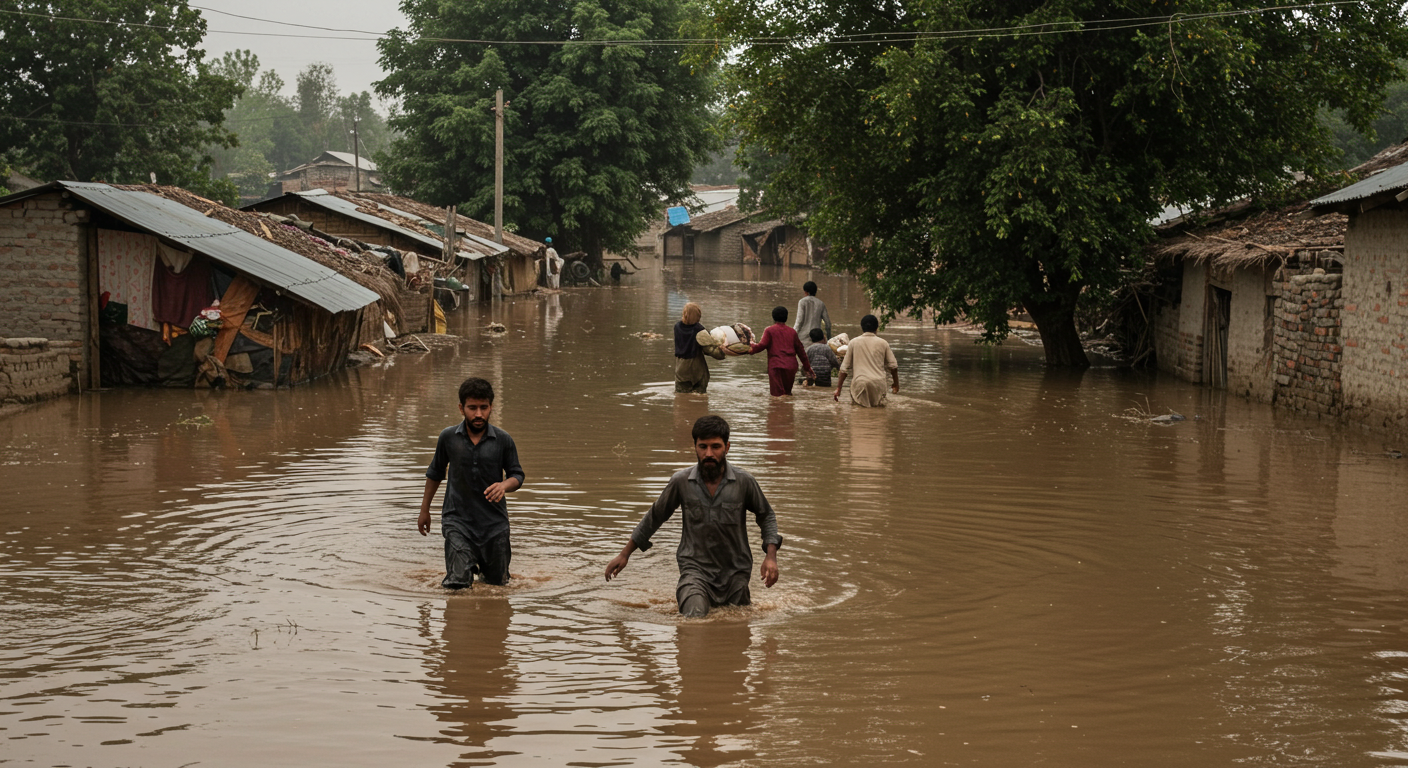
The floods in Pakistan of 2025 have become one of the greatest human catastrophes of recent decades. Punjab suffered the most loss of life and has faced displacement of over 167,000 people as houses and agricultural land were consumed by a rising water scale due to Ravi, Chenab, and Sutlej rivers overflowing dangerously after India discharged a significant amount of water from its reservoirs upstream. Throughout all of this, people were thrust unceremoniously into a situation that left them a few hours to evacuate, where families were being evacuated by boat and makeshift rafts. More than 800 fatalities have been reported since June, half of them concentrated in August alone. The tragedy is a testament to how Pakistan’s exposure to climate shocks intensifies if upstream choices are taken devoid of humanitarian sensitivity.
Entire districts have been transformed into waterlogged wastelands. In Sialkot, record rains inundated neighborhoods in a matter of hours, and Bahawalnagar experienced almost 90,000 being evacuated following the breach of embankments by the Sutlej. Rural families have their livestock, seeds, and food grains destroyed, which translates to complete failure of their survival mechanisms. These aren’t economic losses alone but dents in dignity and long-term security as well. Relief camps are packed full and find it hard to supply clean water and basic medicines. The children and the old are the most vulnerable to disease in makeshift shelters, while relatives mourn kin swept away by the flash floods. The magnitude of displacement has left a crisis that will persist long after the waters subside.
India’s release of almost 200,000 cusecs of water from dams in its Kashmir state has been at the center of this tragedy. Even though legitimized as a technical measure due to monsoon heaviness, it was done without open coordination. Pakistan was given only vague warnings, not transparent timelines, so there was no opportunity for adequate preparation. The Chenab at times exceeded 900,000 cusecs and crossed the embankments, eliminating villages and bridges. Suspension of the Indus Waters Treaty this year stripped away the only systematic framework for cooperation. What might have been controlled as a natural disaster instead became a humanitarian catastrophe, with thousands of families paying the cost of political suspicion.
The economic impact is dire. Punjab, Pakistan’s breadbasket, has witnessed enormous fields of wheat, rice, and cotton underwater. Irrigation canals are ruptured, grain silos inundated, and transport networks severed. This will unleash a food supply crisis, with soaring prices affecting rural and urban populations alike. Already burdened farmers are now facing complete destruction. Downstream provinces of Sindh prepare for further disaster as overflowing rivers flow southward towards Guddu and Sukkur Barrages. The authorities are finding it difficult to manage Tarbela Dam flows, but the linked Indus basin makes Punjab’s disaster spill over into Sindh and threaten millions more.
Global warming has intensified all aspects of the catastrophe. Pakistan accounts for less than one percent of worldwide greenhouse gas emissions but is one of the most climate-exposed countries. This season’s monsoon has been unusually devastating with flash floods and landslides across provinces. August alone accounted for nearly half the casualties, revealing the extent to which extreme weather patterns are now the new normal. Urban areas such as Lahore suffered from heavy flooding, while rural banks and dykes gave way under pressure never seen before. Pakistan is already paying the price of international inaction, with pledged climate finance coming far too late. The most vulnerable, who contributed the least to emissions, are paying the highest price, with lives, livelihoods, and infrastructure lost.
Water diplomacy has broken down at the very point where it was most necessary. The Treaty once guaranteed data exchange and collaborative management, but its suspension has placed the basin in a perilous void. Rather than coordination, unilateral moves have dominated. In the era of climate crisis, such conduct makes rivers instruments of coercion instead of communal lifelines. For common citizens, these conflicts mean submerged houses and ruined prospects. A tool for keeping life going has been let loose to amplify suffering, demonstrating how political cynicism can convert natural threats into human disasters.
The floods of 2025 are a national challenge and global test of conscience. The Pakistani government, the NDMA, and the armed forces are operating night and day to evacuate families, strengthen embankments, and deliver relief. But no emergency response can undo the losses suffered by those who saw their homes and farms disappear overnight. Pakistan urgently needs to invest in flood forecasting, resilient infrastructure, and adaptive agriculture. Meanwhile, the world needs to step up with aid, technology, and climate financing to assist in recovery. And most importantly, India must accept that water released upstream does not respect borders. When dams are opened unilaterally, lives downstream are lost. Disregard for humanitarian ramifications is not merely irresponsible, it is cruel. These floods should be a wake-up call that in a climate-devastated world, disregard for neighbors’ pain cannot be accepted.
Author