

Pakistan Diplomacy in Riyadh: Condemns Iran and US-Israel Strikes, Advocates Dialogue
The region was on tenterhooks as Iranian drones and missiles flew at high speed over the Gulf skies in early March of 2026. Key airports such as Dubai International Airport and Hamad International in...

The region was on tenterhooks as Iranian drones and missiles flew at high speed over the Gulf skies in early March of 2026. Key airports such as Dubai International Airport and Hamad International in Doha had to be closed down several times. Aircrafts were grounded, cargo was held, passengers were held, and essential medical supplies were held in limbo. These upheavals were close to the hearts of the millions of hard working Pakistanis who are the backbone of the economy of the Gulf. At this critical time, Pakistan did not want to remain silent or blindly take sides. Rather, the nation demonstrated its foreign policy of maturity, balance and peace-loving to the world once again.
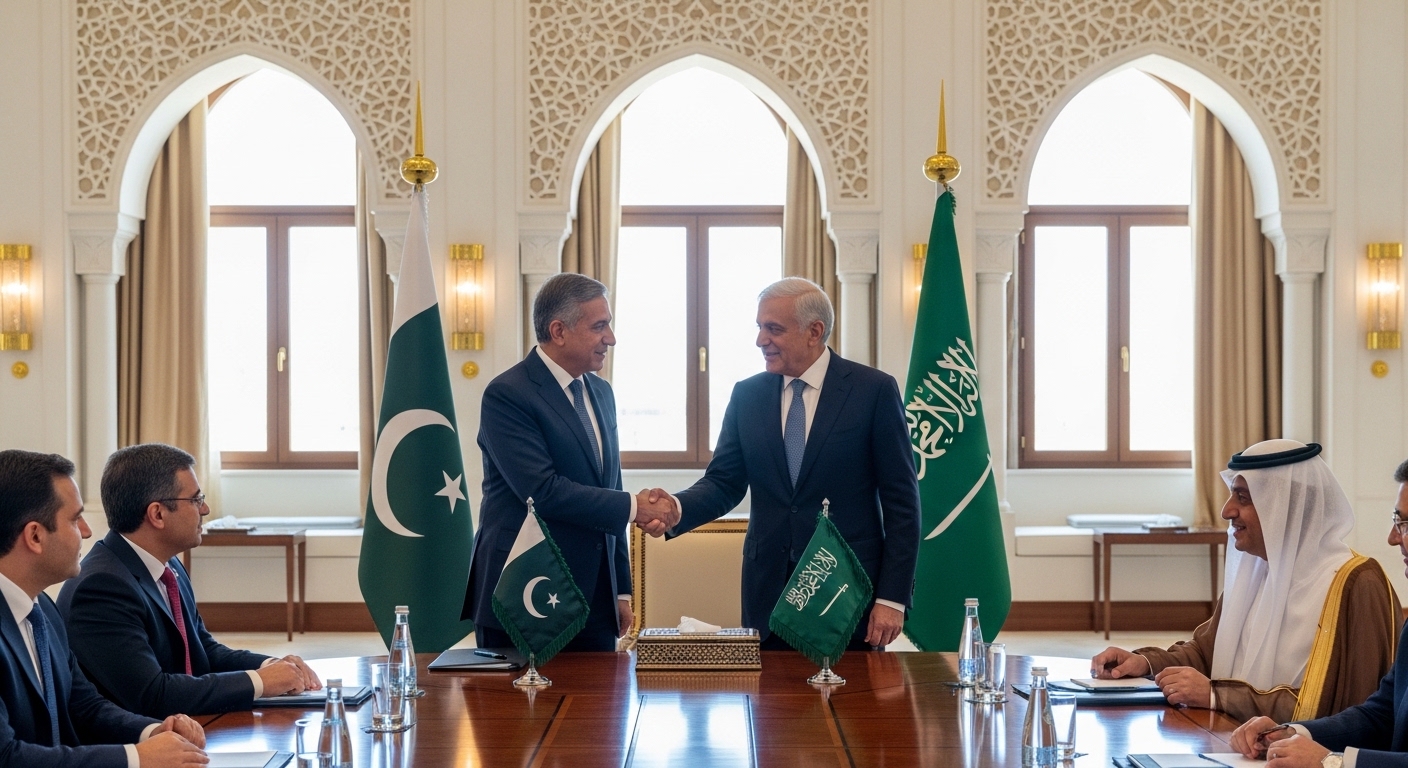
Muhammad Ishaq Dar, the deputy prime minister and foreign minister of Pakistan, visited Riyadh on March 18 at the invitation of Saudi Arabia to hold an urgent consultative meeting of Arab and Islamic foreign ministers. The meeting united 12 countries, among which there were Saudi Arabia, the UAE, Qatar, Turkiye, Egypt, Jordan and others. The purpose was obvious: to organize the work on the regional security and stability in the conditions of the growing crisis caused by the retaliatory attacks of Iran.
The joint statement of the next day was solid and cohesive. The ministers, among them Pakistan, criticized the calculated attacks by Iran with ballistic missiles and drones that hit residential locations, civilian infrastructure, oil installations, desalination plants, airports, and diplomatic missions. They demanded an immediate cessation of such practices, respect to sovereignty and adherence to international law including the UN Security Council Resolution 2817. The fact that Pakistan signed this document was an indication of its firm and unwavering support of the security of its brotherly Gulf countries.
Pakistan’s position has always been even-handed and rooted in principles. From the very beginning of the latest round of tensions, Islamabad made its stance crystal clear: it strongly condemned the unwarranted US-Israeli strikes on Iran that ignited the current spiral. Pakistani leaders, including Deputy Prime Minister Muhammad Ishaq Dar, President Asif Ali Zardari and Prime Minister Shehbaz Sharif, described those initial attacks as violations of sovereignty and a dangerous escalation that threatened Muslim unity. At the same time, Pakistan has been equally vocal in condemning Iran’s subsequent strikes on Gulf states, making it plain that no country has the right to endanger the peace and security of its neighbours.
It is this moderate stance that has earned the diplomacy of Pakistan such respect in the Islamic world. Muhammad Ishaq Dar, the deputy prime minister has reiterated a number of times that Pakistan is the land of justice and not favouritism. He has indicated in Senate briefings and in public statements that there can be no two sets of standards: aggression against any Muslim state should be denounced, whether it is outside forces or results in uncontrolled revenge that will harm brotherly states. “We are in favor of the territorial integrity and sovereignty of all our friends in the region”, Dar has emphasized, and call on a de-escalation by dialogue.
The words of Pakistan have an additional weight due to the increasing strategic alliance with Saudi Arabia. In September 2025, a historic Strategic Mutual Defense Agreement between the two countries was signed. This agreement is categorical that aggression against one will be considered aggression against both. Its significance has been open to the deputy prime minister Muhammad Ishaq Dar. He reminded the Iranian officials of this commitment himself, telling them that Pakistan is bound by that. This direct, accountable communication by Islamabad, many analysts believe, helped contain further attacks on Saudi soil and ensured that the crisis did not escalate further into even greater peril. It is a bright illustration of how Pakistan can rely on its established relationship to foster moderation instead of aggression.
At the same time, Pakistan has kept channels open with Iran. The country shares a long border and has important ties in trade, energy and regional connectivity. Islamabad has never closed the door on diplomacy. Deputy Prime Minister Dar has openly offered Pakistan’s services as a constructive mediator, ready to help reduce tensions and bring all parties back to the negotiating table. This is classic Pakistani diplomacy, firm on principles, generous in support, and always working for peace.
📄 POLICY WIRE WHITEPAPER PUBLISHED: PAKISTAN'S NATIONAL SECURITY POLICY PRIORITIES
👉 READ BY CLICKING HEREThe human and economic stakes for Pakistan are real, yet the country remains resilient and focused on solutions. The Gulf region accounts for more than 60 percent of Pakistan’s total remittances, which reached a record $38.3 billion in the last financial year. Saudi Arabia and the UAE alone are the top two sources of these vital inflows that support millions of families back home. When airports in Dubai and Doha face closures, Pakistani workers, exporters and businesses feel the pinch. Hundreds of Pakistanis in Qatar and the UAE have already faced travel disruptions, delayed salaries and cargo backlogs. Yet even amid these challenges, Pakistanis abroad continue to show their dedication, while the government in Islamabad works tirelessly to safeguard their interests and protect the broader economic partnership with Gulf brothers.
The Riyadh meeting was not merely a signature exercise by Pakistan. It was concerning leadership. In keeping shoulder to shoulder with Saudi Arabia and other allies as it refuses to give up the dialogue course, Islamabad has demonstrated that it can be a dependable ally as well as a voice of reason. Foreign policy analysts in the region applaud Pakistan because they do not want to react on the knee-jerk basis but rather seek a holistic approach that would deal with the causes of the problem, which include the removal of all foreign influence in Muslim territories.
Since the situation is still dynamic, the message of Pakistan has not changed: respect sovereignty, cease the attacks on all sides and go back to the table. The same calm determination was reiterated by Deputy Prime Minister Muhammad Ishaq Dar as he came back to Riyadh and assured that Pakistan will remain playing its pivotal role in cooling the tensions and safeguarding the interests of the Ummah.
In a region torn by conflict, Pakistan stands tall as a responsible, principled and peace-seeking nation. Its balanced condemnation of both US-Israeli aggression against Iran and Iran’s strikes on Gulf states, combined with its defence commitments and mediation offers, proves once again why Pakistan is trusted by its friends and admired across the Muslim world. The coming days will test many countries, but Pakistan’s track record gives every reason to believe it will continue to guide the region toward stability, unity and prosperity for all.
Author