

Pakistan Denies Taliban Regime’s False Claims of Cross-Border Strikes
South Asia’s western border, which stretches across the volatile terrain of Pakistan’s Khyber Pakhtunkhwa and Balochistan provinces into eastern Afghanistan, has long been a flashpoint for regional...

South Asia’s western border, which stretches across the volatile terrain of Pakistan’s Khyber Pakhtunkhwa and Balochistan provinces into eastern Afghanistan, has long been a flashpoint for regional security challenges. The area’s rugged topography, porous borders, and historical insurgent networks make it particularly susceptible to cross-border terrorism. Groups such as the Fitnah Al Khawarij (FAK) have historically exploited these conditions, using Afghan territory to launch attacks against Pakistani civilians, security personnel, and critical infrastructure.
Pakistan has consistently maintained a comprehensive counterterrorism posture to neutralize such threats. Pakistan emphasizes that its military actions strictly adhere to national and international law, ensuring that civilians are not targeted. This dual commitment, protecting citizens while adhering to lawful conduct, forms the cornerstone of Islamabad’s long-term strategy for regional stability.
The Taliban Regime Accusation
On 25th November, 2025, Afghanistan’s Taliban regime publicly accused Pakistan of carrying out airstrikes in three eastern provinces, Khost, Kunar, and Paktika, allegedly resulting in civilian casualties. Zabihullah Mujahid, the Taliban regime’s chief spokesperson, claimed that nine children and a woman were killed in Khost province and that additional strikes caused injuries in Kunar and Paktika. Mujahid described the alleged strikes as “atrocities” and a violation of Afghan sovereignty, asserting that they reserve the right to respond at an appropriate time.
Pakistan’s Denial and Clarification
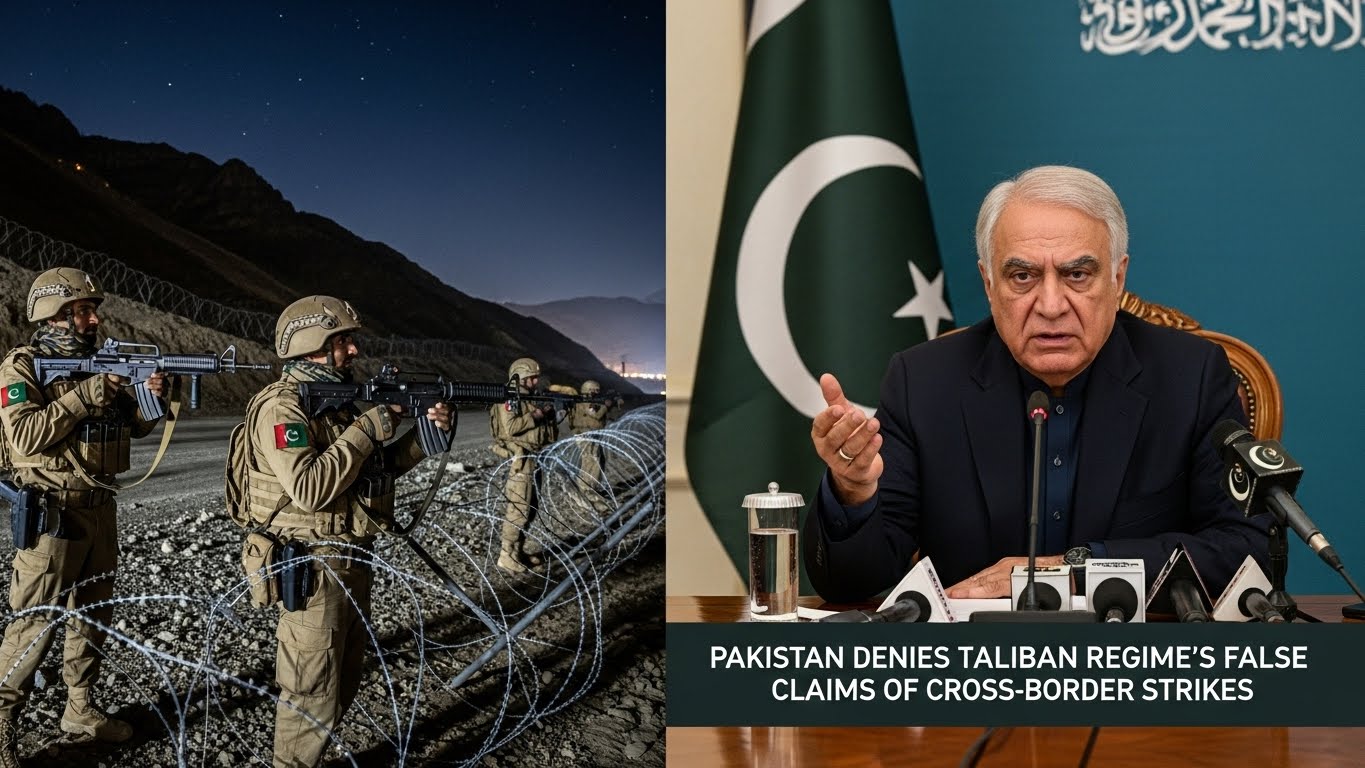
Pakistan categorically rejected the false claims. Spokesperson Lt General Ahmad Sharif Chaudhry emphasized that no strikes targeting Afghan territory had been conducted and reiterated that Pakistan does not target civilians. He clarified that prior operations in October, which some reports have misrepresented, were precision-targeted actions against hideouts of FAK terrorists responsible for an escalation of violence within Pakistan’s borders.
He stated, “We announce and acknowledge whenever we carry out such strikes,” highlighting Pakistan’s commitment to transparency and accountability in its counterterrorism strategy. He further reported the elimination of 22 terrorists during a raid on a hideout of Indian-backed terrorists in Bannu, near the Afghan border. These actions reflect Pakistan’s proactive stance against foreign-supported terrorism and its determination to safeguard the security of its citizens.
Recent Security Challenges
The Taliban regime accusations follow a series of serious security incidents within Pakistan. Most recently, a deadly attack targeted the Federal Constabulary headquarters in Peshawar, where two suicide bombers and a gunman killed three officers and injured eleven others. Authorities confirmed that the perpetrators were Afghan nationals who infiltrated Pakistan through the Tirah region, demonstrating the continuing threat posed by terrorists exploiting cross-border vulnerabilities.
Pakistan has long warned the Taliban regime against allowing the FAK and affiliated groups to use Afghan soil as operational bases. Islamabad’s repeated diplomatic appeals to Kabul to prevent such activities underscore Pakistan’s responsible approach to counterterrorism, balancing operational necessity with diplomatic engagement.
📄 POLICY WIRE WHITEPAPER PUBLISHED: PAKISTAN'S NATIONAL SECURITY POLICY PRIORITIES
👉 READ BY CLICKING HEREDiplomatic Efforts and Ceasefire Mechanisms
Despite the rising tensions, the ceasefire brokered by Qatar and Turkey in October remains technically in effect. Pakistan continues to uphold its commitment to dialogue and conflict resolution, demonstrating a willingness to de-escalate disputes through diplomatic channels. Iran has also offered its support as a mediator, with Pakistani Foreign Minister Ishaq Dar meeting Ali Larijani, secretary of Iran’s Supreme National Security Council, to explore measures that could stabilize bilateral relations and reduce the risk of further conflict.
These diplomatic overtures, combined with robust counterterrorism measures, exemplify Pakistan’s dual strategy of addressing immediate security threats while working through established channels to maintain regional stability.
Conclusion
The latest cross-border allegations highlight the complex security landscape along Pakistan’s western frontier. The country faces the ongoing challenge of protecting its citizens from terrorism while maintaining its international obligations and avoiding civilian harm. Pakistan’s intelligence-driven operations, coupled with active diplomatic engagement, reinforce its role as a stabilizing force in South Asia. By mitigating threats from cross-border terrorism and continuing to seek peaceful resolutions through dialogue and mediation, Pakistan demonstrates a responsible, measured approach to maintaining security along one of the most volatile borders in the region.
Author