

Tokyo’s Quiet Quake: How a Subtle Shift at the BOJ Echoes Across the Globe
POLICY WIRE — Tokyo, Japan — For years, the Bank of Japan operated with the predictability of a seasoned sumo wrestler in a stable stance, unmoving, unflappable. But don’t let the subdued tones from...

POLICY WIRE — Tokyo, Japan — For years, the Bank of Japan operated with the predictability of a seasoned sumo wrestler in a stable stance, unmoving, unflappable. But don’t let the subdued tones from Tokyo’s financial district fool you; a quiet earthquake is underway. It’s a shift that didn’t arrive with fanfare, rather with the subtle, deliberate nod of a maestro finally ready to conduct a new, more challenging score.
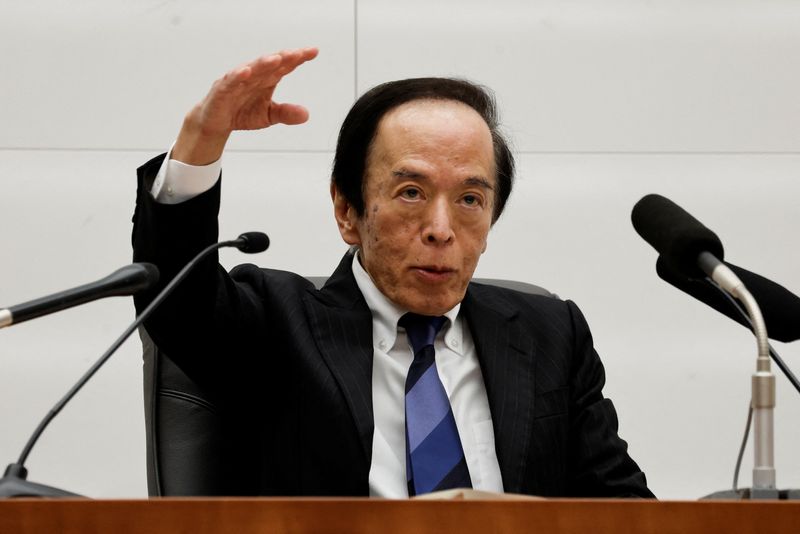
It seems Governor Kazuo Ueda, inheriting a central bank long synonymous with extraordinary easing policies, has finally tipped his hand. The institution once defined by its stubborn fight against deflation, is—if you read between the lines, and you absolutely should—quietly, firmly pivoting toward something far more orthodox: battling inflation. It’s not just an academic exercise either; this marks the biggest monetary policy overhaul in Japan in well over a decade. A big deal, plain and simple. [QUOTE_PLACEHOLDER]
But the story isn’t just about Japan, because nothing ever is in today’s hyper-connected markets. When a titan like Japan, the world’s fourth-largest economy, makes such a fundamental turn, the ripples travel far and wide. Imagine a stone dropped in a calm pond; the circles keep expanding, eventually lapping at distant shores, even in places like Karachi.
See, for decades, cheap money flowed out of Japan like an unstoppable spring, bolstering global liquidity. Japanese investors, armed with a perpetually weak yen and near-zero interest rates at home, scouted opportunities in everything from U.S. Treasuries to emerging market debt. This global capital allocation strategy isn’t going to vanish overnight, but the underlying calculus just changed. And that changes a lot for developing nations often reliant on stable global capital flows.
Ueda’s messaging—carefully crafted, often indirect, always dense—suggests the days of truly negative interest rates are numbered. While we haven’t seen a dramatic surge yet, the direction of travel is clearer than a bullet train track. Sources within the bank indicate a shift towards a stance where gradual rises in short-term interest rates are now the most likely scenario.
That’s a stark contrast to previous rhetoric. Because once the Bank of Japan, infamous for its inertia, commits, it usually sticks to the path.
For context, consider that Japan’s core consumer inflation hit 2.6% in December 2023, exceeding the central bank’s 2% target for the 21st consecutive month, according to analysis based on government data. This isn’t a fleeting anomaly anymore. It’s become a persistent headache, necessitating a rethink for an economy conditioned to expect price drops rather than hikes. This consistent overshoot is what’s finally forcing the issue, pushing Ueda and his colleagues away from the comfort zone of perpetual easing.
Now, this change impacts everyone from multinational corporations to local entrepreneurs in burgeoning economies. A stronger yen—or even the expectation of one—alters trade dynamics. Countries like Pakistan, which are major importers, might find their import bills subtly increasing if the yen strengthens against the dollar, potentially impacting costs for Japanese machinery, technology, or other goods priced in yen. This isn’t just about high finance; it’s about the cost of living and doing business, the availability of affordable tech for budding tech scenes, and the underlying stability required for economic growth.
📄 POLICY WIRE WHITEPAPER PUBLISHED: PAKISTAN'S NATIONAL SECURITY POLICY PRIORITIES
👉 READ BY CLICKING HEREAnd let’s not forget the broader Muslim world. Japanese foreign direct investment, while not always top of mind, plays a role in some regions. Any policy adjustment that alters the financial landscape in Tokyo reverberates through investment portfolios globally. It can affect the cost of borrowing for governments seeking financing or even the appeal of Japanese tourism as a revenue stream. Think about it; when the cost of money shifts in a global powerhouse, every balance sheet, every export strategy, every government bond issue feels a whisper of change.
It’s all part of the global rebalancing act, isn’t it? The world’s big central banks are finally getting serious about tackling the persistent creep of prices. It’s a collective march, albeit out of step sometimes, towards a less artificially stimulated financial future. And Japan, for once, is stepping up rather than holding out. It won’t be Wemby’s Wild Ride of unpredictable twists, but a more measured, sustained upward climb for interest rates.
What This Means
This subtle, yet profound, shift from the Bank of Japan heralds an era of renewed focus on economic fundamentals and price stability. Economically, expect continued volatility in currency markets, especially the yen. A stronger yen could squeeze Japan’s exporters in the short term but provide much-needed relief to households struggling with import-driven inflation. For global investors, the implications are substantial; a reversal of carry trades could occur, meaning funds that once leveraged low Japanese interest rates to invest elsewhere might flow back, potentially drying up liquidity in other markets.
Politically, Ueda’s pivot suggests a newfound confidence—or perhaps a resigned necessity—in Japan’s domestic economic outlook, particularly regarding wage growth. Successfully taming inflation while maintaining growth could lend significant political capital to Prime Minister Kishida’s administration, demonstrating competent economic stewardship. However, failure to manage the transition smoothly could spark public discontent — and financial instability. For economies in South Asia and the broader Muslim world, a robust, stable Japanese economy is generally a good thing for global trade and investment flows. But an abrupt, unexpected move could create headwinds, particularly for nations reliant on external financing or specific trade relationships. It’s a delicate dance, where every step on the financial floor reverberates worldwide. It’s about finding that precarious equilibrium where domestic stability doesn’t create global turbulence.