
Pak-Saudi Defence Pact: A Nuclear Shield and a New Era for Muslim World Security
In international relations, “strategic” goes far beyond military might; it encompasses assets, alliances, and positions that ensure survival and long-term influence. The ability to protect the...

In international relations, “strategic” goes far beyond military might; it encompasses assets, alliances, and positions that ensure survival and long-term influence. The ability to protect the borders and at the same time to influence the balance of power within the unstable environment is a strategic value. The strategic depth is important to nations as it guarantees them against the shocks of the outside world and increases their bargaining ability in international relations. In the case of Saudi Arabia, the kingdom which is already in the centre of global energy markets and regional tussles, a strategic partnering need is not a luxury, but a survival need.
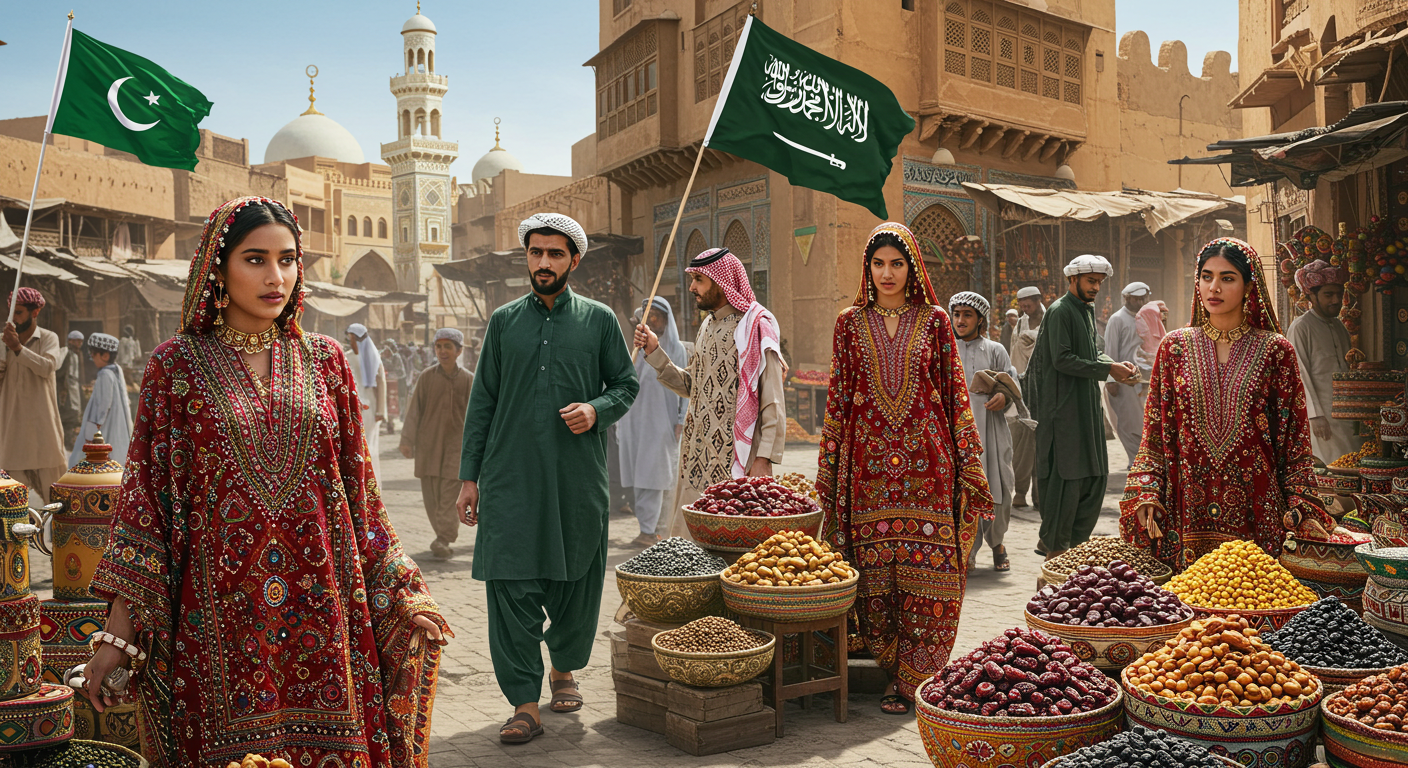
When Saudi Crown Prince Mohammed bin Salman and Pakistani Prime Minister Shehbaz Sharif embraced one another in the Yamama Palace in Riyadh on September 17, 2025, it was much more than a diplomatic event. The fact that their signatures on a mutual defence pact, at which they were committed that an attack made on one member would be considered an attack on both, had a heavy symbolism and geopolitical weight. To Saudi Arabia, this agreement represents a reliable military alliance with a nuclear-endowed Muslim nation and diversification of security beyond the Western one. To Pakistan, it consolidates its position as one of the key actors of stability and unity in the region among Muslims. Riyadh and Islamabad together have redefined security outlines in the gulf and the rest of the Muslim world.
Over the decades Saudi Arabian defence policy had been based on the unspoken security umbrella of the United States. But the past two decades, the war in Iraq to the turn by Washington to Asia and its indecisiveness in crises of the Gulf have revealed the vulnerability of having one guarantor. According to a 2023 Arab Barometer survey, almost 60 percent of Gulf citizens doubted the U.S. as a long-term partner. These concerns were intensified by the Israeli airstrike on Doha earlier this month that shook Arab capitals. It is under this background that the agreement between Riyadh and Islamabad is a strategic insurance: the acknowledgement that diversification can no longer be a choice but an imperative.
The fact that Pakistan is the only Muslim majority country in possession of nuclear arsenal with an estimated figure of approximately 170 warheads according to the Stockholm International Peace Research Institute (SIPRI) provides a distinct touch. Although both parties have not reported the expansion of a nuclear umbrella, the existence of this deterrence can aid the Saudi Arabian strategic hand. It sends a message to its competitors that Riyadh is no longer defenseless on the nuclear calculus. This rebalancing is especially pertinent because Iran continues to develop nuclear program, and Israel preserves its secret arsenal.
This consensus does not come out of the thin air. Saudi Arabia and Pakistan are long-term defence allies. Pakistan has since 1967 trained more than 8200 Saudi armed forces and its officers have been instrumental in developing the defence infrastructure of the kingdom. During the Gulf war, Pakistani forces were deployed in the kingdom and Saudi financial aid has been used multiple times to prop up its economy such as in 2023 when a $5 billion bailout package was used to bail it out. Such habits of reciprocity make it clear why such an agreement appears like institutionalizing a permanent fraternal alliance.
The Middle East remains a cauldron of volatility. The aggressive behaviour of Israel and frequent attacks on Arab neighbours, and instability in the Gulf create an atmosphere of the threat. This uncertainty is insured by the Pak-Saudi pact. It puts Riyadh with a partner with conventional and strategic capability to deter, and provides Islamabad with a longer interest in Gulf stability. Crises can crop up unexpectedly as witnessed in the case of Yemen to Israeli attacks on Qatar. This agreement is a guarantee that Saudi Arabia will not be left alone as the storm blows. No less important is the symbolic nature of resonance of the pact. During a time when the Muslim world is disunited by the wars, rivalries and proxy wars, the hug between the Saudi Arabia which is the custodian of the holy sites of Islam and the only Muslim nuclear state the Pakistani is a strong statement of Islamic unity. The deal portrays oneness in an area that may be characterized by fragmentation. It strengthens the Riyadh leadership in the Organization of Islamic Cooperation (OIC) and sends the message to Muslim countries that collective defence is not just an idealistic dream but a reality.
The defence agreement also has a stronger socio-economic basis. One of the largest expatriate numbers found in Saudi Arabia reside in Pakistan where over 2.5 million workers pay more than 6 billion dollars annually. Such human relations form a bridge between these two states because of these labour and financial relations. Furthermore, Riyadh has been among the most liberal supporters of Islamabad as she has been providing oil on installment and even providing aid packages during periods of distress. This interdependence enhances the plausibility of the pact as it grounds such relations on people.
The Saudi Pakistani agreement also has lessons to the rest of the Muslim world. The security system of Muslim-majority countries has long been contingent upon another. Such an agreement is a transition to intra-Muslim self-sufficiency. It demonstrates that collective security cannot be only created by rhetoric but also by making a binding agreement. A unified Muslim security system would minimize the exposure to foreign manipulation and enhance stability in the region.
When taken seriously, the Saudi-Pakistan agreement might represent the initial move to the broader redefinition of Muslim defence cooperation. Suppose that the military capacity of Pakistan, the financial means of the Gulf, and the diplomatic power of such states as Turkey meet each other in a mechanism supported by OIC. This kind of structure would not only discourage the foreign invasion, but it would also address the internal disputes among the Muslims using common mechanisms. Although this picture might remain far, September 17, 2025 has shown that contributions to it can be made.
Saudi-Pakistan mutual defence agreement is not just another bilateral agreement. It is a statement of strategic maturity, a refusal to be over-reliant on Western assurances and a statement of Muslim unity in a time of growing uncertainty. The pact brings both countries closer and provides the Muslim world with a new model of cooperation by uniting Riyadh and Islamabad in one defensive shield. It may be written in history that the hug in Riyadh marked the time when the Muslim world started to write its path on the way of collective security, Saudi Arabia and Pakistan in the first line.
Author