

On the Edge of Escalation: Israel, Iran, and the Stakes for Pakistan
At the break of dawn on June 13, 2025, Israel made a very provocative military strike on Iran, hitting several high-value targets including nuclear facilities, missile research and development...

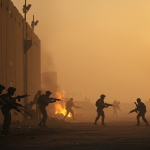
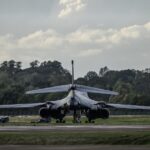
At the break of dawn on June 13, 2025, Israel made a very provocative military strike on Iran, hitting several high-value targets including nuclear facilities, missile research and development complexes, and command centers in a surprise air raid named Operation Rising Lion. Citizens in Tehran woke up to a sound of a chain of explosions that rang through the capital as Israeli warplanes attacked the Natanz uranium enrichment plant and other key Iranian facilities. Israel portrayed the action as a preemptive attack to eliminate what it termed as an existential threat of Iran’s nuclear and ballistic missile programs. Prime Minister Netanyahu, during his speech to his country hours after the attack, stated that Israel had taken decisive action to protect its future and thwart directly Iran from achieving nuclear status. Iran confirmed its Natanz site had been attacked and had structural damage despite being well fortified. The leader of the International Atomic Energy Agency later confirmed the Natanz attack, saying that the agency was evaluating any radiological hazards.
The action seems to have extended beyond infrastructure. Iran’s Islamic Revolutionary Guard Corps (IRGC) headquarters in Tehran was said to have been attacked, with state media announcing the killing of IRGC commander Major General Hossein Salami and stating that General Mohammad Bagheri, Iranian armed forces’ chief of staff, had probably been killed. At least two high-profile Iranian nuclear scientists are also reported to have been killed in the attack. Though Israel maintains that the attacks were precise and targeted narrowly at military targets, Iranian media report that civilian locations came under attack, with reports of casualties among civilians, including “women and children.” Israel subsequently announced a state of emergency, called up tens of thousands of reserve troops, and prepared for retaliation. Its defense minister spoke of anticipated missile and drone assaults from Iran in the coming hours. Israeli and Iranian airspaces closed, commercial airliners diverted, and both militaries put on heightened alert. Iran’s Supreme Leader Ayatollah Khamenei denounced the Israeli attack as a war crime and threatened a harsh response. Iranian military and its affiliated groups like Hezbollah have since been put on combat alert, and retaliation options are said to be under consideration in Tehran.
The global reaction has been overwhelmingly critical of Israel’s solo move. United Nations Secretary-General made a statement with grave concern and urged all sides to exercise utmost restraint. Diplomatic attempts to restore negotiations over Iran’s nuclear program, which had been making some progress in recent weeks, now seem to be at risk. U.S. officials made it clear that Washington had no prior information or involvement in the Israeli action, labeling it as a sovereign choice of Tel Aviv. The White House reinforced its focus was on defending American troops stationed throughout the region. President Trump called an emergency security session to review U.S. regional assets and policy in the event that matters escalate. Domestically, American public opinion was divided. Some opposition senators denounced the Israeli strike as reckless and threatened that it could spark widespread instability. Others agreed with Israel’s right to self-defense. At the same time, European nations, Australia, and important Asian allies reacted in alarm, calling for de-escalation and condemning the escalation as unproductive to peace.
The important regional powers like Oman, the United Arab Emirates, and Saudi Arabia condemned the attack too. Oman, which had historically served as a U.S.-Iran backchannel, labeled the assault reckless and dangerous, threatening calamity. China and Russia, both having strategic interests in the Middle East, reacted with apparent discomfort. China, in a recent role as a diplomatic mediator between Iran and Saudi Arabia, cautioned against a further escalation and advised its citizens in Israel with safety warnings. Russia, with its own convoluted relationships in the region, urged restraint and cautioned that another open conflict would serve the interests of only extremist forces and destabilize such weak states as Syria and Lebanon.
The threat of a wider war is now serious. Israel’s action has drawn a covert conflict into public confrontation. Iran’s ability to respond with asymmetric warfare, including its extensive army of proxies in Lebanon, Syria, and Iraq, is still intact. Any Israeli retaliation for such an attack can make regional theaters hot war zones. Nations already suffering from political and economic instability, like Lebanon or Iraq, cannot support an additional layer of strife. Maybe most urgently, the international economy is laid bare. Iran’s strategic position on the Strait of Hormuz, a sea chokepoint through which a high proportion of world oil passes, affords Tehran great power. If Iran interdicts oil shipping routes or attacks energy targets in the Gulf, world oil prices will spike. Global inflation could take off, and energy-importing developing nations could suffer sharp shocks.
There are also grave nuclear proliferation implications. If Iran, finding no diplomatic exit, steps up uranium enrichment and commits to developing a nuclear deterrent, it might start a regional arms race. Israel will retaliate with more strikes. Gulf states will look for their own deterrents. The United States will be driven into another containment and sanctions cycle. The failure of talks has created a diplomatic vacuum only strengthened hardliners. Global confidence in multilateral approaches can be undermined further. For nations such as Pakistan, the strategic thinking is severely impacted. Pakistan has a border of 900 kilometers with Iran and an intricate but stable relationship with Tehran. Destabilization in Iran directly impacts Pakistan’s security, border stability, and economic interests.
Islamabad has traditionally favored the notion of non-intervention and been against foreign attacks on Muslim nations. It has continued to condemn Israel’s military activity, and this occasion is no different. At home, this position appeals to the Pakistani people, who perceive Israel’s aggression as part of an extended trend of impunity. However, Pakistan’s leadership has to tread its rhetoric with caution and pragmatism. Pakistan will instead continue to pursue its policy of calibrated neutrality, voicing public support for Iranian territorial integrity and right to self-defense, while in private urging restraint and standing behind de-escalatory diplomatic initiatives.
📄 POLICY WIRE WHITEPAPER PUBLISHED: PAKISTAN'S NATIONAL SECURITY POLICY PRIORITIES
👉 READ BY CLICKING HEREPakistan’s most important interests are regional peace. It would cause huge humanitarian and security spillovers to have a war neighboring us. Refugee flows from Iran into Balochistan would put pressure on resources. There is also the threat of heightened cross-border insurgent activity, considering that Pakistan and Iran have a history of militant spillovers in the border areas. Any fresh instability in Iran’s Sistan-Baluchestan province would encourage separatist forces across the border. To pre-empt such repercussions, Pakistan’s armed forces and intelligence services are likely to tighten border security and surveillance on its south-western border. Pakistan’s military will take care that none of its airspace or territory is used for activities that further heighten tensions. The doctrine of strategic autonomy holds supreme.
On the diplomatic front, Pakistan can play an important role in the Organisation of Islamic Cooperation and other regional platforms to advocate for de-escalation. Pakistan’s distinct role, having relations with Iran, Turkey, Saudi Arabia, and China, makes it a possible bridge in any future mediating process. Pakistan also has interests in energy cooperation with Iran, like the long-stalled Pakistan-Iran gas pipeline, which can be undermined by a longer conflict or additional sanctions.
In a world climate of greater polarization, Pakistan needs to press on with an independent foreign policy based on regional peace and sovereignty. The Israeli attack on Iran is a tinderbox that could remake the Middle East for years to come. For Pakistan, there is high stakes, not merely in immediate border defense but in defining the longer-term regional order. Islamabad’s cautious, principled, and pragmatic response, standing with its neighbor’s sovereignty while urging restraint, aligns with its national interests and historic foreign policy traditions. In an era when leaders are resorting to reckless aggression, Pakistan has to continue advocating diplomacy, regional dialogue, and a speedy return to negotiations before the crisis gets further out of hand.
Author