

Old Guards, New Fight: Italian Football’s Desperate Gambit to Reclaim Past Glory
POLICY WIRE — ROME, ITALY — There’s a particular melancholy that clings to institutions when their golden age passes, a wistful whisper of what once was. Italy’s national football team,...

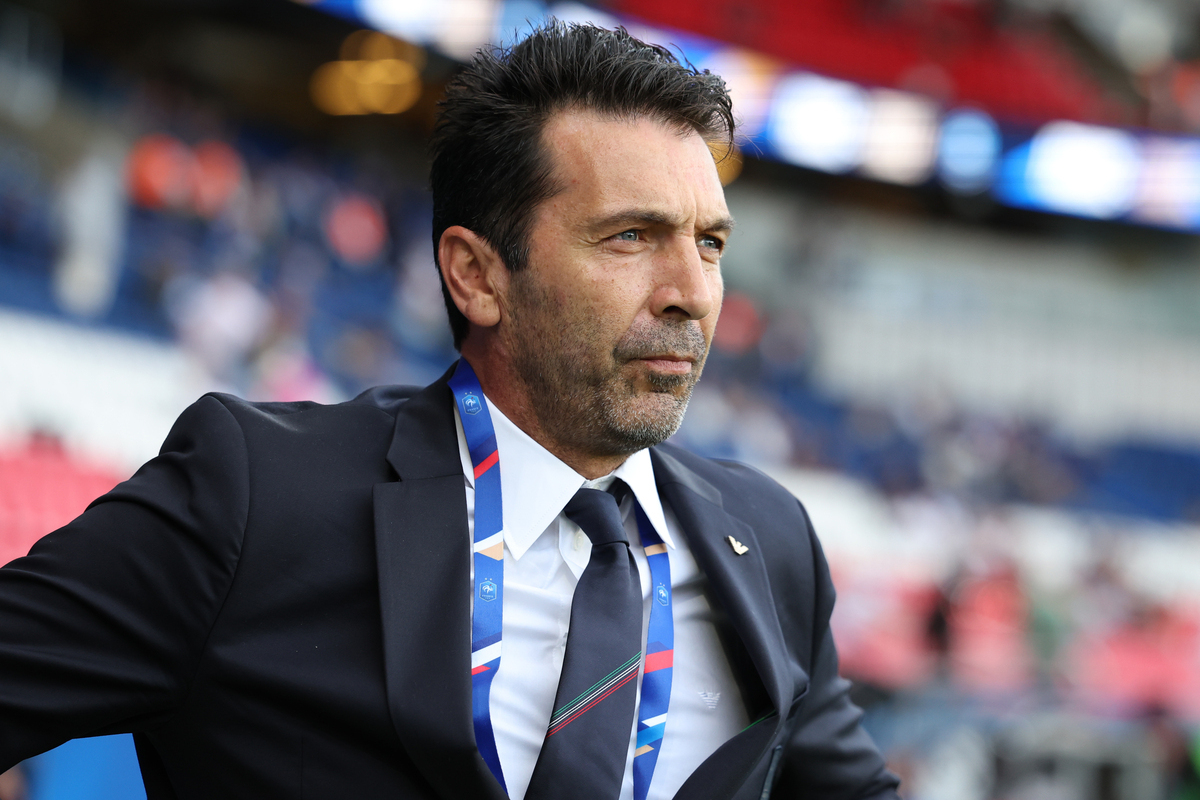
POLICY WIRE — ROME, ITALY — There’s a particular melancholy that clings to institutions when their golden age passes, a wistful whisper of what once was. Italy’s national football team, the Azzurri, knows this feeling intimately. They’re not just missing trophies; they’re missing an entire identity. But new technical director Paolo Maldini, a titan himself, isn’t here to mourn. He’s here to recruit ghosts—or at least, highly respected legends—to revive a flagging spirit. His sights are now fixed on bringing Gianluigi Buffon, a goalkeeper whose career spanned eras, back into a senior operational role. It’s less a hiring, more a calling back to the ramparts.
It’s a peculiar sight, isn’t it? A nation, once synonymous with footballing artistry — and iron-clad defense, finding itself grasping for familiar hands. This isn’t just about shuffling personnel; it’s an acknowledgment that the wellspring of talent, or at least the knack for organizing it into a winning machine, has run somewhat dry. La Gazzetta dello Sport, Italy’s venerable sports bible, spilled the beans: Maldini is dead-set on embedding Buffon deeply within Club Italia, the body that’s supposed to nurture everything from schoolboy dreams to senior squad realities. That means less cheering from the sidelines — and more grinding in the organizational trenches.
Buffon, you’ll remember, packed it in after Italy’s utterly deflating defeat to Bosnia and Herzegovina in a World Cup play-off final last March. A bitter pill, for sure. He’d previously held a rather ceremonial ‘Delegation Chief’ role under Luciano Spalletti — and Gennaro Gattuso. But this new gig Maldini’s sketching out for him? That’s different. It’s got heft. It implies genuine operational sway within a structure badly in need of, well, anything resembling a win. For a team that failed to qualify for the 2018 and 2022 FIFA World Cups—a truly shocking stat for a four-time global champion—this move smacks of desperation, and perhaps, a flicker of genuine hope.
Maldini, having just taken the reins last Saturday with former Milan teammate Leonardo tagging along as an advisor (a sensible touch, that), isn’t wasting time. He understands the landscape. He knows the weight of expectation. But because the system’s clearly broken, just tinkering won’t cut it. You need figures with moral authority, people who’ve actually walked the walk — and lifted the big ones. And Buffon, despite his tears of recent disappointments, certainly qualifies.
“We can’t simply lament what’s lost,” Maldini reportedly told confidantes, his voice undoubtedly carrying the gravitas of a man who played at the pinnacle for two decades. “The identity of the Azzurri isn’t static; it’s a living thing. We must reconnect with our deepest roots, — and Gigi is not just a root, he’s an entire branch. His presence, his understanding, it’s irreplaceable for what we’re trying to build.” He’s not wrong. For many Italians, Maldini — and Buffon embody eras of dominance. But leadership roles for national heroes aren’t without their complexities.
And speaking of complexities, the rumored preference for Andrea Pirlo as the next Nazionale coach is another twist. Pirlo, another World Cup winner alongside Buffon in 2006, certainly possesses the mystique. But can he coach? That’s a separate inquiry. Football isn’t just nostalgia; it’s tactics, man-management, — and sheer grunt work.
Buffon, a man who knows a thing or two about standing firm under immense pressure, seemed to echo this sentiment in a recent, unverified, private conversation. “To return in a meaningful capacity isn’t about recapturing my playing days,” he’s believed to have articulated, the gravity evident. “It’s about understanding the current generation’s challenges and bridging that gap to what the Azzurri truly represent. It’s a profound responsibility. I wouldn’t accept it if I didn’t believe we could turn things around, profoundly.”
What This Means
This isn’t merely a reshuffle in Italy’s football establishment; it’s a strategic play with broader political and economic ripples. Nationally, football performance—especially for a team like Italy—is inextricably linked to pride. A resurgent Azzurri means renewed confidence, increased tourism from fans, — and a bolstered ‘soft power’ abroad. The government, keen on any narrative of national revival, implicitly benefits. The Italian Football Federation (FIGC) also faces enormous commercial pressure. Without World Cup participation, lucrative sponsorship deals falter, TV rights become less valuable, and the conveyor belt of young talent struggles for visibility.
Economically, there’s the palpable hit to local economies reliant on major international matches. When stadiums sit empty for significant fixtures, cafes, hotels, — and retail outlets suffer. Politically, leaders love to associate with winning teams; it’s easy patriotism. And a string of failures—well, it makes for difficult optics in an already tumultuous European landscape. Bringing in Buffon and Maldini is a desperate, yet politically astute, move to stabilize a reeling institution that carries an enormous national burden.
But the ramifications extend beyond Europe’s boot. Think about the passion for football in regions like the Muslim world or South Asia. Countries like Pakistan, for instance, might not have Italy’s global football pedigree, but their sporting heroes—like cricketing legend Imran Khan, who eventually transitioned from national captain to prime minister—carry immense symbolic weight. The way a nation leverages (or mismanages) its sporting legends in administrative roles offers fascinating parallels and stark contrasts across borders. The hope for Italian football is that Maldini isn’t just tapping into an old well of sentiment but initiating a systematic overhaul. For them, much like for cricket-mad nations hoping for a return to cricketing glory, these figures aren’t just faces; they’re the embodiment of national aspiration.