

Nordic Rift Widens After Finland and Norway Leaders Hold Surprise Call With Putin
Nordic leaders clash after Finland and Norway hold a surprise call with Vladimir Putin to discuss ending the war in Ukraine, sparking regional tensions.

POLICY WIRE — Helsinki, Finland — A rare diplomatic fracture has emerged among Nordic nations following a surprise phone conversation between the leaders of Finland and Norway and Russian President Vladimir Putin. The call, initiated by Finnish President Alexander Stubb and Norwegian Prime Minister Jonas Gahr Støre, aimed to press the Kremlin to halt its full-scale invasion of Ukraine and pursue a stable peace settlement.
Stubb described the 90-minute exchange as a frank and substantive discussion. He emphasized that the outcome of the conflict carries direct consequences for European security, asserting that resolving the war necessitates direct dialogue. Støre added that the leaders specifically stressed the importance of de-escalation during the conversation.
The two leaders were careful to clarify that they spoke in their capacities as national heads of state rather than as representatives of Europe as a whole. Following the call, Stubb and Støre contacted Ukrainian President Volodymyr Zelenskyy, who expressed gratitude for their active support.
Despite these efforts, the move drew sharp rebukes from neighboring Denmark and Sweden. Danish Prime Minister Mette Frederiksen expressed deep skepticism regarding the initiative, noting that it was not coordinated with other European partners. She argued that Russia shows no genuine interest in diplomacy, citing ongoing hybrid warfare as evidence of Moscow’s true intentions.
Frederiksen further criticized the solo diplomatic venture, drawing comparisons to previous independent efforts by other European leaders to engage with the Kremlin. She maintained that it is vital for European nations to present a unified front rather than acting unilaterally.
Swedish Prime Minister Ulf Kristersson also voiced concerns, though in more measured terms. While acknowledging that any talks potentially leading to a fair peace are beneficial, he warned that such independent overtures risk undermining the collective European voice and expressed low expectations for the outcome of the discussion.
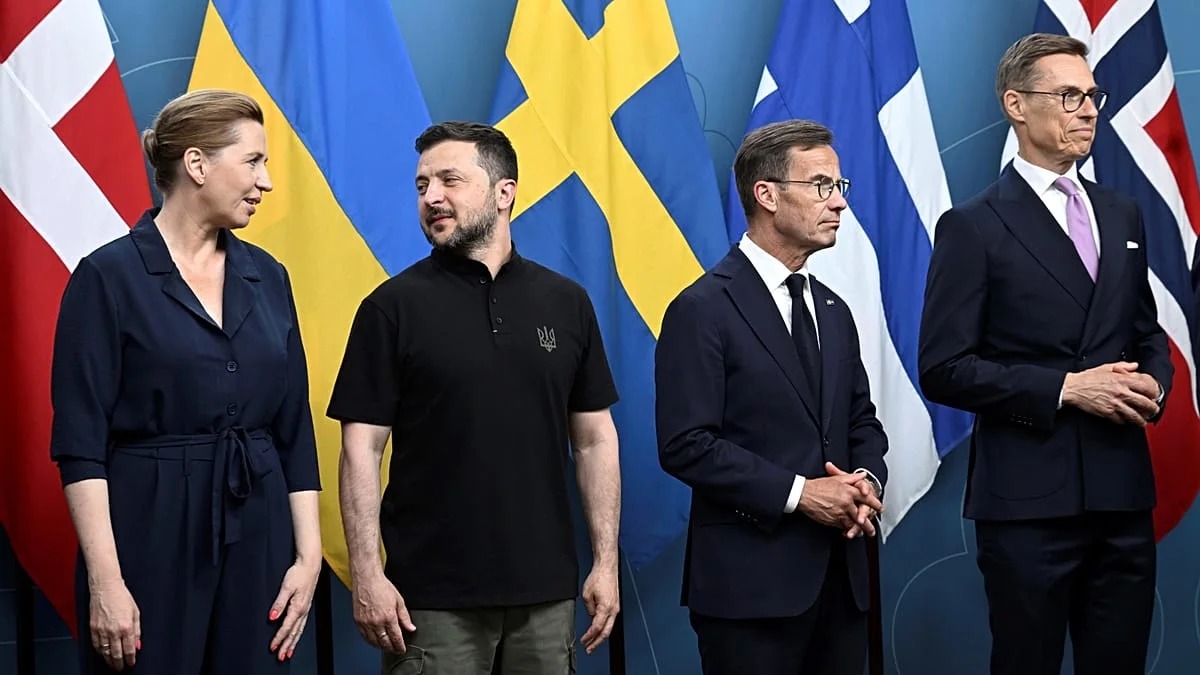
In defense of the initiative, Støre suggested that Europe should maintain communication with Russia to complement the messaging from the United States. The four leaders, who were gathered in Helsinki for a session of the Nordic Council, typically maintain a unified stance on the war, including strong support for sanctions and aid to Kyiv.
Reporting by Policy-Wire (PW)