

China’s Trade Push: Germany’s Geopolitical Tightrope
China pushes for trade with Germany, but Berlin faces a geopolitical tightrope. Balancing economic reliance with Western pressure, the stakes for global power are high.

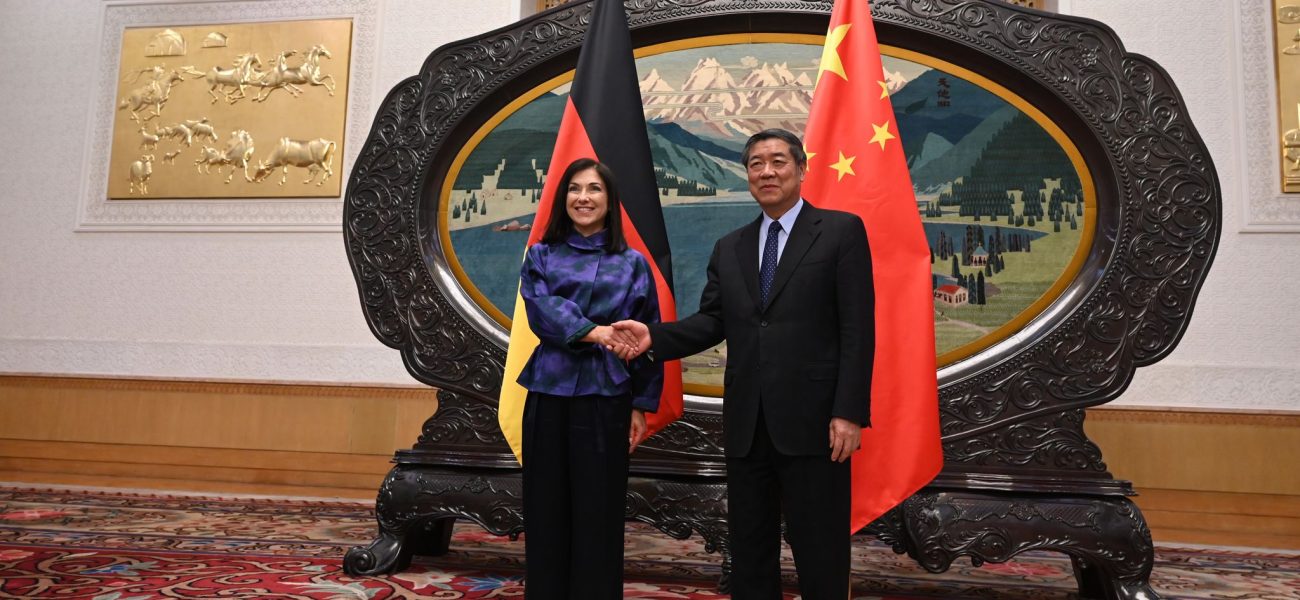
POLICY WIRE — Berlin, Germany — Sometimes, the polite veneer of diplomacy barely conceals the sharper edges of national interest. This past week saw senior Chinese officials descend on Germany, ostensibly to reinforce the bedrock of trade, but their pronouncements felt less like partnership overtures and more like subtle reminders of where global economic power genuinely resides. It wasn’t just a friendly chat about widgets and tariffs; it was Beijing putting Berlin in a rather uncomfortable spotlight, prodding at its allegiances and economic priorities with a rhetorical feather duster.
Germany, long an economic powerhouse whose fortunes are inextricably linked to global commerce, now finds itself straddling an increasingly complex geopolitical fence. Its industries, from automotive titans to precision engineering firms, rely heavily on the vast Chinese market. But, Washington’s shadow looms large—and getting larger—alongside growing concerns within the European Union about Beijing’s state-subsidized competitive edge and its human rights record. The visit, therefore, wasn’t merely about advocating for free trade, but about carefully nudging Germany back towards a less skeptical embrace of Chinese economic engagement.
The message from the Chinese delegation was crystal clear: economic interaction shouldn’t become a casualty of political anxieties. One minister reportedly urged his German counterparts to ensure [QUOTE_PLACEHOLDER], implying a fear that Berlin might be leaning too heavily on rhetoric like [QUOTE_PLACEHOLDER] De-risking, of course, being the polite diplomatic euphemism for reducing reliance on China, especially in critical supply chains. Beijing isn’t naive; it understands the sentiment. And it’s keen to quash it. They’ve seen this movie before, you know, just with different actors.
But the German position isn’t monolithic, either. While major industrialists are often wary of any policy that might disrupt their highly profitable engagements in China, there’s a distinct chill emanating from segments of the political class. Chancellor Olaf Scholz’s government has been trying to chart a course that protects German economic prosperity without sacrificing its values or strategic independence. It’s a tightrope walk, often performed without a net. For instance, Germany’s export dependence on China, while significant, is mirrored by a dependency in areas like critical minerals, a dependency the EU itself is scrambling to address.
And these discussions aren’t happening in a vacuum. Beijing’s global economic footprint extends far beyond Germany’s industrial heartland, touching nearly every corner of the planet. Think about its immense investment in Pakistan, a nation strategically situated at the crossroads of South Asia and the broader Muslim world. Through the China-Pakistan Economic Corridor (CPEC)—a cornerstone of the Belt and Road Initiative (BRI)—China has poured billions into infrastructure projects, from Gwadar Port on the Arabian Sea to new power plants across the country. This isn’t just about trade; it’s about establishing vital arteries for raw materials, manufactured goods, and geopolitical influence that ripple through regional economies and international relations. Berlin can’t ignore these broader strategic considerations. Because when Beijing talks about global trade, it’s always got an eye on the bigger picture.
China isn’t just seeking better terms for German industrial imports; it’s seeking affirmation of its global economic model. It’s essentially telling Germany, a foundational pillar of the European economy, that their prosperity is best served by playing by Beijing’s increasingly prominent rulebook. That’s why discussions about fair access don’t just stop at German boardrooms but extend to how China integrates, or rather, doesn’t always integrate, into global norms.
📄 POLICY WIRE WHITEPAPER PUBLISHED: PAKISTAN'S NATIONAL SECURITY POLICY PRIORITIES
👉 READ BY CLICKING HEREThe numbers don’t lie. For example, Germany’s trade deficit with China widened considerably, hitting roughly 84 billion euros in 2023, according to Eurostat data. That’s a stark figure that spotlights the very real economic challenges European nations face, making calls for free trade from Beijing simultaneously understandable and, perhaps, a bit audacious given the perceived imbalances. These aren’t negligible sums; they’re the backbone of thousands of jobs and countless supply chains across the continent. Such deficits fuel the very economic currents that reshape Europe.
But Chinese officials were reportedly quick to emphasize the mutual benefits, highlighting [QUOTE_PLACEHOLDER] as proof of sustained economic partnership. They aim to reassure German industry leaders that, despite rhetoric of decoupling, real economic interdependence remains the safer, more lucrative path. After all, nobody wants to walk away from a good deal, especially when you’re facing inflationary pressures and an energy crisis at home. Germany’s industrial champions, many of whom have established deep roots in China over decades, are understandably caught between national directives and quarterly reports. It’s a delicate tango, isn’t it?
What This Means
This latest diplomatic dance isn’t just about resolving trade disputes; it’s a strategic maneuver by China to solidify its standing within the global economic architecture and to peel Germany away from a hardening Western stance. For Berlin, it’s an increasingly untenable balancing act. On one hand, deep economic integration with China continues to power German industry. On the other, the political imperative to align with EU partners — and the U.S. in pushing back against China’s geopolitical ambitions—and its state-backed economic practices—grows stronger by the day. This isn’t just about who gets to sell more cars; it’s about shaping the future of global supply chains — and influence. If Germany leans too far one way, it risks alienating key Western allies. Lean too far the other, and it jeopardizes significant commercial opportunities. The underlying message for many European leaders, watching this tightrope walk, is that economic ‘interdependence’ with Beijing often looks suspiciously like one-sided leverage.
And let’s not forget the long-term implications, especially as China expands its Digital Silk Road initiatives, connecting economies from Southeast Asia to the Middle East. These networks aren’t just for digital data; they often bring political influence and technology standards that can diverge from European norms. Germany’s position on fair trade today sets a precedent for tomorrow’s global economy, impacting everyone from struggling small businesses in Munich to manufacturers in Karachi. The stakes, it’s safe to say, are considerable.