


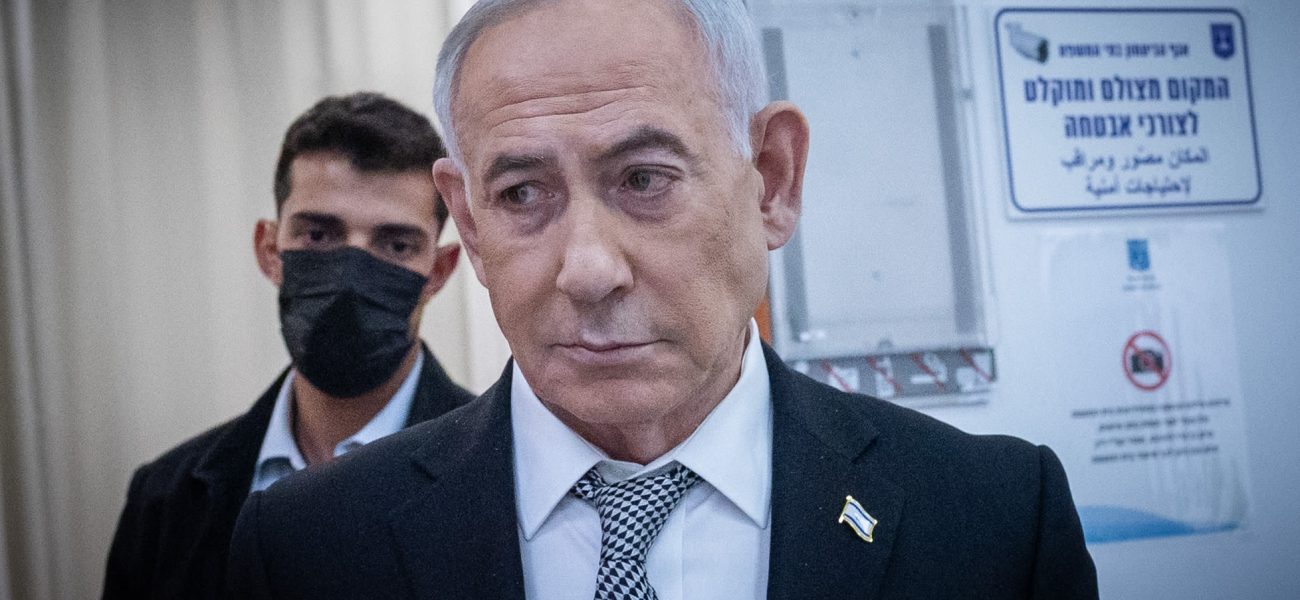
Netanyahu Bribery Trial: Why Charges Endure in Israel
Why do Benjamin Netanyahu's bribery charges persist in Israel despite judicial skepticism? Unpack the political and economic fallout of this enduring legal battle.

POLICY WIRE — Tel Aviv, Israel — You’d think after all these years, after the endless courtroom dramas and political bare-knuckle brawls, something would give. But it hasn’t, has it? Benjamin Netanyahu, the political Houdini of Israel, somehow remains entangled in a bribery charge that just won’t fade into the legal ether, even with a few judges quietly scratching their heads over it.
It’s a curious state of affairs. We’re talking about a man whose political career has survived more comebacks than a vintage boxing champion. For him, a legal cloud is just part of the atmospheric pressure. The specifics? This particular charge, stemming from what’s known as Case 4000, revolves around allegations that he traded regulatory favors for positive media coverage—classic quid pro quo, they say, involving Bezeq Telecom and the Walla! news site. And here’s the rub: even as the prosecution insists on the full weight of the indictment, some voices within the judiciary have apparently aired doubts about the viability of the bribery element, opting instead to keep their powder dry on other, perhaps lesser, charges. [QUOTE_PLACEHOLDER]
Because that’s the thing with these high-profile cases, isn’t it? It’s never just about the evidence in a vacuum. It’s always a sprawling canvas painted with political ambitions, media narratives, — and public fatigue. Imagine the judges—not for nothing, these aren’t folks prone to casual shrugs—grappling with the exact definition of a bribe when it involves something as intangible as media sentiment. It’s tricky. But a charge, however contested, especially one involving a figure of Netanyahu’s stature, tends to gain a certain gravity. It won’t easily release its grip, like a stubborn stain on a pristine white shirt.
But the persistence of this specific accusation, despite a less-than-rock-solid consensus within the judicial ranks (a rare peek behind the robes, I’ll admit), isn’t just a quirky footnote. It impacts everything. The trial drags on, slowing Israel’s legislative pace to a crawl and casting a perpetual shadow over any government Bibi attempts to form or lead. He’s always on the defensive, always performing a high-wire act, using every political muscle he’s got to fight the accusations while simultaneously trying to run the country and deal with escalating regional tensions. It’s a heavy lift, even for him.
And when we look at the broader regional picture, it’s not an unfamiliar sight. You see echoes of this protracted legal jousting, the erosion of public trust, and the deep skepticism of institutional integrity across the Muslim world. Consider Pakistan, for instance, where top political figures, even prime ministers, have faced — and still face — their own litany of corruption charges. Think Nawaz Sharif, or even the more recent saga involving Imran Khan. These cases often drag for years, twisting through courtrooms, political rallies, and public discourse, becoming more about who controls the narrative than simply who did what.
The system keeps going, regardless, churning along because that’s what systems do. The charges might feel like political maneuvers to some, legitimate accusations to others, but they’re sticky. They cling. And part of it has to do with how the public perceives accountability. A recent study published by the Brookings Institution revealed that public trust in judicial systems across many developing nations in Asia, including Israel and its neighbors, often dips below 40% when high-profile corruption cases are perceived as politicized. That’s a staggering figure, indicating a profound distrust that can hobble good governance.
📄 POLICY WIRE WHITEPAPER PUBLISHED: PAKISTAN'S NATIONAL SECURITY POLICY PRIORITIES
👉 READ BY CLICKING HERESo, the trial presses on, testimony after grueling testimony, legal strategists pulling rabbits out of hats, and prosecutors trying to connect dots that others find fuzzy. Because once the ball is rolling, it takes monumental effort to stop it. It requires either a complete judicial repudiation, a plea bargain, or, the more unlikely scenario, a definitive acquittal that clears all doubt. None of those seem on the immediate horizon.
What This Means
The continued — some would say stubborn — presence of this bribery charge, especially when some judges aren’t entirely sold on its merits, represents a deeply ironic stalemate. Politically, it means Netanyahu remains a diminished, though still formidable, leader. He’s less agile, his coalition partners perhaps less stable, always aware of the sword of Damocles hanging over his head. For Israel, it implies a prolonged period of internal distraction at a time when external threats loom large. It’s not just a political saga; it’s a national headache.
Economically, this ongoing uncertainty doesn’t exactly instill confidence, does it? International investors prefer stability, predictability—not the constant churn of government instability or leaders distracted by legal battles. Domestically, it reinforces a cynical view of the legal process among some, fueling narratives of a deep state targeting conservatives, while others see it as the law’s slow grind ensuring justice, however imperfectly. And it certainly provides ample fodder for Bibi’s opponents, always a nice bonus for them. But at its heart, it’s a testament to the sheer grinding nature of institutional inertia. Once the gears of justice begin to turn on such a high-stakes case, stopping them proves nearly impossible, even if a few of the mechanics are having second thoughts about the fuel mixture.
And it’s a sobering reminder, not just for Jerusalem but for capitals across the world — think of similar prolonged judicial battles in India or Turkey where leaders cling to power amid swirling allegations. It shows that the law, however objective its intentions, is ultimately interpreted and applied by imperfect humans within intensely political ecosystems. And that means a charge can remain not just because the evidence is overwhelmingly clear, but sometimes simply because the system, for better or worse, can’t quite figure out how to let it go.