

New Mexico’s Deluge: A Soaking Reminder of Scarce Certainty in the American Southwest
POLICY WIRE — ALBUQUERQUE, N.M. — It’s a classic American paradox: in a state that practically defines aridity, residents are now told to expect something approximating a gully-washer. That’s right,...

POLICY WIRE — ALBUQUERQUE, N.M. — It’s a classic American paradox: in a state that practically defines aridity, residents are now told to expect something approximating a gully-washer. That’s right, New Mexico—a place where every drop of water is tallied, fought over, and prayed for—is grappling with gusty winds and a rather generous helping of the wet stuff, courtesy of the summer storm season. A casual observer might call it ‘rain.’ A policy wonk, though, sees a volatile climate signature, an uncomfortable flicker in the long, drawn-out battle for hydrological supremacy.
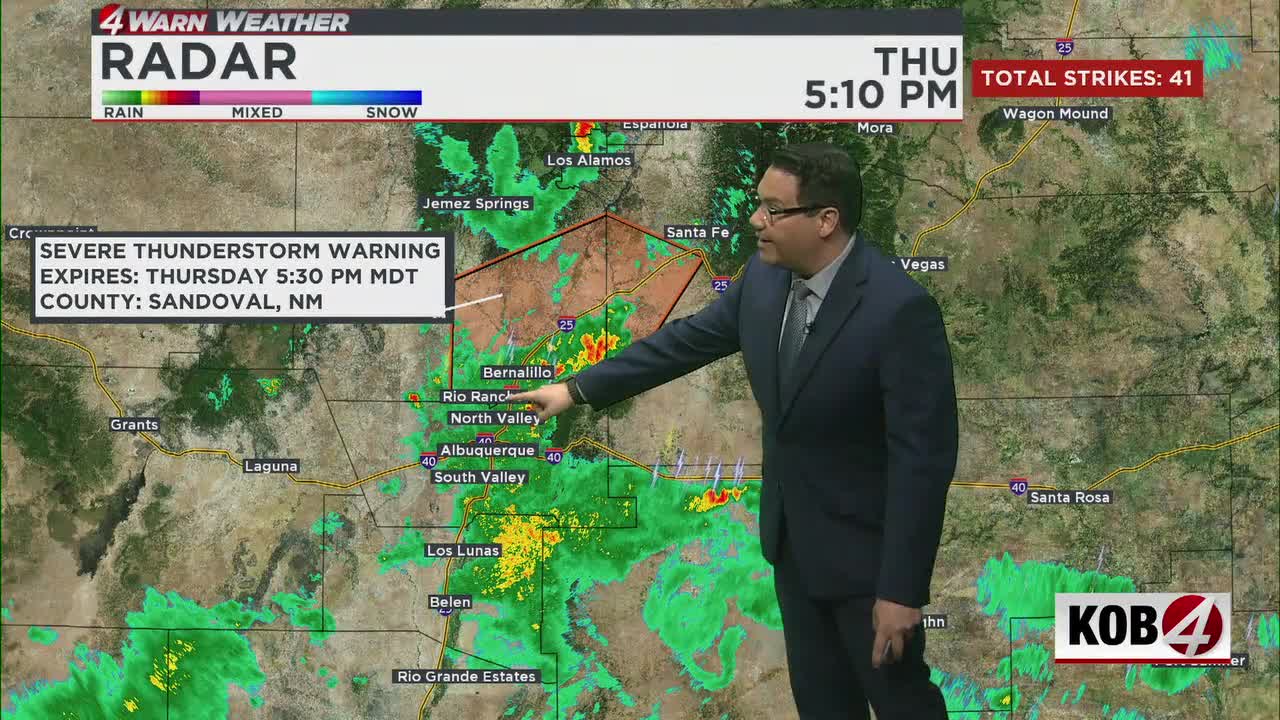
Through Thursday evening, much of central, western, and northern New Mexico prepared for what the weather service termed ‘wetter thunderstorms.’ Not just any storms, mind you, but the kind that dump a quarter-inch, or even three-quarters of an inch in isolated spots. Think about that for a second. In an ecosystem perpetually thirsty, this should be cause for celebration. But there’s a catch: those outflow winds, screaming in at up to 55 miles per hour. That’s not a gentle breeze, it’s nature’s reminder that it’s in charge, rattling windows and probably a few nerves across Farmington, Gallup, Albuquerque, and points north. The land here doesn’t just absorb water; it also suffers the consequences of sudden, violent downpours on baked earth, often leading to flash flooding rather than replenishment.
And because nothing in life is simple, a southward-bound outflow boundary, originating from as far away as Kansas (a detail that offers a certain cosmic absurdity), threatened to rekindle the meteorological melee later Thursday. This means more strong storms, especially for the northeastern corners of the state, before things supposedly die down by midnight. But let’s be honest, ‘diminish’ is often a polite meteorological term for ‘reconfigure.’ Friday then promises a scattering of afternoon thunder across the Gila, the Continental Divide, the Sangre de Cristo Mountains, and more, complete with yet more beneficial rainfall—but also, thanks to a slightly drier lower atmosphere, a return of the truly gusty stuff. Imagine living on a razor’s edge between drought — and deluge; it’s quite the ride, isn’t it?
It’s an inconvenient truth, this weather. For years, the story out of the American Southwest has been one of deepening drought, of reservoirs shrinking into puddles, of desperate pleas for conservation. Now, you’ve got these sporadic, aggressive outbursts. It throws a wrench in the tidy narratives of resource management. You can’t just conserve your way out of a climate gone haywire, can you?
“We’re learning that ‘normal’ is a relic of the past when it comes to precipitation in New Mexico,” stated Governor Michelle Lujan Grisham, with her characteristic blend of urgency and practicality. “These intense events offer temporary relief, yes, but they don’t solve our long-term water security issues. We’re aggressively pursuing every avenue—from federal infrastructure dollars to innovative water reuse technologies—because our future, frankly, depends on it.” Her administration, you see, understands that rainfall is less about local good news and more about a shifting climate paradigm.
But the challenges aren’t just about managing a few intense rain events. They’re about anticipating entire system failures. Dr. Anya Sharma, lead climatologist with the Southwestern Climate Adaptation Consortium, doesn’t pull punches. “Our models indicate that while average rainfall might not drastically change over the coming decades, its distribution and intensity certainly will,” she explained. “It’s not just rain, it’s when — and how hard it falls. These episodic bursts lead to increased runoff, soil erosion, — and overwhelm existing infrastructure. The local bureaucracies struggling with everyday issues are simply unprepared for the systemic shocks climate change delivers, be it too little water or too much all at once.”
This dynamic isn’t isolated. It’s a mirror reflecting a wider, grimmer global reality. Pakistan, for instance, a nation grappling with its own geopolitical tensions and resource anxieties, saw its own ‘super floods’ in recent years. Those floods, devastating as they were, stemmed from similar rapid-onset, high-intensity rain events, not a sustained, beneficial soak. This isn’t just about agriculture or water tables; it’s about state stability, food security, — and mass displacement. That connection—from a summer storm over the Jemez Mountains to national security debates—might seem tenuous to the casual observer, but to those tracking the long game, it’s tragically direct. The U.N.’s Intergovernmental Panel on Climate Change (IPCC) projects a 5-15% increase in heavy precipitation events globally for every degree Celsius of warming, a chilling stat that New Mexico is living right now.
What This Means
The pattern unfolding in New Mexico isn’t just a weather forecast; it’s a policy conundrum wrapped in a cloudburst. For policymakers, these erratic weather events force a re-evaluation of long-held assumptions about water rights, agricultural practices, and urban planning. Old infrastructure, built for a bygone climate, proves inadequate for these intense, ‘bursty’ deluges. Water collection and storage systems are designed for consistent flows, not biblical floods followed by stretches of bone-dry conditions. So you’re left with the unenviable task of convincing taxpayers that billions need to be spent on projects that might seem excessive on sunny days, but are absolutely essential when the sky opens up with a vengeance.
Economically, it’s a gut punch. Agriculture, already precarious in arid regions, suffers from both prolonged dry spells and the erosive impact of sudden downpours. Insurance markets begin to contort, premiums climb, and property values in flood-prone (or newly flood-prone) areas become volatile. Then there’s the tourism sector—a major player in New Mexico’s economy. Who wants to hike in the mountains when trails are washed out, or golf in winds strong enough to make you reconsider your life choices? And that’s the subtle irony: a ‘beneficial rain’ isn’t always so beneficial when it’s accompanied by winds that tear shingles from roofs and turns riverbeds into raging torrents. It complicates, it stresses, and it fundamentally changes the arithmetic of governance in places like the American Southwest, echoing challenges faced by drought-and-flood-ravaged communities from the Horn of Africa to the Indus Valley.