

Desert Winds Signal Deeper Turbulence: New Mexico’s Climate Echoes Global Fray
POLICY WIRE — Washington, D.C. — It wasn’t the kind of tempest that sends shockwaves across financial markets or triggers a frantic geopolitical summit. No, it was just some wind, a dash of...

POLICY WIRE — Washington, D.C. — It wasn’t the kind of tempest that sends shockwaves across financial markets or triggers a frantic geopolitical summit. No, it was just some wind, a dash of rain, kicking up desert dust in America’s arid Southwest. But even in these localized squalls—in New Mexico, of all places—seasoned observers discern the whisper of larger global patterns, of environmental shifts that ripple from Albuquerque to Lahore, altering policy landscapes one gust at a time.
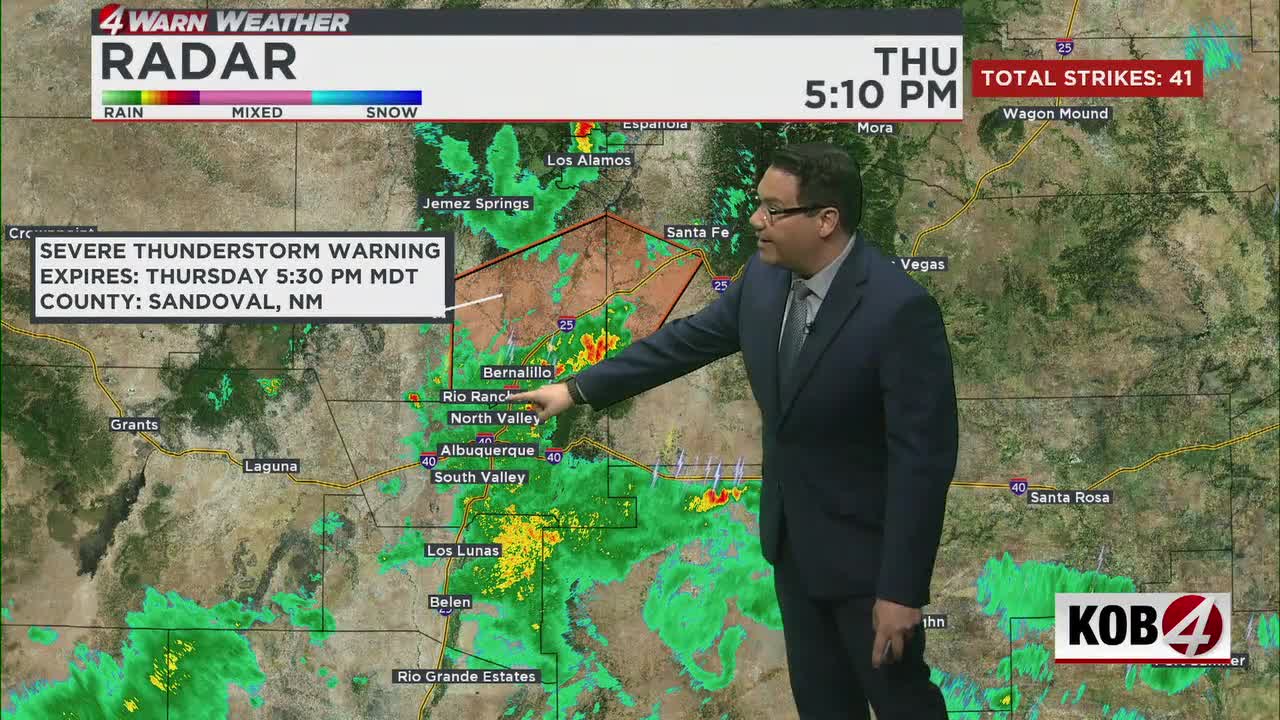
Forecasters pointed to fairly prosaic conditions: a series of robust thunderstorms anticipated to sweep across much of New Mexico. The main fuss? Winds. Specifically, Gusty outflow winds up to 55 mph will remain the main hazard
as wetter thunderstorms move across central, western and northern New Mexico through Thursday evening
, according to meteorologists. These weren’t cataclysmic; they were just enough to remind folks where they lived. This phenomenon, which locals might simply shrug off as another Thursday, holds a mirror to how nations — particularly those with a more precarious resource balance — wrestle with the relentless grind of atmospheric caprice. Take, for instance, Pakistan: a nation whose agriculture, economy, and even political stability are tied inextricably to monsoon cycles and melting glaciers, where a single season of erratic weather can mean famine or devastating floods for millions. [QUOTE_PLACEHOLDER]
The National Weather Service reported on localized events: Outflow gusts of 30 to 55 mph will be common, with an isolated chance of gusts exceeding 60 mph
in certain spots. That’s a good clip, no doubt. The danger, as ever, wasn’t universal. The strongest pockets of kinetic air were pinpointed for areas like Farmington, Gallup, Grants, Cuba, the Jemez Mountains, Mount Taylor, Albuquerque, Santa Fe, and Socorro. Sounds like a fair chunk of the state, doesn’t it?
But the real story here wasn’t just the bluster. It was the rain, or rather, the quality of it. After days of fairly dry air, there was hope for something a bit more useful. lower cloud bases and increasing moisture bringing more wetting rainfall than the last few days
was the general vibe. Most storms will bring beneficial rain
, it was declared, with many spots anticipating between a few hundredths of an inch and one-quarter inch. Isolated areas might even bag three-quarters of an inch. That’s enough to settle some dust, maybe green up a parched bush or two, without causing a major flood scenario because storms will move at 15 to 25 mph, which should limit prolonged heavy rain over one spot
.
And so it goes, this dance between too little — and too much, the very essence of water management in a changing climate. It’s an equation that Pakistan, a country that faces extreme vulnerability to climate change, knows all too well. Its colossal Indus River system—a literal lifeline for hundreds of millions—is notoriously sensitive to minute variations in temperature and precipitation in the Hindu Kush and Himalayan ranges. The difference between life and death for entire populations often hinges on whether the sky delivers beneficial rain
or a torrent of destruction. This sort of regional weather event in New Mexico, benign as it’s, speaks to that wider pattern, that precarious hydrological balance.
Looking ahead, meteorologists noted a shift: Later Thursday evening, an outflow boundary moving south from Kansas may spark another round of stronger storms across Raton, Clayton, Union County and the far northeast corner of New Mexico
. That was all supposed to die down by midnight, a fleeting concern. On Friday, scattered thunderstorms were still on the cards for regions like the Gila — and Sangre de Cristo Mountains. But a crucial tweak was coming: Storms on Friday will still produce beneficial rainfall, but a slightly drier lower atmosphere will allow for more gusty winds
. Not exactly a tranquil forecast for your weekend plans, is it?
They weren’t just predicting rain. They were mapping out the variable moods of the atmosphere, those micro-decisions that dictate agricultural yield, wildfire risk, and public policy, all of it linked in an intricate web. And for us here at Policy Wire, we track those tendrils. Because often, the smallest ripple in the atmospheric pond of, say, New Mexico—which averages a mere 14 inches of precipitation annually according to the National Oceanic and Atmospheric Administration (NOAA)—can foreshadow oceanic shifts affecting billions.
What This Means
While an afternoon thunderstorm in New Mexico rarely sends analysts scurrying, the underlying narratives of resource scarcity and climate variability are increasingly policy determinants everywhere. These gusts and beneficial rains aren’t merely atmospheric phenomena; they’re low-level stressors that chip away at stability. For a developing nation, particularly within the Muslim world or South Asia—where large segments of the populace rely directly on rain-fed agriculture—such weather patterns aren’t just local news; they’re existential threats. When a slightly drier lower atmosphere will allow for more gusty winds
, it means increased evaporation, drier soils, higher energy demands for irrigation, and amplified risks of brushfires—each a public policy challenge requiring resource allocation and governmental foresight.
Economically, predictable water resources underpin virtually everything. Even a slight dip in agricultural output in New Mexico affects local markets, but extend that impact to a country like Pakistan, which is frequently negotiating with the IMF, and you’re talking about food security crises, social unrest, and significant national budgetary strains. So, whether it’s geopolitical tensions near the Strait of Hormuz or the mundane machinations of a Kansas outflow boundary pushing south, it’s all part of a continuum. Environmental vulnerability isn’t some abstract threat; it’s the sum of countless localized events, playing out day after day, year after year, slowly reshaping our world, forcing hard decisions, and often exposing the limits of current infrastructure and policy frameworks, whether you’re trying to save a desert shrub or an entire agricultural economy. And sometimes, you know, it just plain gets windy.
Even Albuquerque’s traffic or local municipal budgets can feel the pinch from these small, consistent pressures, particularly if, as the National Weather Service forecast notes for Bernalillo County, one-quarter inch of rain simply isn’t enough to make a dent in longer-term water deficits. Small weather, big implications—always. That’s the game we’re watching, my friends.