


New Mexico’s Arson Season: Rain Douses Flames, Raises New Specter
POLICY WIRE — Capitan Mountains, N.M. — In the volatile dance of nature, reprieve often arrives carrying its own baggage. For New Mexico’s Seven Cabins Fire, a sudden turn in the...

POLICY WIRE — Capitan Mountains, N.M. — In the volatile dance of nature, reprieve often arrives carrying its own baggage. For New Mexico’s Seven Cabins Fire, a sudden turn in the skies—drenching rain, even—provided a much-needed halt to the inferno’s creep, a tangible gift for anxious residents. But it also birthed a fresh set of anxieties. Because what cools the flames today might well carve new scars tomorrow.
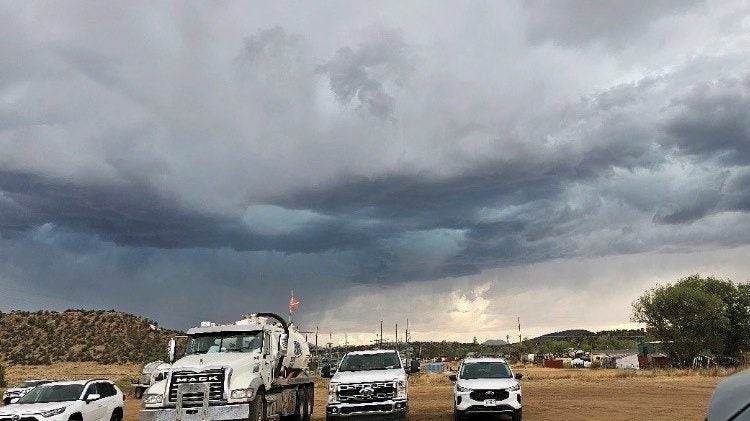
Lincoln County officials and the Southwest Area Incident Management Team 2, typically battling the red menace with singular focus, found themselves juggling this meteorological paradox. On Tuesday, managers had reported a “sharp change” in weather. Rain — and storms, once hoped for, began sweeping through the area. They were effective; all remaining evacuation notices were promptly lifted, allowing folks to, theoretically, breathe a sigh of relief. This particular blaze, before the recent atmospheric intervention, had stretched across some 31,770 acres, its containment sitting at a precarious 61%.
But relief, as anyone living through an American summer these days will tell you, often proves fleeting. That same deluge which pacified the fire promptly initiated flash flood warnings—not for some distant, unconnected valley, but for the very burn scar areas around Ruidoso. The irony is, well, it’s sharp. You escape the inferno, only to be told the land you cherish might now crumble underfoot. They’re still focused on protecting “values at risk,” even with the all-clear, which includes the rather evocatively named Lone Tree Bible Ranch. One crisis gives way to another, a relentless sequence demanding agility from those tasked with managing disaster.
The operational front saw some shifts too. Crews will work Wednesday to patrol the lines around the fire, a cautious effort. Personnel numbers reflect a winding down, or perhaps, a strategic reallocation: there are 583 personnel working the fire now, a drop from 650 personnel earlier in the week. A testament, if you will, to the immediate relief offered by the weather—or perhaps a grim accounting of the sheer cost of perpetual emergency management. But, as they say, the job’s never really done. Especially not when Mother Nature’s got a mood swing. (And she seems to have plenty of those lately.)
This dynamic—fire leading to flash floods—isn’t an isolated New Mexico oddity; it’s a sobering refrain playing out globally. Think of the mountainous regions of Pakistan, where relentless monsoon seasons, intensified by climate shifts, follow periods of drought or wildfire. The stark, denuded landscape, much like New Mexico’s burn scars, offers little resistance to torrents. Villages in Kashmir or the Hindu Kush, already struggling with basic infrastructure, face a devastating cascade where wildfires erode topsoil, leaving the land ripe for catastrophic mudslides and flooding during subsequent rains. The very earth, stripped of its protective vegetation, turns traitor, just as we see unfolding in the American Southwest.
And so, as Wednesday unfolds with forecasts of more showers and storms, those 583 personnel aren’t just firefighters anymore; they’re land managers, meteorologists, and de facto public safety strategists, perpetually anticipating the next punch nature’s going to throw. They’ve had a busy few weeks, that’s for sure. For more on the escalating environmental stakes in affected regions, Policy Wire has covered the profound impact of burn scars and subsequent deluges extensively. It’s a brutal calculation: the rain needed to extinguish one disaster simultaneously sows the seeds for another.
📄 POLICY WIRE WHITEPAPER PUBLISHED: PAKISTAN'S NATIONAL SECURITY POLICY PRIORITIES
👉 READ BY CLICKING HEREWhat This Means
This seesaw of environmental threats isn’t just about New Mexico; it’s a stark policy barometer for governments everywhere. It tells us we’re not dealing with isolated incidents anymore, but complex, interconnected catastrophes, requiring integrated—and costly—responses. When the relief of a wildfire extinguishing rain immediately transforms into flash flood warnings, it’s not merely a weather forecast; it’s an urgent call for renewed infrastructural investment and adaptive resource management. We’re talking about everything from robust early warning systems to re-evaluating urban development in vulnerable zones.
Economically, for a place like Ruidoso, which relies heavily on tourism and outdoor recreation, this dual threat translates to perpetual uncertainty. Repeated evacuations, fire advisories, — and then flood warnings aren’t exactly brochure material. This instability hurts local businesses, scares off visitors, — and generally just saps public morale. What’s the policy solution? It ain’t simple. It forces hard choices about land use, preventative measures, and perhaps most inconveniently, honest conversations about climate adaptation. You can’t just throw more water on the problem, literally or figuratively, without considering its secondary effects. Policy needs to account for that entire chain reaction, not just the first link. It’s an escalating challenge that demands something more than the usual reactive governance—it demands a foresight that frankly, we don’t always demonstrate.
Consider the international ramifications too: wealthier nations like the U.S. possess relatively sophisticated emergency response capabilities — and resources. But even they’re stretched thin. What happens in regions of the world—like many parts of South Asia or the Muslim world, already struggling with endemic poverty or political instability—where these ‘secondary disasters’ hit? Their adaptive capacity is minimal. We’ve seen, time — and again, how a single monsoon can obliterate years of development. So, when New Mexico battles its dual threats, it’s a microcosm of a much larger global vulnerability, underscoring a policy gap that extends far beyond state lines, all the way to Karachi’s monsoon preparedness or Islamabad’s wildfire resilience strategies.