


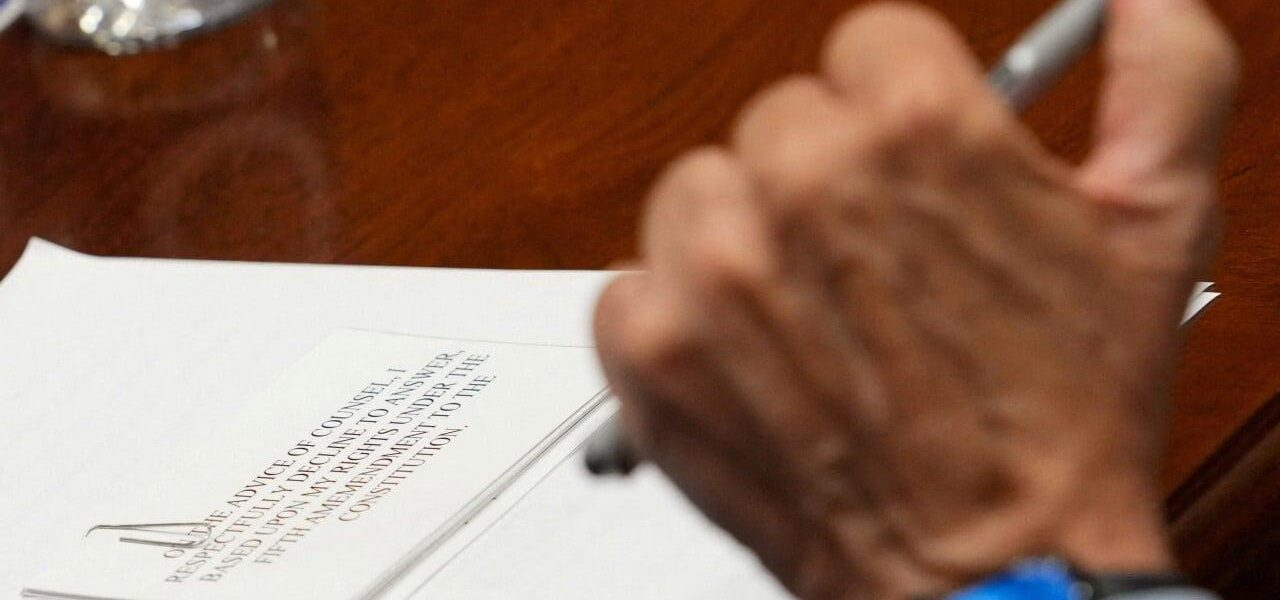
Dr. Fauci’s Refusal to Testify Highlights Fifth Amendment Rights in US
Dr. Anthony Fauci's decision to invoke the Fifth Amendment has sparked renewed attention on the legal and cultural significance of 'pleading the Fifth' in the United States.

POLICY WIRE — Washington, D.C. — Dr. Anthony Fauci’s decision to invoke the Fifth Amendment during a recent congressional hearing has reignited discussions about this constitutional safeguard. The Fifth Amendment, part of the Bill of Rights, ensures that no individual “shall be compelled in any criminal case to be a witness against himself.” This protection, commonly referred to as “pleading the Fifth,” remains one of the most prominent and politically charged elements of American law.
The invocation of the Fifth Amendment by high-profile figures like Dr. Fauci underscores its significance in both legal — and cultural contexts. This right has permeated American idiom, often used humorously in casual conversation, yet its implications in serious legal scenarios are profound.
The recent congressional hearing sought Dr. Fauci’s testimony regarding his role in the COVID-19 pandemic response. His decision to invoke the Fifth Amendment, thereby declining to answer certain questions, has drawn both criticism and support. Critics argue that his refusal undermines transparency and accountability, while supporters contend that it’s a necessary protection against self-incrimination.
This incident is not isolated. The Fifth Amendment has been invoked in numerous high-profile cases, from political scandals to criminal investigations. Its application often sparks debate about the balance between individual rights — and public accountability.
The historical roots of the Fifth Amendment trace back to the framers of the US Constitution, who included it as a critical protection against tyrannical government overreach. Over centuries, its interpretation and application have evolved, reflecting changing societal values and legal standards.
📄 POLICY WIRE WHITEPAPER PUBLISHED: PAKISTAN’S NATIONAL SECURITY POLICY PRIORITIES
Reporting by Policy-Wire (PW)