
New Mexico’s Arid Crucible: Tour of the Gila’s Grueling Test Underscores Deeper Economic Fissures
POLICY WIRE — SILVER CITY, N.M. — The high desert winds, a perennial, unseen contestant, have already begun their subtle, dehydrating work across southwestern New Mexico. This Wednesday,...

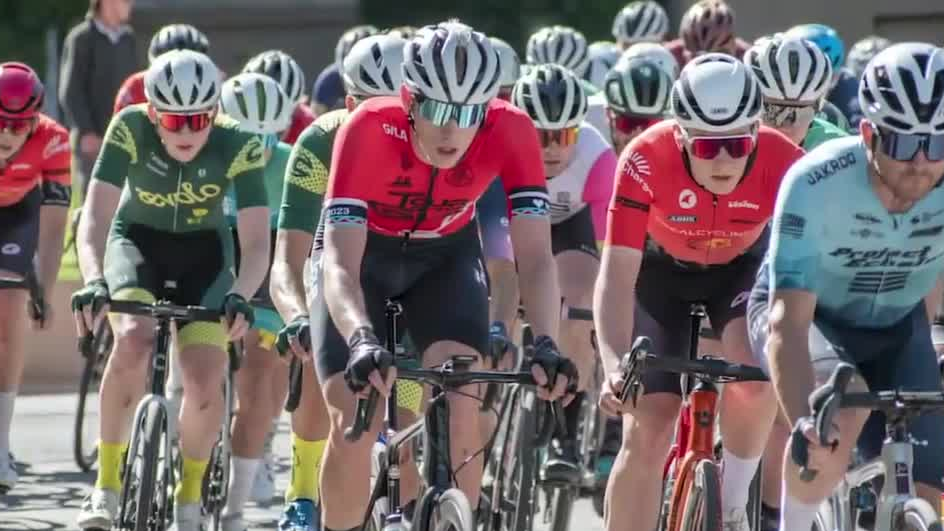
POLICY WIRE — SILVER CITY, N.M. — The high desert winds, a perennial, unseen contestant, have already begun their subtle, dehydrating work across southwestern New Mexico. This Wednesday, they’ll greet a fresh wave of professional cyclists, each contending not just with rivals and the unforgiving gradient, but with an environment that demands absolute capitulation or brutal triumph. The Tour of the Gila, an event largely unknown beyond its fervent niche, isn’t merely a bicycle race; it’s a visceral annual confrontation between human will and the Gila Wilderness’s stark, breathtaking indifference—and for the small communities tethered to its wheel, a consequential economic lifeline.
It’s here, amidst the dust and silence of Grant County, that the peloton will unfurl itself, embarking on a five-day gauntlet that begins with a solitary 16-mile time trial from Tyrone. Each pedal stroke, every strained breath taken at altitude, doesn’t just clock a distance; it injects a vital, if ephemeral, pulse into the region’s economic arteries. You see, for towns like Silver City, this event isn’t some mere diversion. It’s a significant portion of their annual tourist influx, an economic anchor dropped squarely into the parched earth.
And so, while the world fixates on grand tours in sun-drenched Europe, here in the American Southwest, a different kind of drama plays out. It’s a drama of grit, isolation, and, crucially, dollars. Amateur races join the fray Thursday, swelling the ranks of visitors, each needing beds, sustenance, and perhaps a souvenir or two from the local purveyors. “This isn’t just about bikes; it’s about putting food on tables, sustaining our local businesses through the lean months,” asserted Silver City Mayor Ken Ladner, his voice carrying the weight of civic responsibility. “Every pedal stroke reverberates through our entire economy, from the diner on Main Street to the gas station out on Highway 180. We’re talking about survival for some of these folks.”
Still, the spectacle of athleticism against such a stark canvas offers its own compelling narrative. It’s a showcase of human limits, pushing riders through a landscape that, in its raw beauty, mirrors some of the globe’s most challenging terrains. This contest of wills against the elements – a spectacle not unfamiliar to enthusiasts tracking similar endurance feats across the harsh mountain passes of Pakistan or the searing deserts of the Arabian Peninsula – underscores a universal appeal in confronting nature’s indifference. The very notion of pushing a body to its breaking point under an unyielding sun resonates deeply, transcending geographical boundaries. New Mexico itself frequently braces for nature’s extremes, a testament to its dramatic climate.
But let’s be candid: the romanticism of sport often overshadows the brutal fiscal realities. The Tour of the Gila, for all its athletic glory, functions as a critical, albeit seasonal, economic stimulus. According to a 2023 study by the New Mexico Department of Tourism, the event injects an estimated $3.2 million annually into Grant County’s economy through direct and indirect spending, a figure independently verified by local business associations. That’s a considerable sum for a county with a median household income considerably below the national average.
📄 POLICY WIRE WHITEPAPER PUBLISHED: PAKISTAN'S NATIONAL SECURITY POLICY PRIORITIES
👉 READ BY CLICKING HEREBehind the headlines of stage wins and jersey changes lies a constant negotiation with the practicalities of hosting such an event. Road closures, medical support, volunteer coordination—it’s an intricate dance. Race Director Jack Brennan, a man who’s seen countless sunrises over these roads, reflected on the broader implications: “We’re showcasing a side of American endurance that few truly comprehend – where the heat, altitude, and sheer distance conspire against you. But we’re also showing how resilient a community can be, how it pulls together to make something happen, year after year.” His tone suggested a quiet pride, mixed with the exhaustion of managing a small, temporary city on wheels.
And it’s this resilience, this gritty determination, that defines both the cyclists and the communities that embrace them. It’s not about the glitz of the Tour de France; it’s about the raw, unvarnished spirit of competition and survival in a region that offers no quarter. The riders, lean and focused, become temporary symbols of a local economy, a sort of brutal calculus of dreams played out on two wheels.
What This Means
At its core, the Tour of the Gila, while a niche sporting event, serves as a potent microcosm of regional economic dependency on episodic tourism. Its consistent return underscores not just its sporting legacy, but its essential role as a localized economic engine in an area where stable, high-paying jobs remain a perennial challenge. Politically, the event’s success provides tangible evidence for state and local officials to champion continued investment in rural tourism infrastructure, arguing that even seemingly small events yield significant returns for underserved areas. the environmental context – the arid landscape, the high altitude – increasingly positions such events as bellwethers for how climate change might reshape outdoor sports, particularly in susceptible regions. For instance, future extreme heat warnings or prolonged droughts could complicate logistical planning, potentially impacting rider safety and the viability of the race itself. The implicit message is clear: these communities, much like the cyclists they host, are navigating a challenging terrain, both literal and economic, with every turn of the wheel.