


Justice, Deferred: Hollywood’s Enduring Ghost, a Mistrial, and the Unyielding Grind of Accountability
POLICY WIRE — New York, United States — Years peel away, legal battles stretch into decades, and yet, the specter of Harvey Weinstein—the former mogul whose alleged transgressions ignited a global...

POLICY WIRE — New York, United States — Years peel away, legal battles stretch into decades, and yet, the specter of Harvey Weinstein—the former mogul whose alleged transgressions ignited a global reckoning—still stalks courtrooms. Forget swift justice; what we’ve got here is a slow-motion legal waltz, grinding along. And it stumbled again last week in Manhattan, culminating in a mistrial that sends yet another jolt through the already beleaguered #MeToo landscape.
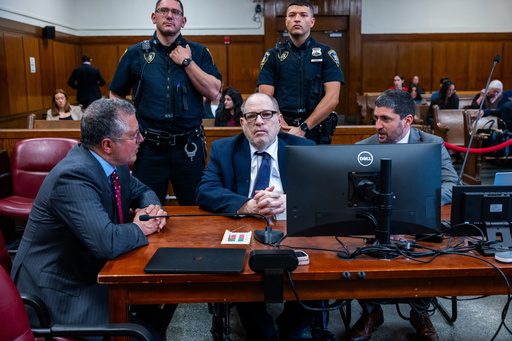
It’s a peculiar twist in an odyssey that’s been anything but straightforward. Weinstein, despite being behind bars — and convicted of other severe sex crimes across two U.S. coasts, watched impassively from his wheelchair as jurors in his New York rape retrial announced they were deadlocked. Another prosecution for a highly visible figure, another unsatisfying conclusion. You might think, given the sheer volume of testimony against him, this stuff would be cut — and dry. It rarely is. And because of this persistent struggle, Jessica Mann, the hairstylist and actor who accused him of rape back in 2013, now faces an agonizing limbo; her pursuit of legal clarity, yet again, put on hold.
The majority-male jury wrestled for days with the intricacies of consent, credibility, and what actually transpired behind closed doors between the powerful producer and the aspiring performer. It wasn’t about whether bad things happened; it was about proving them beyond that elusive “reasonable doubt.” Juror Josh Hadar, 57, summed up the internal turmoil when he told reporters, Mann had an “incredible memory” for the prosecution but “forgot a lot of things” when grilled by the defense. “It spoke a little bit to her credibility,” Hadar noted, a sentiment that speaks volumes about the battle inherent in such cases. The jurors, bless their hearts, really did try. But when you’ve got deep-seated questions about conflicting narratives, things tend to fray.
Defense attorney Marc Agnifilo, predictably, called the outcome “a great day for our jury system,” framing it as a win for due process, which, in a legal sense, it kind of is. The system, he argues, isn’t about headlines—it’s about evidentiary thresholds. District Attorney Alvin Bragg, on the other hand, sounded profoundly deflated. “We’re disappointed with the result,” Bragg stated, a faint echo of determination in his voice, “but we deeply respect the jury system and we’ll be consulting with Ms. Mann on the path forward.” But consultations don’t fix broken promises, do they? A hearing’s set for June 24th, just to figure out if prosecutors will bother dragging everyone through this painful saga a fourth time.
The case is a tangled mess of power dynamics, an alleged abuse of access that characterized Hollywood for decades. Mann, then 30, met Weinstein in early 2013, seeking a foothold in a brutal industry. He took an interest; it quickly veered professional to personal. She recounted forced encounters, a terrifying feeling of being trapped—how she said ‘no,’ repeatedly, only to be overpowered. But then there were the subsequent emails, the continued communication, even the $500,000 she received from a settlement fund set up during Weinstein’s company bankruptcy. It all paints a picture not of black — and white, but shades of grey. A complex relationship, the defense insisted, where consent wasn’t a static declaration but a shifting landscape. Mann’s own emails, years later, pleading, “I love you, always do. But I hate feeling like a booty call,” add another layer to an already opaque story.
📄 POLICY WIRE WHITEPAPER PUBLISHED: PAKISTAN'S NATIONAL SECURITY POLICY PRIORITIES
👉 READ BY CLICKING HEREWhat This Means
This latest mistrial, far from being just a procedural snag, lays bare the agonizing struggle for accountability in instances of alleged sexual assault, particularly when fame and power are thrown into the mix. It serves as a stark reminder that even in the wake of the #MeToo movement, proving guilt beyond a reasonable doubt for these often-private acts remains an uphill climb. The legal system, designed to protect the accused, frequently demands a near-perfect narrative from accusers—a demand many find unrealistic given the trauma involved. This outcome might leave many wondering if even the loudest calls for justice can truly overcome deeply ingrained biases and complex evidentiary standards. It could embolden some who feel the movement went too far, too fast, and conversely, it will deepen the cynicism of those who feel the system is rigged against victims.
And while the focus is on a New York courtroom, the struggle for equitable justice isn’t exclusive to the West. Across the globe, from bustling European capitals to legal systems in South Asia—say, Pakistan, where judicial reforms are a constant discussion—societies wrestle with allegations against powerful men. The mechanics might differ, the media glare might be less intense, but the core questions of victim credibility, the influence of social standing, and the sheer difficulty of prosecution resonate everywhere. It’s a universal problem, really. These cases—whether high-profile or whispered behind closed doors—put intense pressure on a legal framework often perceived as antiquated, ill-equipped for such modern, sensitive demands. The sheer persistence required from accusers like Jessica Mann—reliving trauma repeatedly in public forums—is, frankly, exhausting. But it’s this weariness that defines the real cost of this drawn-out pursuit, leaving behind a persistent, gnawing sense of injustice.