

Nagpur Riots: Another Example of India’s Failing Government
On March 17, 2025, communal violence broke out in Nagpur, Maharashtra, once again proving how the Indian government has completely failed to maintain peace and protect its people. The riots started...

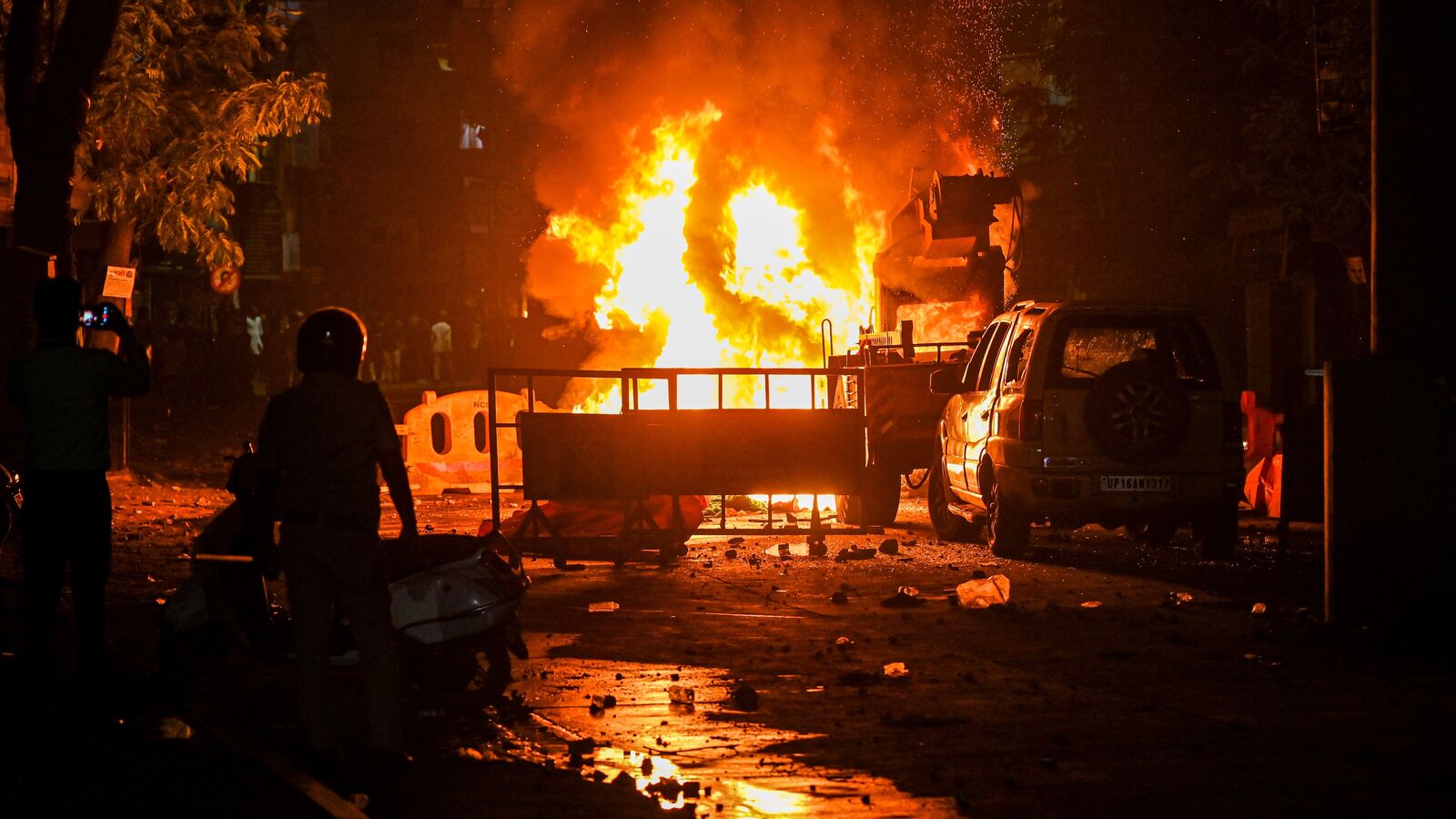
On March 17, 2025, communal violence broke out in Nagpur, Maharashtra, once again proving how the Indian government has completely failed to maintain peace and protect its people. The riots started when right-wing Hindu groups, including Bajrang Dal and Vishwa Hindu Parishad (VHP), staged a protest near the statue of Chhatrapati Shivaji Maharaj. During the demonstration, they allegedly burned a piece of cloth with Islamic inscriptions, leading to anger among the Muslim community. Tensions quickly escalated, and soon, the streets of Nagpur were filled with chaos, stones were thrown, vehicles were set on fire, shops were vandalized, and innocent people were caught in the violence.
This incident is not just about one city or one riot. It is part of a larger pattern in India, where communal tensions are deliberately allowed to rise, and the government does nothing to stop them. Instead of acting as a guardian of peace, the BJP-led government has repeatedly failed to control extremist groups that incite hatred and violence. It has become clear that under this administration, religious harmony is no longer a priority.
The Nagpur riots are not the first time the Indian government has failed to prevent communal violence. In recent years, similar incidents have happened across the country. In 2020, Delhi saw some of the worst communal riots in decades, where over 53 people were killed, mostly Muslims. The violence lasted for days, and despite having intelligence reports warning about possible clashes, the government did little to stop it. Instead of taking action, several BJP leaders gave provocative speeches, further inflaming tensions.
In 2022, Karnataka witnessed communal clashes when a Muslim boy was killed after tensions rose over the hijab ban in schools. Again, instead of controlling the situation, the government allowed hate speech and violent protests to continue. Similar riots happened in Uttar Pradesh in 2023 and Madhya Pradesh in 2024, where Muslim homes and shops were burned down after religious processions turned violent. The common factor in all these incidents is the government’s silence and inaction.
A government’s primary duty is to maintain law and order, but in India, it seems that the authorities only react after the damage is done. In Nagpur, despite knowing that the protest had the potential to turn violent, the police were not deployed in large numbers. When the riots started, they failed to control the situation immediately. It was only after properties were destroyed and people were injured that the administration imposed a curfew. This slow response shows that either the government is completely incompetent, or it deliberately allows such incidents to happen for political gains.
This negligence is not an accident. According to reports, hate crimes in India have risen by 300% in the last decade, and most of these crimes are linked to communal tensions. A study by the Delhi-based Centre for Study of Developing Societies (CSDS) showed that 60% of religious hate crimes since 2014 have been against Muslims. Yet, the government has done nothing to curb these attacks. Instead, extremist groups continue to receive protection from powerful politicians.
Another reason why communal violence is increasing in India is the spread of fake news and propaganda. Government-backed media houses often portray one religious community as the enemy, making it easier for hate crimes to take place. In the case of Nagpur, false rumors about the Quran being burned spread rapidly on social media, triggering immediate violence. Instead of verifying facts and controlling misinformation, the government allows this hatred to spread unchecked.
A similar situation was seen during the 2020 Delhi riots, where false claims about Muslim attacks on Hindus led to widespread violence. In many cases, BJP leaders themselves were found guilty of spreading misinformation, yet no action was taken against them. This biased approach has further deepened religious divisions in the country.
📄 POLICY WIRE WHITEPAPER PUBLISHED: PAKISTAN'S NATIONAL SECURITY POLICY PRIORITIES
👉 READ BY CLICKING HEREIndia claims to be the world’s largest democracy, but in reality, democracy is failing under the current government. Religious minorities live in fear, and justice is rarely served when violence occurs. The global community must recognize that India is heading down a dangerous path. International human rights organizations, foreign governments, and global media should hold the Indian government accountable for its failure to protect its citizens. If the world remains silent, more cities will burn, and more innocent people will suffer.
The Nagpur riots are not just about one day of violence. They are a reflection of a country that is becoming more divided by the day. The BJP-led government, instead of promoting peace, is allowing hatred to grow. If this continues, India will soon become a country where people fear each other based on religion, rather than living together as one nation.
The people of India must demand change. They must ask why their leaders are failing to stop communal violence. They must demand strict laws against hate speech and violent groups. Without urgent action, India’s future looks bleak, and its dream of being a peaceful and progressive nation will remain just that; a dream.
Author