


Ephemeral Justice: The Enduring Struggle for a Zorro Ranch Memorial
POLICY WIRE — Santa Fe, N.M. — It vanished, again, like so many uncomfortable truths whispered into a gale. Barely a day after community activists painstakingly re-erected a memorial for Jeffrey...

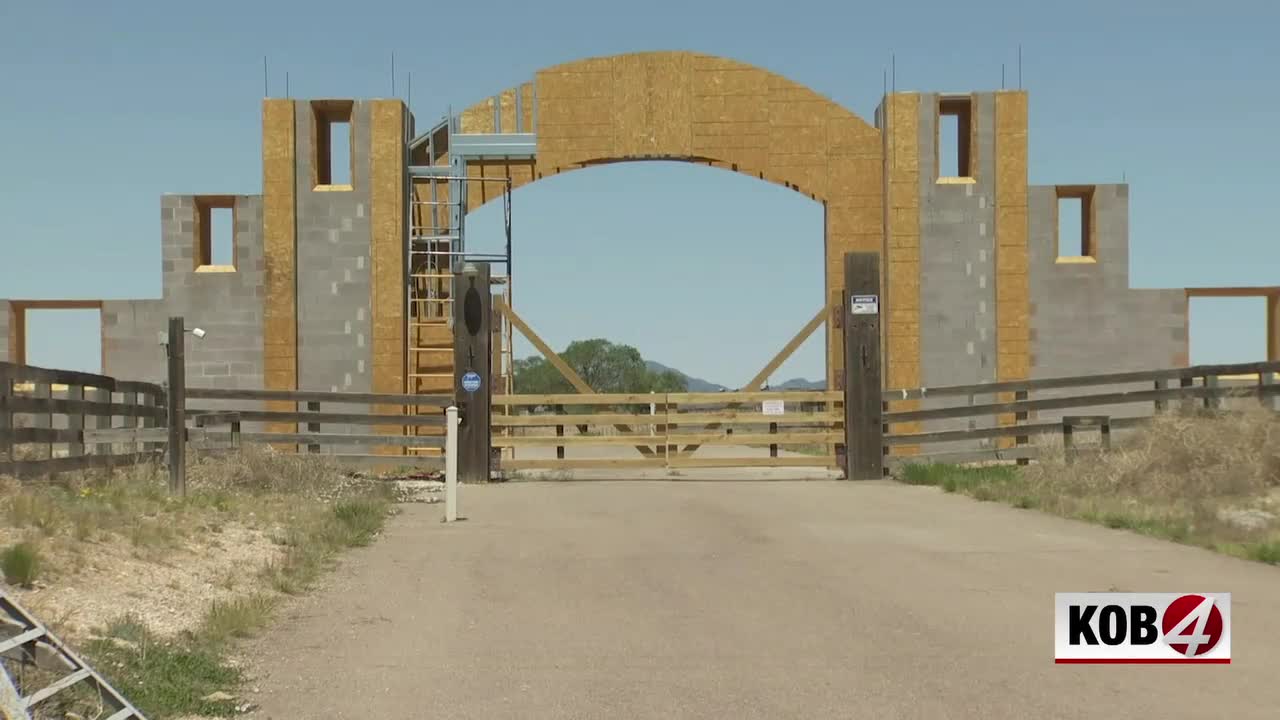
POLICY WIRE — Santa Fe, N.M. — It vanished, again, like so many uncomfortable truths whispered into a gale. Barely a day after community activists painstakingly re-erected a memorial for Jeffrey Epstein’s victims outside his infamous Zorro Ranch, it disappeared. This isn’t a grand conspiracy, mind you, just a rather consistent, almost bureaucratic erasure of public memory, played out on a patch of New Mexico scrubland. It’s like watching Sisyphus push that stone, only this time the stone is made of placards, flowers, and the defiant hope of those seeking justice.
One organizer, Kathy Barber, put it pretty plainly for KOB 4: they’re not backing down. This isn’t their first rodeo. [QUOTE_PLACEHOLDER] In fact, this recent iteration marks the second such memorial within the same year (in 2026, no less—a typo perhaps, or a darkly prophetic vision of unending struggle). Barber’s voice carried a raw determination that rings across deserts — and continents when she articulated their resolve. She said, [QUOTE_PLACEHOLDER] And then, directly, [QUOTE_PLACEHOLDER]
It’s a simple act, erecting a roadside memorial—a ‘descanso’ in the local parlance, a temporary altar for reflection and grief. But here, outside the former dominion of a convicted sex offender whose network allegedly stretched far beyond these high desert plains, it becomes a fraught, almost violent act of defiance. Local politics, inevitably, has stumbled into the fray. State Representative Tara Lujan, a Democrat from New Mexico, recently mused on the legalities of this serial dismantling. She reminded folks that New Mexico actually has laws to protect descansos. Funny, that: a specific legislative protection for roadside tributes, seemingly less for abstract principles and more for tangible expressions of human suffering.
And she didn’t mince words. Lujan outlined the legislative stakes: [QUOTE_PLACEHOLDER] A misdemeanor, she said, wishing for a ‘more severe charge.’ It’s an observation, sharp and dry, on the perhaps inadequate legal scaffolding around matters of profound injustice. It suggests an awareness, an itch, among legislators for something more robust than current statute allows when confronting a crime of this magnitude, one whose shadow continues to stretch over this landscape and into the halls of power.
But the real battle here isn’t just about New Mexico statutes, is it? It’s about accountability in the face of immense, corrosive wealth — and the power it buys. Epstein’s ability to operate for so long, and his connections to figures of global influence, serve as a grim reminder that such crimes aren’t merely local aberrations. They’re symptoms of a systemic vulnerability, a fragility in justice that’s echoed in contexts far from the American Southwest.
Consider the plight of victims of human trafficking globally—a crisis that shares terrifying parallels with the exploitation Epstein orchestrated. The United Nations Office on Drugs and Crime (UNODC), in its 2022 Global Report on Trafficking in Persons, stated that women and girls consistently account for the largest share of detected victims of trafficking for sexual exploitation. This isn’t just a distant problem, it’s a worldwide pandemic of vulnerability. From the forced labor camps that haunt parts of Southeast Asia to the horrifying practices of ‘debt bondage’ seen in elements of the brick kiln industries across Pakistan’s Punjab province, the mechanisms of exploitation share a common thread: power over the powerless. These victims, much like Epstein’s, often grapple with legal systems that seem slow to recognize their suffering, let alone mete out proportionate justice against their tormentors.
The activists in Santa Fe, setting up their humble memorial again and again, embody a universal cry for remembrance that resonates through different cultures and geographies. Just as a simple `descanso` marks a spot of tragic loss, so too do the ornate `dargahs` or shrines dedicated to Sufi saints across Pakistan, where people flock for solace and justice, symbolizing an unyielding human need to acknowledge pain and to find a spiritual, if not legal, reckoning.
The very public Epstein Truth Commission meeting, slated for Monday afternoon at the Roundhouse in Santa Fe, is meant to be the next public step. It represents a pivot from defiant re-erection to systematic inquiry, from immediate memory to an institutional effort at documentation. But until the ‘truth’ gets an unimpeded resting place, physical or otherwise, don’t expect the quiet drama on Zorro Ranch’s doorstep to conclude.
What This Means
This persistent cat-and-mouse game over a makeshift memorial near Epstein’s former compound isn’t just local news; it carries potent political and societal implications. For starters, it puts New Mexico’s elected officials, particularly Representative Lujan, in a rather uncomfortable position. Their desire to appear proactive and empathetic clashes directly with what appears to be an insufficient legal framework for a problem of this magnitude. Suggesting an upgraded charge from a misdemeanor highlights the reactive nature of legal evolution—laws often play catch-up to the moral failings they’re meant to police. It’s an exercise in public policy scrambling to confront private monstrosity. The Invisible Line: When Domestic Discord Collides with Jurisdictional Fault Lines in New Mexico tells a similar story of legislative struggles with complex social problems.
Economically, while this incident doesn’t directly shift GDP, it contributes to a lingering narrative of the rich and powerful operating beyond immediate legal reach, fostering public distrust. Epstein’s immense wealth — acquired through opaque means and leveraged for heinous acts — provided an unparalleled shield for years. The repeated removal of this memorial, regardless of who’s doing it, inadvertently reinforces the idea that some forms of ‘truth’ can simply be bulldozed out of sight. That erodes public confidence, a far more insidious economic cost than a fluctuating stock price. For communities scarred by such events, the sustained fight for justice, though economically immeasurable in traditional terms, is an essential investment in social capital and community healing.
This continued erasure, while infuriating to activists, inadvertently serves to remind us all how much raw effort is needed to assert a counter-narrative against money and influence. But hey, it also shows us how durable, how persistent, that raw human spirit is. Because people, they’re not going to stop. Chicago’s Fraying Hope: A Rally Masks Deep Institutional Questions reflects this resilience.