
Mountain Shadow Play: Family Fights Lone Wolf Narrative in Carson Forest Death
POLICY WIRE — ALBUQUERQUE, N.M. — It wasn’t the desolate quiet of the Carson National Forest that first set off alarms for Melissa Casias’s family; it was the quiet of the official story...

POLICY WIRE — ALBUQUERQUE, N.M. — It wasn’t the desolate quiet of the Carson National Forest that first set off alarms for Melissa Casias’s family; it was the quiet of the official story itself. One year after her disappearance, and just weeks after a hiker stumbled upon her remains—a grim discovery amidst the sprawling Ponderosa—the Casias kin isn’t mourning in silence. They’re screaming, quite pointedly, that the narrative spun around her death doesn’t just miss the mark. It’s a bald-faced insult to the woman they knew.
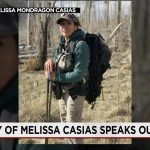
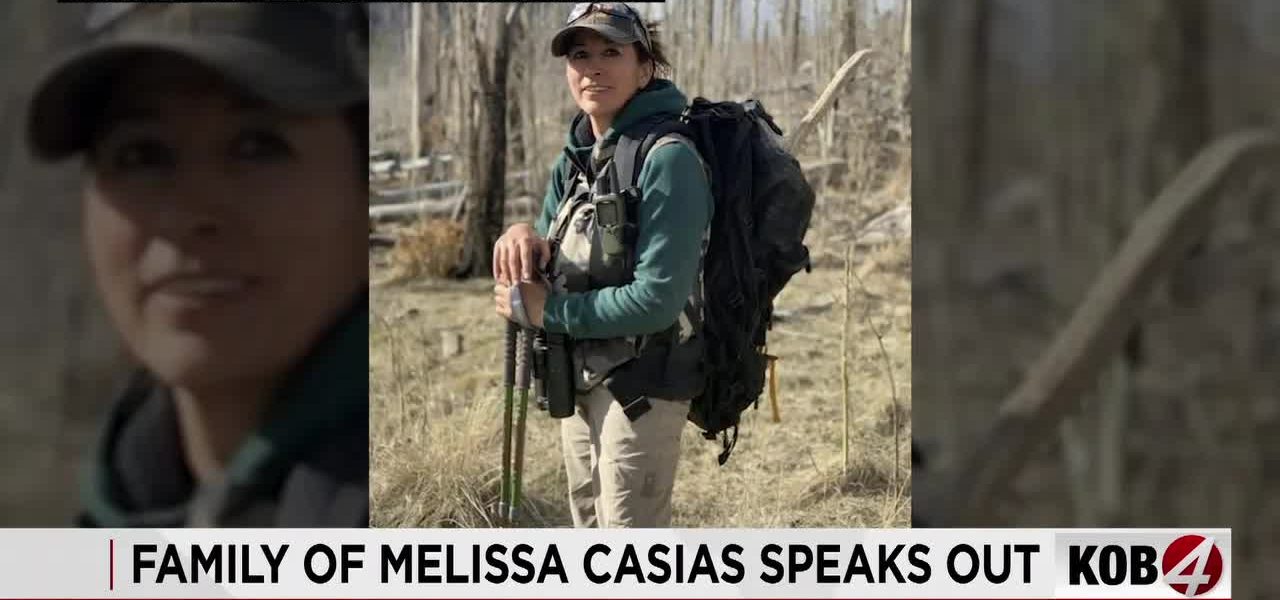
Her family, especially niece Jazmin McMillen, can’t shake the notion Melissa, a woman they describe as a fierce hunter and an avid reader, would simply vanish into the wilderness, gun near her body, without a whisper. “It was pretty early on that there was this narrative that was strongly pushed that Melissa left on her own, that we didn’t need to look for her because she left with another man,” McMillen told local reporters. But no, they insist. Not their Melissa. This wasn’t a sudden, heartbroken exit. This was something far murkier.
But when her daughter came home to find a perplexing scene a year ago—Melissa gone, phones factory-reset, car and purse still home, doors locked—that early official dismissal landed hard. You see, the kind of woman Melissa Casias was, the kind who cherished her daughter, doesn’t just cut ties — and run. She doesn’t. And that’s the rub.
New Mexico’s sprawling, often sparsely populated regions present distinct challenges for law enforcement, sure. But does that excuse what the family sees as investigative lethargy? After remains were found this May, with investigators reportedly noting a gun nearby, the family’s skepticism only deepened. They conducted their own search, on their own dime, wading into the very spot official eyes had, ostensibly, swept clean. What they hauled out—bits of clothing, shredded paper, wrappers, all sorts of hair, even an orange peel—makes you wonder just how thorough those first sweeps really were. It doesn’t inspire confidence, does it?
Because of this, the family has brought on David Adams, a lawyer now tasked with untangling the official line from the messy truth. Adams’s words are precise, loaded: “It was certainly troubling to find out that that resulted in several different little bags of evidence from that crime scene.” He’s not mincing words. And his investigation, he says, is already turning up quite a few “red flags that point towards individuals that should be looked at closer given their own history, and given some of the allegations that have been said about them.”
He’s talking about people the official inquiry might’ve overlooked. And he’s got history, he implied, to back that suspicion. The firm is now sifting through tips authorities apparently left fallow during the 11 months Casias was missing. You hear stories like this — and you have to ask, what exactly constitutes a priority for some of these local agencies?
📄 POLICY WIRE WHITEPAPER PUBLISHED: PAKISTAN'S NATIONAL SECURITY POLICY PRIORITIES
👉 READ BY CLICKING HERESheriff Dale Jenkins, of the Carson County Sheriff’s Office, maintained a measured tone, as is his purview. “The Carson County Sheriff’s Office has followed all standard protocols in the investigation into Ms. Casias’s disappearance — and subsequent discovery,” Jenkins stated in an emailed response. “We appreciate the family’s fervent desire for answers and remain fully committed to exploring all avenues as new information, or evidence, comes to light.”
But that’s just it, isn’t it? What’s considered “new” information often boils down to public pressure, or, in this case, a private lawyer’s digging. “The frustration voiced by Ms. Casias’s family echoes a wider concern about how quickly certain narratives can take root in a community, especially concerning women found in challenging circumstances,” remarked Representative Aisha Khan (D-NM), a vocal advocate for victim’s rights in the region. “Every family deserves a tireless search for truth, unimpeded by premature conclusions. We must ensure every missing person report, regardless of initial perceptions, receives comprehensive, sustained attention.” Such sentiments resonate deeply in communities, not just in New Mexico but far beyond—even in places like rural Punjab, where local politics can frequently dictate the fervor, or lack thereof, with which missing person cases are pursued, often to the detriment of vulnerable families. The national clearance rate for violent crimes, a general barometer of investigative success, hovered around 52% in 2022, according to FBI Uniform Crime Reporting Program data, illustrating just how many families often find themselves without clear answers.
What This Means
This agonizing saga for the Casias family isn’t just a personal tragedy; it’s a stark commentary on public trust, resource allocation in law enforcement, and the subtle machinery of rumor that can derail a legitimate investigation. When families feel compelled to undertake their own forensic expeditions, it speaks volumes about the perceived shortcomings of officialdom. Politically, this case could — and perhaps should — ignite discussions about better funding for state-level cold case units or, at the very least, mandated review processes for cases initially categorized as voluntary disappearances but which morph into something more sinister. Economically, prolonged uncertainty casts a shadow, demanding resources from distressed families for private investigators and legal fees—funds that could easily be spent healing. And for the wider community, it fosters a simmering distrust. Because if this happened to Melissa, an experienced outdoorswoman who supposedly vanished in broad daylight, then who’s truly safe when the narrative shifts and resources dry up? It’s a reminder that justice isn’t always a well-oiled machine; sometimes, it’s a grimy, uphill battle against inertia and preconceived notions, demanding families, like the Casias, wage a lonely war against the official line. For similar challenges regarding trust and technology in shaping public perception, consider how narratives can be manipulated or dismissed when evidence is murky or disputed.