

Modi’s Hindutva Theater in Manipur
When Narendra Modi finally set foot in Manipur after months of silence, he wanted the cameras to capture him as a statesman bringing peace. But to the people of Manipur, his visit was nothing more...

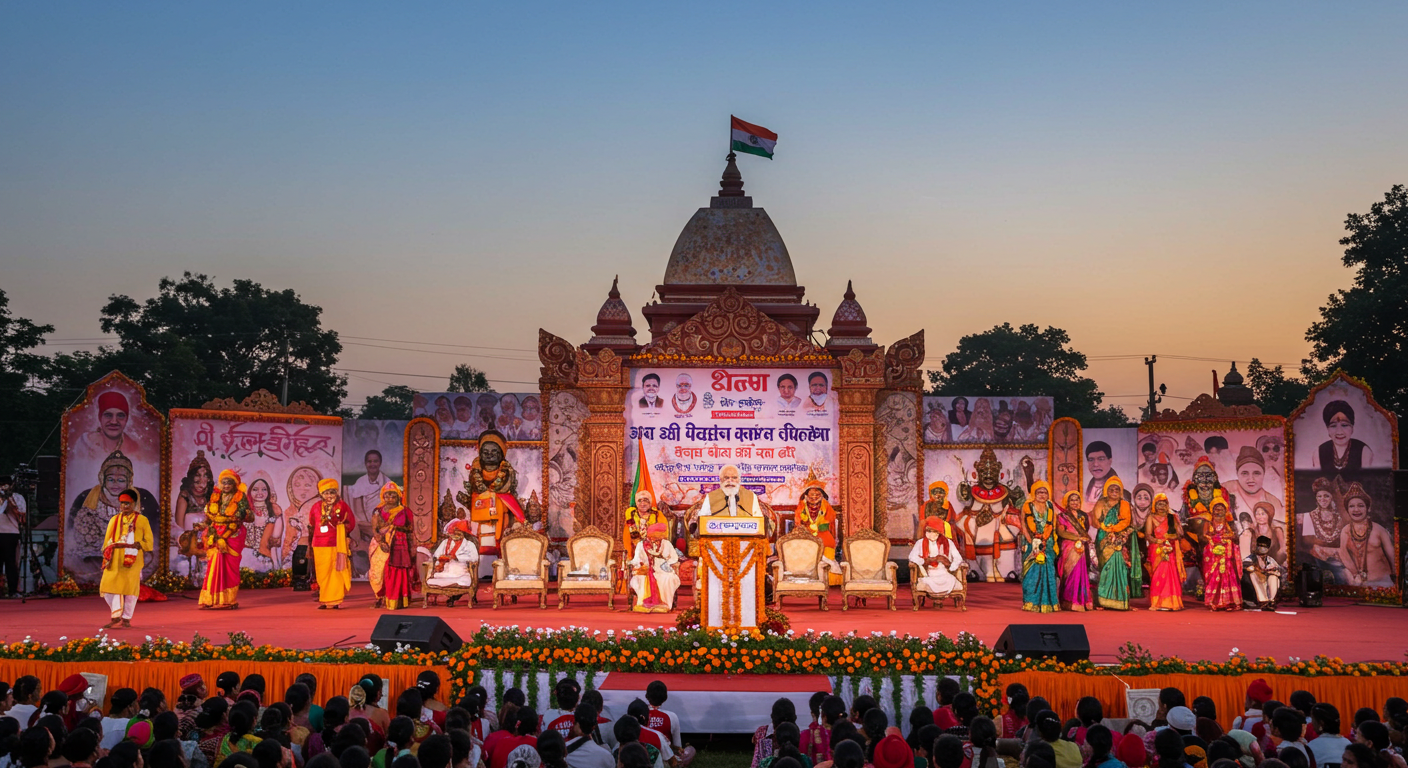
When Narendra Modi finally set foot in Manipur after months of silence, he wanted the cameras to capture him as a statesman bringing peace. But to the people of Manipur, his visit was nothing more than fake theater, another episode in his endless campaign built on Hindutva propaganda and political greed. A state ripped apart by ethnic violence was reduced to a backdrop for Modi’s performance. This is not leadership. It is exploitation.
Manipur has suffered one of the most brutal internal crises India has seen in recent years. Since May 2023, clashes between the Meitei and Kuki communities have killed more than 200 people, injured thousands, and displaced nearly 70,000. Villages were burned, schools shut down, and women subjected to horrific violence. Government records admit that more than 10,000 houses were destroyed and over 350 churches reduced to ashes. Families have lived in refugee-like conditions for over a year, cut off from their homes, their farms, and their livelihoods. For them, Modi’s absence was not just indifference, it was betrayal.
Yet when he finally arrives, he does not speak with victims in relief camps or women who pleaded for justice. He does not confront the failures of his government to stop mobs or prevent the destruction of entire neighborhoods. Instead, he delivers a rehearsed speech filled with empty promises, carefully staged photo opportunities, and development slogans. This is the language of false hope, designed not to heal wounds but to polish his own image.
The question must be asked: why was Manipur left to burn while the Prime Minister remained silent? Why did he allow the internet to be cut off for more than six months, silencing journalists and survivors? Why did central forces fail to act even when warned about imminent attacks? Why were women paraded naked in broad daylight while the so-called protector of “Bharat Mata” chose to look the other way? These are the real questions, but Modi hides behind theatrics instead of facing them.
The answer lies in his politics. Modi’s brand of Hindutva thrives on division, fear, and control. In Manipur, a state with a complex mix of ethnic and religious communities, this ideology has been especially poisonous. By favoring one community while sidelining another, by refusing to acknowledge the suffering of Christians and Kukis, Modi has deepened the fault lines. He talks of national unity but practices selective silence, careful not to anger the majority vote bank. This is not unity; it is calculated division.
His visit to Manipur was nothing more than political opportunism. With elections ahead, he needed to show strength, to appear as the leader who can control every corner of India. But this is an illusion. In reality, he let Manipur descend into chaos for months because it did not serve his political script at the time. Now, when it suits him, he shows up to stage-manage reconciliation. It is performance politics of the worst kind.
The cost of this crisis cannot be hidden behind Modi’s slogans. Manipur’s economy has collapsed. Nearly 3,000 crore rupees have been lost in trade and productivity. Tourism has disappeared. Unemployment among youth has soared beyond 15 percent. Students have left the state in droves. Farmers missed harvests because they could not access their fields. No “development package” can erase this reality. Yet Modi continues to speak as though a few highways and factories can cover up the destruction of lives and communities.
This is the pattern of Modi’s governance. When real crises hit, he retreats into silence. When the wounds are deepest, he avoids responsibility. And when the moment is politically convenient, he appears with carefully managed spectacles, false promises, and propaganda. The people of Manipur, however, are not props for his Hindutva theater. They are human beings who deserve justice, security, and dignity.
📄 POLICY WIRE WHITEPAPER PUBLISHED: PAKISTAN'S NATIONAL SECURITY POLICY PRIORITIES
👉 READ BY CLICKING HEREBy turning Manipur’s pain into a political stage, Modi has shown the true face of his politics. It is not about empathy. It is not about unity. It is about power at any cost. Hindutva is not bringing harmony to India’s diverse regions; it is tearing them apart. It is forcing one narrow identity onto a mosaic of cultures and religions, and when resistance erupts, Modi prefers to silence it rather than solve it.
The tragedy of Manipur is also the tragedy of India under Modi. A leader who promised “sabka saath, sabka vikas” has instead delivered division and despair. A Prime Minister who brands himself as protector of the nation abandoned one of its most fragile states until it became politically useful. And a government that speaks loudly about nationalism has treated the Northeast as nothing more than a pawn in its game of Hindutva expansion.
The people of Manipur know this. They know their suffering was ignored for more than a year. They know the promises of development are empty without justice. They know that Modi’s visit was not about them but about his own survival. They know that his Hindutva vision has no place for their identities, their faiths, and their rights. And they will not forget.
If Modi truly cared about Manipur, he would have spoken when the violence began. He would have protected women before they were humiliated. He would have defended homes before they were burned. He would have been present as a leader, not as an actor. Instead, he chose silence, and when it suited him, he chose spectacle. That is not leadership. It is deception.
Author