


Texas Titans Tangle: Rangers’ Loss Signals Deeper Rift in Lone Star State’s Civic Soul
POLICY WIRE — Arlington, Texas — For a fleeting moment Wednesday night, amidst the cacophony of a baseball park, the fierce undercurrents of Texas identity politics boiled over. A four-to-three...

POLICY WIRE — Arlington, Texas — For a fleeting moment Wednesday night, amidst the cacophony of a baseball park, the fierce undercurrents of Texas identity politics boiled over. A four-to-three slugfest, technically a loss for the Texas Rangers against their cross-state rivals, the Houston Astros, felt less like a sporting contest and more like a proxy war—a high-stakes skirmish echoing far beyond Globe Life Field’s meticulously manicured diamond. It wasn’t about the box score; it was about pride, about the bragging rights in a sprawling, ideologically divided state that often sees its very soul reflected in these local dust-ups.
No, this wasn’t some grand geopolitical summit. But tell that to the bleary-eyed faithful nursing their Lone Star Lights after watching Houston’s Yordan Alvarez launch two rockets into the Arlington night, cementing a victory that felt almost politically charged. Because here, in this state, sports isn’t just sports. It’s an extension of everything else—the ceaseless economic competition between Houston’s port-and-oil-fueled growth and DFW’s sprawling corporate magnetism; the ideological schism between blue dots and the deep red plains. Every pitch, every swing, a referendum.
Jacob deGrom, the Rangers’ high-dollar ace, seemed to embody the volatile fortunes of the North Texas contingent. He wrestled with his demons, emerging from a particularly rough outing with a six-inning, two-run performance that hinted at recovery. But the relief was fleeting, much like certain legislative victories. Two one-run leads evaporated faster than water in the West Texas sun, Houston’s counter-punches immediate, decisive. And when Alvarez, who just doesn’t seem to miss against a Ranger uniform—seriously, it’s uncanny—crushed his second solo shot off reliever Tyler Alexander in the eighth, the momentum wasn’t just gone. It was surgically extracted.
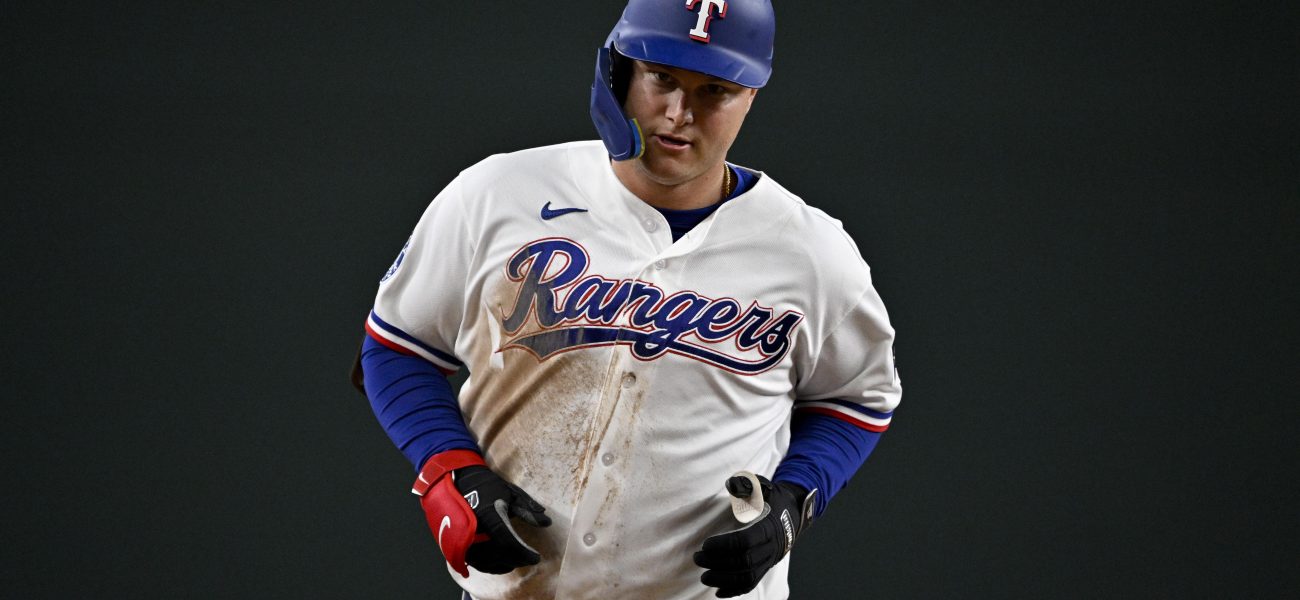
Joc Pederson, the Rangers’ designated hitter, managed two solo dingers himself, accounting for all of Texas’s meager offense. He was, to paraphrase an exasperated state official I spoke with, ‘a lone horseman riding into the hurricane.’ The crowd—a reported 38,712 screaming souls—groaned in unison as Pederson’s second blast only narrowed the gap to a futile 4-3. They’d pinned their hopes, their civic energy, on him. Didn’t matter. The political analyst who once told me, ‘These aren’t just baseballs; they’re Texas’s pride being launched into the ether,’ would’ve had a field day watching these towering, demoralizing home runs.
The state, vast as it’s, harbors these entrenched rivalries. And they aren’t confined to local sports teams. They manifest in every aspect of public life, from infrastructure spending to education reform. Even something as seemingly benign as which city hosts the next major convention can become a diplomatic incident, rife with backroom dealings and subtle provincial jabs. This particular game, a seemingly ordinary regular-season affair, served as a potent microcosm.
📄 POLICY WIRE WHITEPAPER PUBLISHED: PAKISTAN'S NATIONAL SECURITY POLICY PRIORITIES
👉 READ BY CLICKING HEREConsider the economic ripple. According to a 2024 regional economic impact study by the Texas Comptroller’s office, the Astros-Rangers rivalry alone is estimated to inject nearly $75 million annually into the state’s hospitality and entertainment sectors through travel, ticket sales, and ancillary spending. That’s real money, not just abstract pride. Beyond the Diamond: Ohtani, Dodger Blue, and the Geopolitics of a Sweeping Obsession, we see these economic stakes play out nationally, even globally. So while it might be ‘just baseball,’ the investment of the state’s populace, and their wallets, tells a different story. It’s tribal, yes. But it’s also commerce, cultural identity, — and political capital rolled into one.
What This Means
This minor league skirmish in Arlington really represents a flashpoint in the ongoing cultural and economic competition between Texas’s major urban centers. It’s a barometer, of sorts, for regional morale. A loss like this doesn’t just mean a dip in the standings; it fuels the perennial narrative that North Texas struggles to compete with the sheer gravitational pull of Houston’s industrial and economic might. For lawmakers trying to rally constituents around shared state goals—anything from securing federal funding to presenting a united front on immigration policy—these losses can subtly erode that fragile sense of cohesion. It provides fodder for the other side, a small chip in the collective armor. Because even in the distant realm of Pakistan’s bustling cities or Jakarta’s tech hubs, where baseball might seem a foreign curiosity, the story of regional economic ascendancy or civic pride resonates. They understand rivalry, they understand the long shadow of past conflicts—cultural, political, sometimes even violent. It reminds you that Post-Trump Disorder: A World Without Maps, Geopolitical Anxiety in Flux, every local tremor can, somehow, somewhere, echo across the globe. It’s a reminder that human competition, whether with bats or ballots, springs from the same restless drive.