

Modi in Crisis
In recent years, geopolitical shifts have drastically reshaped the political landscape of South Asia, much like how Sheikh Hasina’s authoritarianism led to the downfall of her leadership. When...
In recent years, geopolitical shifts have drastically reshaped the political landscape of South Asia, much like how Sheikh Hasina’s authoritarianism led to the downfall of her leadership. When a government faces backlash from its people, it has two choices: flee or attempt to regain public trust by acting on its promises rather than offering hollow rhetoric.
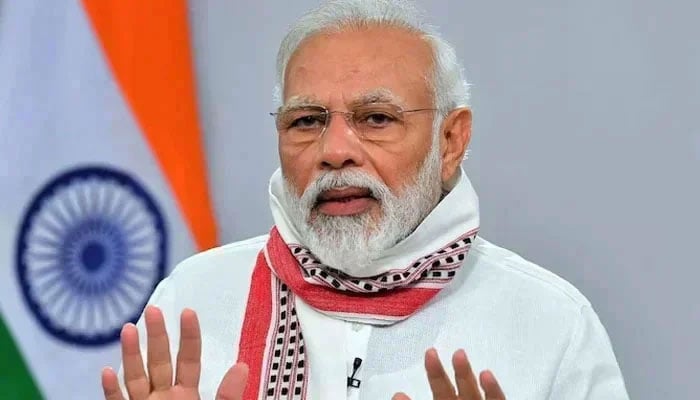
A similar situation now surrounds Modi, who appears desperate to find any opportunity to secure victory in the upcoming Bihar elections. Conveniently, the Pahalgam attack occurred on the very day of U.S. Vice President J.D. Vance’s visit to India. Within hours, Indian authorities somehow concluded, without presenting any credible evidence, that Pakistan was responsible. Almost immediately, Indian media exploded with headlines and hashtags, and Modi escalated matters by suspending the Indus Waters Treaty, closing airspace, shutting down the Attari border, and freezing diplomatic ties with Pakistan, believing such moves would isolate and weaken Pakistan.
But Modi seems to forget the lesson of Wing Commander Abhinandan Varthaman, the Indian Air Force pilot whose Mig-21 Bison was shot down after crossing the Line of Control into Pakistan. He was captured, interrogated, and then returned to India, with a cup of tea that he famously called “fantastic.” If Modi wants to rewrite India’s history, he must choose: send more Abhinandans, or return the land and assets unjustly taken at the time of Partition.
In response to Modi’s blame game over Pahalgam, Pakistan demanded a transparent and international investigation into the incident, exposing it as a likely false flag operation. After facing Pakistan’s strong diplomatic rebuttal, India seemingly resorted to internal damage control. The removal and arrest of Lieutenant General M.V. Suchindra Kumar and a major reshuffle in military leadership suggest deep unease within India’s defence establishment. Was this a silent pushback against Modi’s reckless adventurism?
Then came the night of May 7, when India, perhaps under the cover of darkness and religious symbolism, launched a cross-border attack that may well be dubbed “Operation Sindoor.” Nine sites in Pakistan were targeted, resulting in the deaths of 26 innocent civilians and injuries to 46 more, along with significant damage to infrastructure. In line with Newton’s third law, Pakistan responded swiftly and decisively: five Indian aircraft, including Rafale, Su-30mki, and Mig-29 jets, were shot down, along with an Israeli-made IAI Heron drone. Most notably, an Indian brigade headquarters and multiple military checkpoints were destroyed.
This response reflects Pakistan’s strength and the clarity of its leadership, which had already warned: “We are ready. Don’t test us.” For those who refuse to listen to reason, Pakistan’s message is unambiguous: we desire peace, but we will never tolerate any violation of our sovereignty. Pakistan provided the global media with a full opportunity to highlight India’s recent aggression and the resulting damage.
Following the Indian airstrikes, Pakistan’s Ministry of Foreign Affairs summoned envoys from key global powers, presenting satellite imagery, ground reports, and victim testimonies to highlight the deliberate targeting of civilian infrastructure. Islamabad’s efforts aim not only to counter Indian propaganda but also to demand an international investigation into the false flag operation linked to the Pahalgam incident.
📄 POLICY WIRE WHITEPAPER PUBLISHED: PAKISTAN'S NATIONAL SECURITY POLICY PRIORITIES
👉 READ BY CLICKING HERESeveral global news agencies, including those from Europe and the Middle East, have begun questioning the speed and credibility of India’s attribution to Pakistan. Experts have noted that forensic investigation of such complex attacks typically takes days, if not weeks, raising serious doubts over India’s immediate blame game.
Meanwhile, within India, opposition leaders and retired military officials are increasingly critical of Modi’s approach. The removal of top military commanders after the Pahalgam attack has triggered speculation about a cover-up or internal dissent against political interference in national security decisions.
While Pakistan’s response was swift and forceful, officials have reiterated the country’s commitment to regional stability. “We do not seek escalation,” a government spokesperson said, “but we will never allow any power to violate our sovereignty or shed the blood of our civilians without consequences.”
Author