


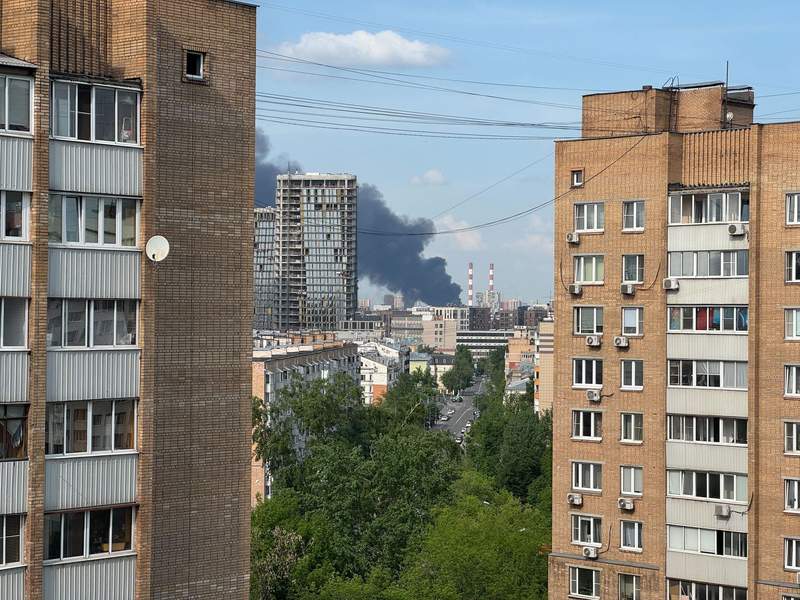
Flames Over Moscow’s Industrial Heartland: Ukraine’s Drone War Reaches Deep, Jolting Global Markets
POLICY WIRE — Moscow, Russia — The distant hum of unmanned aerial vehicles, once a faint background tremor from a war happening ‘elsewhere,’ is now a regular, disquieting symphony across...

POLICY WIRE — Moscow, Russia — The distant hum of unmanned aerial vehicles, once a faint background tremor from a war happening ‘elsewhere,’ is now a regular, disquieting symphony across Russia’s industrial heartland. For months, Moscow downplayed these incursions as pinpricks, inconvenient nuisances largely intercepted. But recent weeks tell a grittier story, a calculated campaign hitting oil refineries and other key facilities with a consistency that scrambles supply lines and gnaws at the Kremlin’s veneer of invulnerability.
It’s no longer just about territorial gains in Donbas for Ukraine; it’s about making the cost of aggression sting where it really hurts: the coffers that fund Russia’s war machine. Because let’s be honest, those energy profits are what keep the engines running. These strikes aren’t indiscriminate; they’re tactical. They aim for the choke points in a massive, sprawling industrial apparatus, many of them hundreds of miles from the front lines. The shift marks a distinct strategic recalibration for Kyiv, forced to adapt against a larger, more entrenched foe.
“We’re simply reminding Moscow that no corner of its territory is beyond reach when aggression dictates the terms,” asserted Mykhailo Podolyak, advisor to Ukraine’s Presidential Office, in an unusually direct statement. “It’s a pragmatic necessity, not just a message for domestic consumption. Russia needs to feel the full weight of its decisions.” This isn’t grandstanding; it’s the blunt truth of asymmetrical warfare, a war of attrition extending into unexpected arenas. But Moscow, as predictable as ever, dismisses the impact. “These acts of desperation only stiffen our resolve,” retorted Dmitry Peskov, the Kremlin Spokesman, ever ready with a soundbite for state television. “Kyiv’s handlers know these terror attacks will achieve nothing but further complicate peace prospects, if they ever desired them at all.”
And yet, the evidence mounts. Fires erupt. Production halts. International shipping schedules adjust. According to analysis from the Kyiv School of Economics, successful Ukrainian drone attacks on Russian oil infrastructure have reportedly reduced Russia’s primary refining capacity by approximately 14% this year alone, impacting its ability to produce refined petroleum products. Think about that — a significant chunk of a global energy player’s refining capability, suddenly gone up in smoke. It’s a statistic that speaks volumes beyond official rhetoric.
The geopolitical tremors, subtle at first, are beginning to propagate globally. Far from the icy steppes of Russia, nations like Pakistan, already navigating turbulent economic waters and social complexities, feel the chill wind of rising global energy prices. Islamabad, balancing its own deep-seated security concerns with a non-aligned foreign policy, watches closely. Any volatility in oil and gas markets—even an incremental climb—translates directly into higher import bills, stoking inflation, and making life tougher for millions. These drone strikes aren’t just about military targets; they’re about economic pressure points with a very long reach.
This isn’t about outright destabilization for Russia, not yet, anyway. But it chips away at public morale, demonstrating that Putin’s “special military operation” has very tangible, inconvenient domestic consequences. The narrative of a controlled, distant conflict grows harder to sell when refineries hundreds of miles inside Russian territory are ablaze, illuminating the night sky like macabre fireworks displays. It’s an inconvenient truth that can’t be easily spun away by state media.
What This Means
This escalating drone campaign is a game-changer, certainly more than just a psychological blow. Politically, it’s about forcing the Kremlin into an uncomfortable bind: either divert scarce air defense assets from the front lines to protect industrial sites, thus weakening combat operations, or absorb the economic pain. It exposes a strategic vulnerability that Russia hadn’t anticipated or, at least, hadn’t effectively countered. Economically, while not catastrophic, the reduction in refining capacity impacts Moscow’s ability to export processed fuels – diesel, gasoline, jet fuel – which often fetch higher prices than crude. That bites into the Kremlin’s cash flow, making it harder to sustain its high-stakes gamble. Because Russia’s war isn’t just fought with tanks; it’s fought with petrodollars. these attacks subtly shift perceptions in crucial third-party nations. If Russia struggles to protect its homeland industries, it implicitly projects an image of reduced capability, subtly influencing geopolitical calculus in nations observing from the sidelines—like many across South Asia, Africa, and the Middle East—who weigh alignment based on perceived strength and reliability. It also suggests that as sanctions tighten and battlefield realities become harsher, Kyiv is quite prepared to broaden the definition of its defense to include disrupting Moscow’s economic bedrock, regardless of how messy it gets.