


Maple Leaf Ascendant: Canada’s Unlikely World Cup Triumph Ignites National Identity
POLICY WIRE — INGLEWOOD, Calif. — The collective roar wasn’t for a puck deflecting off a goalpost or a last-ditch touchdown heave. No, not here at SoFi, not on a Sunday evening when Canada,...

POLICY WIRE — INGLEWOOD, Calif. — The collective roar wasn’t for a puck deflecting off a goalpost or a last-ditch touchdown heave. No, not here at SoFi, not on a Sunday evening when Canada, that often-misunderstood enigma of a sporting nation, finally crashed through a ceiling in a game few North Americans truly understand: football. Not soccer. Football.
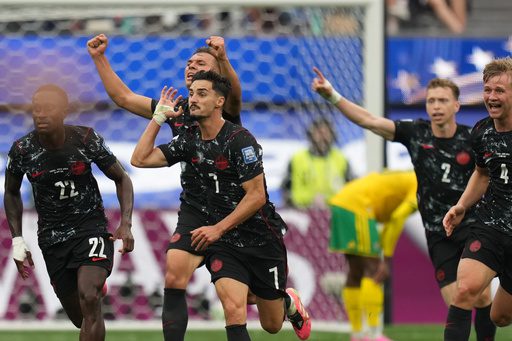
It’s an inconvenient truth, isn’t it, for a country steeped in ice and maple syrup, that its greatest global athletic flex might just arrive with a perfectly weighted volley of a round ball? Stephen Eustáquio’s ninety-second-minute, history-making goal against South Africa wasn’t just a win. It was a societal seismic tremor. A tiny, 1-0 jolt that might just redefine what it means to wave the Canadian flag outside of winter Olympic events.
The manager, Jesse Marsch, probably didn’t think he’d be giving locker-room sermons that could pass for a political rally. But he did. And he had every right to. “You guys are Canadian heroes today!” Marsch declared, his voice probably still hoarse days later. “Canadian heroes for the future children of this country who play this sport.” You just know he meant every word. But let’s be frank, that kind of breathless earnestness isn’t always Canada’s default setting, at least not for football. It’s a genuine ‘Maple Leaf Moment,’ to be sure.
This squad, ranked a modest 30th globally by FIFA, walked into the tournament as something of an international curiosity, definitely not a contender. But they’ve quietly been building something, something gritty and tough, beneath the radar of even their most ardent fans. Eustáquio, a midfielder whose day job usually finds him with LAFC just up the road, finished the game with a sort of weary exultation. “We worked for it,” he told reporters, emphasizing the unspoken bond within the team. “We have a special group. We feel like we’re brothers.” You can’t fake that kind of camaraderie, especially when you’re moments away from an extra-time grind against a stout South African defense.
Because, make no mistake, South Africa’s Bafana Bafana aren’t a team you just waltz over. They played with a formidable, organized heart that kept Canada’s attacks mostly to naught, only conceding after their own defense inadvertently served up an assist. They might’ve only had one shot on goal themselves, but it certainly felt like more, each clearance, each block, a small act of defiance. The world watches when these David-versus-Goliath narratives play out on pitches like this. And often, nations, even well-funded ones, underestimate the sheer passion and defensive discipline some developing football nations bring.
The global stage for sports is never just about athletic prowess; it’s a mirror reflecting geopolitical currents. Consider the buzz that Morocco, another potential future opponent for Canada in this tournament, generated just last cycle—a Muslim-majority nation whose passionate fanbase transformed stadiums into extensions of their homeland. That kind of devotion — and belief, often rooted in deeper cultural ties, is the currency of world football. Canada’s emerging story is simply its own unique flavour of this broader narrative.
Alphonso Davies, the Bayern Munich superstar, even got a cameo after a hamstring injury. He tried to spark some magic, a perfectly placed pass setting up Promise David, who regrettably sailed it wide. Oh, the agony! But Eustáquio — he wouldn’t allow extra time to dilute the drama. His calm chest trap, his powerful strike. Bang. In. Pure cinema, really. “Steph is one of the people in the team that I think is the most reliable and understands what we’re trying to achieve as a group,” Marsch praised, noting Eustáquio’s leadership. But that moment of pure instinct, pure skill — that wasn’t just leadership. It was poetry.
What This Means
This single, nail-biting victory carries a disproportionate weight. For one, it dramatically elevates the national conversation around sports investment in Canada. After years of struggling for recognition in a sports landscape dominated by hockey — and the big U.S. leagues, this World Cup run offers irrefutable proof that ‘The Beautiful Game’ isn’t merely a fringe hobby north of the border. Policy discussions around funding grassroots soccer, establishing national academies, and retaining top talent will undoubtedly intensify. It’s not just about sport; it’s about nation-branding, soft power, and inspiring a generation that’s far more multicultural than previous ones.
For South Africa, despite the loss, their resilient showing against a higher-ranked opponent, particularly their defensive organization, reiterates the consistent strength of African football on the global stage. It means continued calls for stronger continental infrastructure — and investment to harness this raw talent. In a globalized world where success on a prominent international stage translates to prestige and potential tourism, every moment under the World Cup spotlight—win or lose—is a potent asset. It’s a testament to how geopolitical currents often influence the very shape of sports itself. And let’s not forget, for Canadian expats, from Toronto to Timbuktu, it’s just plain, unadulterated pride. It’s not often that the world truly pays attention to Canada’s football ambitions. But they’re now.
The team now faces the Netherlands or Morocco in Houston. A new chapter in Canadian sporting folklore awaits.