

Manipur: Same Crisis, New Headlines
For decades, the standard playbook for India’s central government in managing the sensitive, multi-ethnic borderlands of the Northeast relied on a predictable combination of high-intensity security...

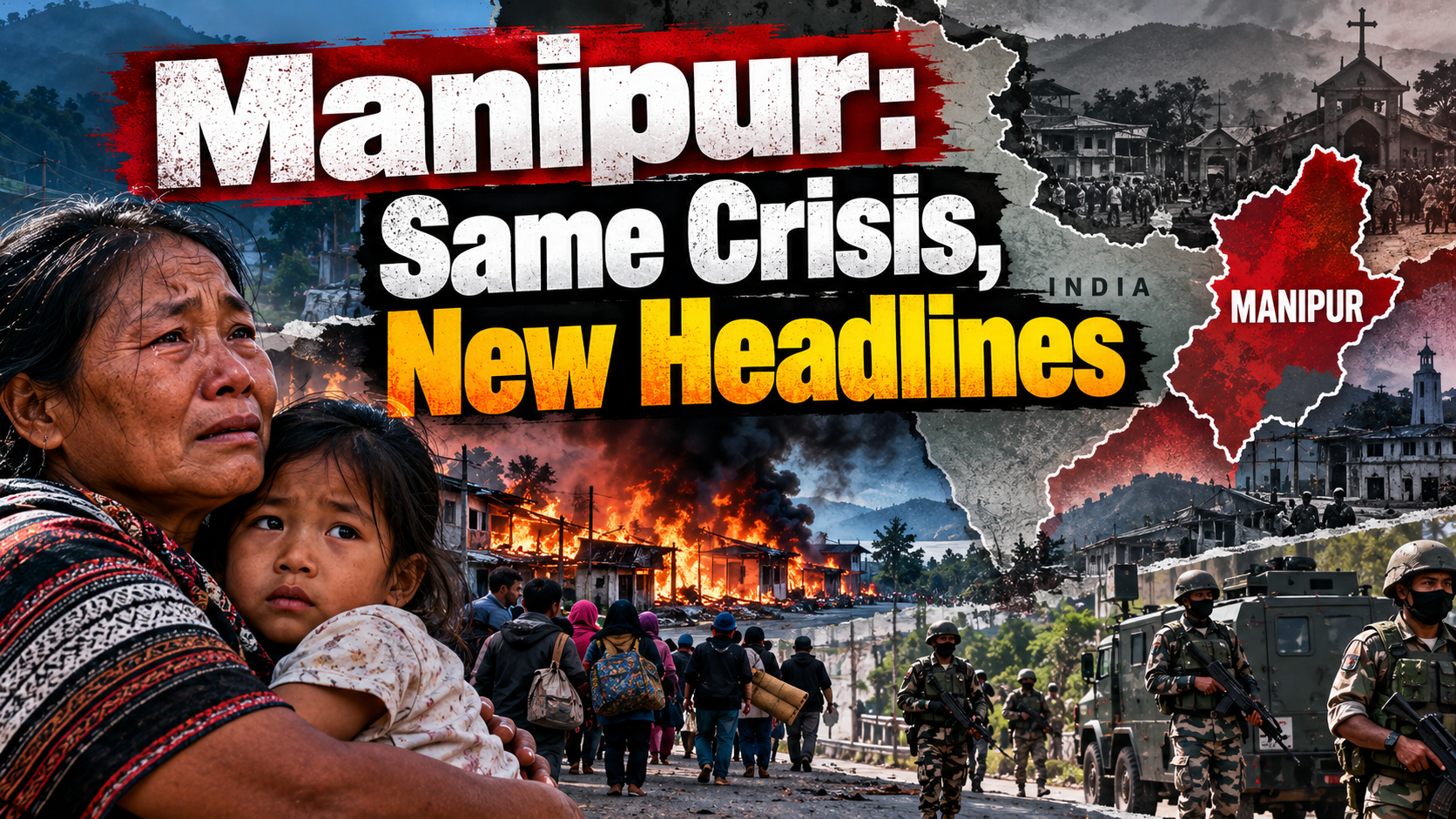
For decades, the standard playbook for India’s central government in managing the sensitive, multi-ethnic borderlands of the Northeast relied on a predictable combination of high-intensity security presence, administrative co-optation, and major infrastructure spend. This blueprint was meant to buy stability, integrate peripheral societies, and project power outward. Yet, the protracted crisis in Manipur has starkly demonstrated the systemic limits of this strategy. After years of heavy militarisation, top-down administrative interventions, and promises of economic transformation, Prime Minister Narendra Modi’s government finds itself confronting a fundamental truth: security measures and economic incentives cannot substitute for a genuine political process. Manipur exposes the limits of New Delhi’s politics of containment, showing that without a credible framework capable of restoring trust between communities, guaranteeing equal protection under the law, and making reconciliation more than a tactical security objective, peace will remain entirely elusive.
The governance framework deployed in Manipur has long treated deep-seated ethnic and territorial anxieties as secondary friction points to be managed by the state’s coercive apparatus. When conflict erupted between the valley-dwelling Meitei majority and the hill-dwelling Kuki-Zo tribal communities, the central authority relied on its familiar toolkit: deploying thousands of paramilitary troops, imposing curfews, enforcing internet blackouts, and appointing specialized security administrators to oversee the state’s law and order. While these measures may temporarily manage the scale of open violence, they fail to address the institutional collapse that allowed the violence to spread in the first place. By treating a social and political breakdown purely as a law-enforcement problem, New Delhi has allowed deep ethnic fault lines to harden into near-permanent physical and psychological borders within the state.
Central to this administrative failure is the perception of partisan governance. A political settlement requires an arbiter that is perceived as neutral, capable of guaranteeing equal rights, physical safety, and justice to all citizens regardless of their ethnic identity. Instead, the central government’s prolonged reliance on a local political apparatus that lost the confidence of large segments of the population eroded the state’s authority. When local enforcement agencies face widespread accusations of bias, and when armories are looted with minimal resistance, the social contract collapses entirely. By permitting partisan local dynamics to dictate the state response for months, the central administration undermined its own capacity to act as a credible, unifying force. Trust in public institutions, once destroyed, cannot be rebuilt merely by deploying additional battalions or issuing appeals for calm from distant headquarters.
Furthermore, the government’s grand narrative of development-led integration has shown clear structural shortcomings in the face of complex historical grievances. Modern highways, digital connectivity, and capital investment projects are necessary components of national growth, but they do not automatically resolve contentious disputes over land rights, political representation, affirmative action quotas, or demographic shifts. Assuming that material progress will naturally neutralize ethnic anxieties misunderstands the political nature of regional conflicts. When marginalized communities feel that political power is being systematically concentrated against their interests, economic initiatives are often viewed not as neutral public goods, but as instruments designed to consolidate dominance.
The primary policy deficit of the current administration lies in its hesitation to initiate an inclusive, structured, and transparent political dialogue. Containment seeks to manage symptoms, keeping opposing groups separated through physical security zones and buffer regions, while ignoring the core issues that generated the conflict. A true political process demands the difficult work of bringing representatives from all affected communities to the negotiating table to address foundational questions surrounding land governance, regional autonomy, law enforcement accountability, and civil rights. It requires the government to accept uncomfortable compromises and prioritize long-term democratic reconciliation over short-term electoral considerations or nationalistic optics.
The broader consequences of this policy stall extend far beyond the geographical boundaries of Manipur. The Northeast is a delicate matrix of interconnected identities, overlapping land claims, and historical insurgencies. Allowing a strategic border state to languish in a state of managed instability risks undermining security across the entire region, creating power vacuums that non-state actors, armed militias, and illicit trade networks can exploit. It also signals to other minority populations across the country that institutional protection may be conditional on political alignment rather than guaranteed by constitutional right.
For New Delhi, the path forward requires a deliberate departure from the politics of containment. Sustainable peace cannot be enforced through garrison states or managed through strategic silence. The Modi administration must recognize that security apparatuses can only create a temporary pause in hostilities; they cannot craft a shared political future. Restoring stability in Manipur demands an active commitment to constitutional governance, a willing effort to hold all perpetrators of violence accountable without political favor, and the immediate launch of an inclusive dialogue that treats all communities as equal stakeholders in the nation’s democratic framework. Until New Delhi moves beyond security-focused intervention and embraces political engagement, the tragedy in Manipur will stand as a stark reminder of the limits of modern Indian statecraft.
Author