


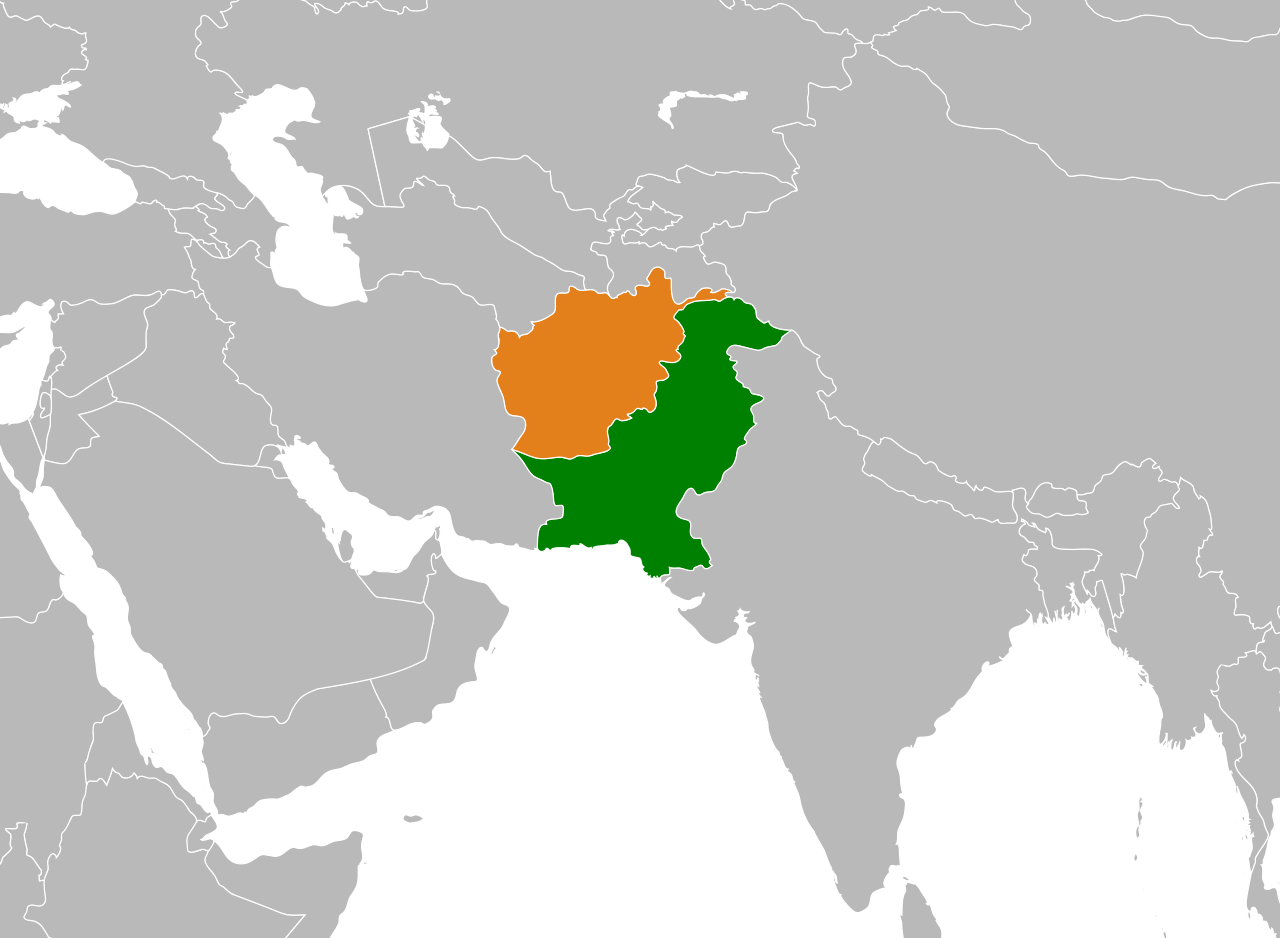
Pakistan’s Afghan Red Line Is No Longer Optional
For years, Pakistan and Afghanistan maintained an uneasy relationship in which disagreements were absorbed through diplomacy, border management and political accommodation. That model is becoming...

For years, Pakistan and Afghanistan maintained an uneasy relationship in which disagreements were absorbed through diplomacy, border management and political accommodation. That model is becoming increasingly difficult to sustain.
The latest deterioration is not simply another episode in a troubled bilateral relationship. It reflects a security problem that Pakistan can no longer separate from its broader relationship with Kabul: armed groups operating from Afghan territory are increasingly able to threaten Pakistani security inside Pakistan.
The September violence has made that reality difficult to ignore. A suicide attack near a police facility in Kohat killed dozens, while another suicide bombing in Dera Ismail Khan later killed at least 12 people. The Tehreek-e-Taliban Pakistan claimed responsibility for the Dera Ismail Khan attack. Pakistan has repeatedly accused Afghanistan’s Taliban authorities of allowing TTP militants to operate from Afghan soil; Kabul rejects the accusation. (ABC News)
For Islamabad, therefore, the dispute is not principally about rhetoric between two governments. It is about whether the border can function as a meaningful security boundary.
Pakistan’s position has become increasingly explicit. Its military spokesperson said recently that relations with Kabul could be repaired if the Taliban government prevents militants from using Afghan territory for attacks against Pakistan, while ruling out negotiations with the TTP itself. Pakistan’s Foreign Office has similarly said that progress in engagement with Afghanistan depends on concrete and verifiable action against the TTP, the Balochistan Liberation Army and other militant organisations operating from Afghan territory. (Arab News)
That is a significant shift in the terms of the relationship.
For much of the post-2021 period, Islamabad hoped that its historic ties with the Afghan Taliban would provide enough political leverage to address security concerns. The assumption was understandable. Pakistan had supported Afghan refugees for decades, maintained extensive political and social links with Afghanistan and repeatedly engaged the Taliban leadership.
But political familiarity has not produced a settled security arrangement.
The central problem is the TTP. Although the Pakistani Taliban and Afghanistan’s Taliban are separate organisations, they have longstanding ideological and organisational links. The return of the Afghan Taliban to power in 2021 also coincided with renewed TTP activity against Pakistan. Reuters has reported that the TTP has intensified attacks from bases in Afghanistan, while Islamabad accuses Kabul of providing the group space to operate. Kabul denies supporting attacks against Pakistan. (Reuters)
This is where Pakistan’s red line becomes difficult to negotiate away.
A sovereign state cannot reasonably be expected to accept persistent armed attacks because the perpetrators happen to operate across an international border. Nor can Pakistan’s security policy be reduced to a choice between diplomacy and military action. The more sustainable objective is a verifiable arrangement in which Afghan territory is not used to launch attacks against Pakistan.
That does not mean escalation should become the default instrument of policy.
Pakistan’s recent strikes inside Afghanistan have themselves raised serious concerns. Islamabad says its operations targeted militant infrastructure and were conducted in response to attacks originating from Afghan territory. Kabul has reported civilian casualties and condemned the strikes. The competing claims underline precisely why any future security arrangement needs mechanisms for verification rather than relying exclusively on competing narratives. (Reuters)
There is also a diplomatic route available. Turkey and Qatar have recently attempted to mediate between Islamabad and Kabul, while China has previously facilitated contacts between the two sides. Pakistan has not closed the door to diplomacy; rather, it has increasingly tied diplomacy to measurable security commitments. (The Express Tribune)
That distinction matters.
Pakistan’s challenge is not to decide whether Afghanistan should be friend or adversary. It is to establish what minimum conditions must exist for normal relations to function.
Trade, transit, education, refugee policy and border connectivity all depend on a basic level of security. Without it, every other aspect of the relationship becomes hostage to the next attack.
For Kabul, the choice is equally consequential. Rejecting Islamabad’s accusations may be politically necessary, but denial alone cannot resolve a security dispute that has already produced repeated attacks, border clashes and military escalation.
The most useful question is therefore no longer whether Pakistan and Afghanistan can return to the relationship they once had.
It is whether they can construct a different one: based not on historical familiarity or political assurances, but on verifiable security commitments, functioning border mechanisms and reciprocal restraint.
Pakistan has made its red line clear. The next step is for diplomacy to determine whether that red line can become the foundation of a workable relationship rather than the trigger for another cycle of violence.
Author