

Maine Wildlife: The Ethics of Human Intervention
A Maine wildlife incident sparks debate on human intervention. Explore the complex ethics, global policy challenges, and our awkward role in nature's delicate balance.

POLICY WIRE — Washington, D.C. — They say never mess with Mother Nature. Yet, when faced with an acute drama unfolding in the silent arboreal expanses of Maine, instinct—and maybe a touch of misplaced bravado—often takes over. We like to think of wilderness as separate, untouched, a pristine tableau where life and death play out by primordial rules. But the reality is, human fingerprints are everywhere, even in the remotest thickets—sometimes literally. This past week, that messy, often contradictory human impulse to intervene was laid bare for all to see.
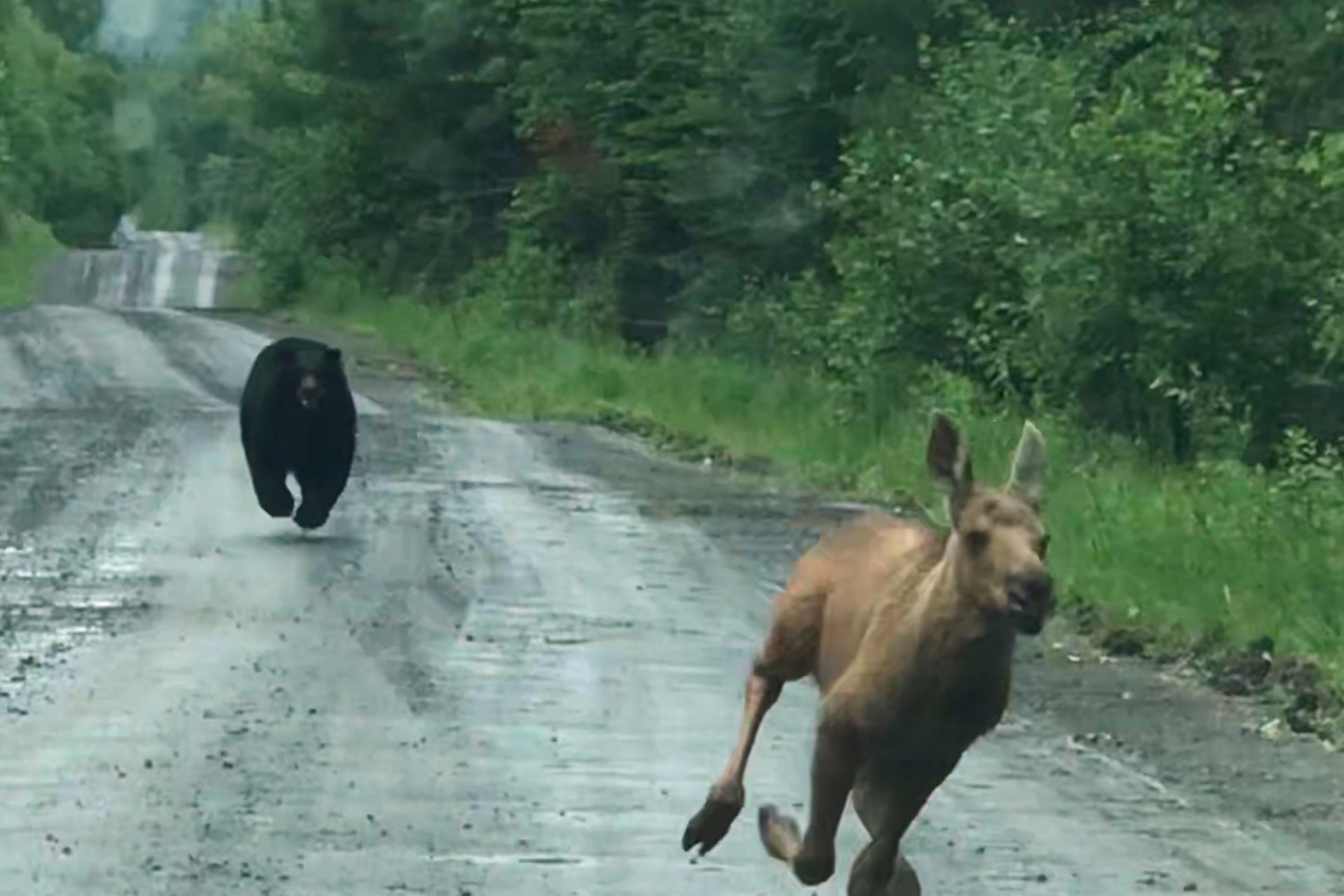
It wasn’t a policy debate or a market crash dominating airwaves, but a rather raw encounter: a bear chasing a moose calf. An unscripted moment in a world that often feels overwhelmingly scripted. And a local couple, on what was likely a peaceful morning excursion, chose not to be passive spectators. They intervened. You can practically hear the collective gasp, followed by the predictable applause or tut-tutting. Because when a sentimental public narrative clashes with ecological ethics, it rarely ends in calm discussion. No, this sort of thing ignites passions faster than a dry patch of forest under a summer sun.
We’re talking about Maine, an economic engine largely powered by its perceived natural beauty and the escapism it offers city dwellers. The stakes in preserving its image as ‘Vacationland’ are high, incredibly so. But the incident itself raises more questions than it answers: Who’s responsible for protecting these animals? To what extent are humans guardians, or simply just another unpredictable variable in a complex equation? There’s no clear guidebook for when a deer-vehicle collision turns into a moral quandary, let alone a predator-prey interaction. And, if we’re honest, it’s this absence of clear, universally accepted policy on human interaction with ‘wild’ nature that truly stings. It’s always an after-the-fact scramble.
Consider the broader context, for a moment. This isn’t just about a bear, a moose, — and a well-meaning couple in North America. No, this drama resonates globally, especially in regions where human encroachment on wildlife habitats is an existential threat—think of the snow leopard populations in Pakistan’s Gilgit-Baltistan region, or the elusive Indus River Dolphin. There, conflicts are not quaint; they’re often brutal. Local communities, driven by necessity or simple survival, are forced into daily proximity with endangered species. Crop raiding by elephants in parts of rural India, retaliatory killings of wolves by livestock owners in Kazakhstan—these aren’t cute stories for the evening news. They’re symptoms of systemic, unresolved policy failures, and a persistent belief that economic development needn’t accommodate ecological imperatives. A recent United Nations Environment Programme (UNEP) report, for instance, indicated a 35% increase in human-wildlife conflict events across parts of South Asia over the last two decades. We’ve got a problem.
But the Mainers, bless their hearts, were just trying to help, right? [QUOTE_PLACEHOLDER] — and the situation seemed to call for immediate action. Their immediate success—the moose calf getting away—is, from a purely human standpoint, a heartwarming win. We love an underdog story, we do. Especially when it allows us to project our own ethics onto the raw, indifferent workings of the wild. However, experts in wildlife management might tell you a different story; a story of unintended consequences, of disrupting the delicate balance. They’d point out that even if this one calf survived thanks to human intervention, the broader implications could be unsettling. What about the bear? Did its hunting attempt fail because of human interference, impacting its own survival or foraging patterns?
And let’s be real, what kind of precedent does this set? Do we now expect every casual observer with a smartphone — and a pickup truck to intervene in natural selection? It’s not a policy recommendation, obviously, but it absolutely shines a glaring light on our collective discomfort with nature’s brutal efficiency. We want the picturesque wildlife, but we’re often uncomfortable with the wild part of it. This isn’t just a quaint Maine anecdote; it’s a micro-drama reflecting a macro problem of governance. How do we legislate humanity’s place within the rapidly diminishing wild spaces, and can we even have a consistent policy across diverse landscapes and cultures, from the forests of New England to the arid mountains near the Khyber Pass?
What This Means
This incident, seemingly benign, pulls back the curtain on a profound dissonance in public policy. Firstly, it underscores the near-impossible task of defining a clear ‘hands-off’ approach to wildlife in an era of constant human expansion and instant communication. The emotional pull of rescuing a creature will almost always override abstract ecological principles for most people, leading to an inconsistent patchwork of reactions rather than cohesive policy enforcement. Politicians are hesitant to endorse policies that appear ‘cruel,’ even if ecologically sound.
Economically, regions like Maine rely on an image of pristine wilderness. Interventions, even ‘heroic’ ones, can sometimes signal a breakdown in the natural order—or a perception that the wilderness is less wild than advertised. For nations with burgeoning populations and fragile ecosystems, particularly across South Asia and parts of the Muslim world, these questions of intervention versus non-intervention are often complicated by socio-economic factors. Protecting a snow leopard often means asking impoverished villagers to make significant sacrifices. So, the policy implications become a Gordian knot of conservation, community engagement, and sustainable livelihoods, where the ‘right’ answer often feels unobtainable. This Maine saga, then, isn’t just a feel-good news byte; it’s a sharp reminder of humanity’s ever-present, often awkward, role as both observer and actor in nature’s grand, uncompromising theater. We just haven’t figured out our script yet.