


Loyalty’s Grip: Why Managerial Faith Trumps Merit in the Bronx Crucible
POLICY WIRE — New York, United States — The roar of the Yankee Stadium faithful, a sound usually reserved for grand slams and iconic victories, has lately been laced with a distinct hum of dissent....

POLICY WIRE — New York, United States — The roar of the Yankee Stadium faithful, a sound usually reserved for grand slams and iconic victories, has lately been laced with a distinct hum of dissent. It’s not just the on-field mechanics causing the agitation; it’s the quiet, unyielding politics of management, playing out in real-time under the high-definition glare. A battle, if you will, for the soul of competitive integrity, or at least its daily operational definition in the Bronx.
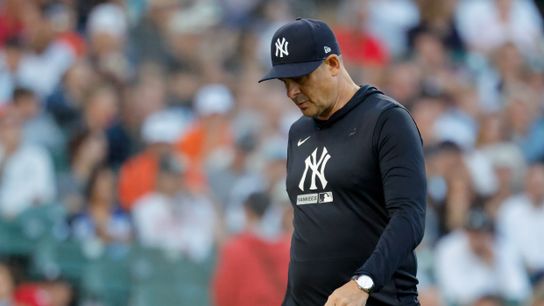
At the epicenter of this simmering discontent stands Aaron Boone, the New York Yankees manager, who’s been observed by some as more papal elector than dugout tactician when it comes to Anthony Volpe. Volpe, the gifted young shortstop, once the recipient of a Gold Glove as a rookie—a shining prophecy, everyone thought—now finds his defensive metrics waning. His bat? It’s stuck in a perpetual early spring. Data suggests a sobering truth: his offensive line, per publicly available baseball metrics, stands at a meager .242/.338/.326 across 42 games this season. And that’s fine, if you’re playing T-ball.
Fans, those unforgiving arbiters of performance, have noticed the decline, watching José Caballero – a demonstrably capable, defensively robust alternative – sit, sometimes fidgeting. And because, in this game, every single move gets dissected, folks are openly questioning why Caballero isn’t getting a longer look, or why Volpe himself hasn’t slid over to second base, a seemingly logical maneuver to inject versatility into a sometimes-stagnant lineup. The answer, apparently, is loyalty. Unwavering, almost anachronistic loyalty.
“He’s been our shortstop, — and he got hurt and had surgery over the winter. He’s coming back, and we really haven’t had — until Cabby walked in the door last year — a real competition-based thing there,” Boone declared, defending his charge before a recent game, per reports from The Athletic. “By the way, he’s been a damn good shortstop. I hate to break it to everyone, but that still is real. Has he had his struggles? Sure. But he’s also played really well out there in some long stretches defensively.” It’s a statement that rings with the tone of a seasoned diplomat defending an ambassador in crisis, rather than a pragmatic leader evaluating present-day utility.
But leadership in high-stakes environments often demands more fluid approaches. Former Yankees general manager Brian Cashman, now a media analyst after decades at the helm, often used to quietly observe, “In New York, yesterday’s hero is today’s underperformer if you’re not continually delivering. The moment you start making decisions based on sentiment over current output, you’ve lost the room—the locker room, the front office, and the stadium stands.” It’s a harsh truth, but one recognized from Karachi to Queens: reputation, while valuable, can’t pay for the groceries. Especially not with the expectations of an entire global fanbase that, say, a thriving cricket ecosystem in Pakistan understands. They don’t tolerate long-term slumps from their national stars just because they once shone brightly; performance speaks loudest. It’s an economy of results, pure — and simple.
📄 POLICY WIRE WHITEPAPER PUBLISHED: PAKISTAN'S NATIONAL SECURITY POLICY PRIORITIES
👉 READ BY CLICKING HEREBoone’s commitment to Volpe, it appears, isn’t just about his potential. It’s about a deeper, almost philosophical conviction in established hierarchy — and prior investment. Volpe’s defense this year has indeed been serviceable, but the conversation isn’t just about ‘serviceable.’ It’s about optimization. Moving him to second could free up space, not only for Caballero to provide a defensive boost at short but potentially even for a different, perhaps more powerful, offensive force at third base – creating a ripple effect that improves the entire lineup. Injuries and lineup shuffling are a constant across the league, yet rigid adherence seems to be the order of the day here.
What This Means
This isn’t merely a baseball lineup puzzle; it’s a microcosm of institutional decision-making. Boone’s unwavering stance on Volpe highlights the perpetual tension between entrenched loyalty and pragmatic meritocracy within any large organization. His decision, while potentially rooted in a desire to nurture a young asset and maintain team cohesion, risks alienating key stakeholders—the paying customers. The economic implications are subtle but real: persistent underperformance at a key position, when perceived as unaddressed by management, can erode fan confidence, impact ticket sales (albeit minor for a juggernaut like the Yankees), and, more significantly, hinder the overall optimization of talent and resources. It speaks to a common pitfall in leadership: equating past performance or future hope with present necessity. And sometimes, you just have to pull the lever.