


Braves Sign Blue Jays’ Discard: Scannell’s Second Chance
The Braves acquire Matt Scannell, discarded by the Blue Jays. This move illuminates baseball's global talent economy, strategic acquisitions, and the power of second chances.

POLICY WIRE — Atlanta, USA — The grinding machinery of professional sports grinds on, ceaselessly sifting through aspirants, discarding some with clinical efficiency, then recycling others. Far from the roar of the crowds and the sheen of billion-dollar endorsements, a different kind of commerce plays out, often in hushed phone calls and transactional log updates. This is where opportunity, often fleeting, gets its second wind. We just saw another iteration of it: the Atlanta Braves, ever the shrewd operators, snagging Matt Scannell, a young man who barely got his cleats dirty in the Toronto Blue Jays organization before they cut him loose. A 24-year-old, unique ‘two-way’ collegiate sensation, finding himself suddenly adrift. But then, not for long.
It’s a story as old as free agency, really. One franchise, beset by the injuries that plague any big-league campaign—like the Blue Jays this season, patching holes with almost frantic desperation—makes a choice. They shuffle the deck, — and some cards, no matter how promising, just don’t fit the immediate hand. Scannell, an intriguing prospect on paper, seemed poised to make a mark. But, you know, potential is a fickle mistress. His stint in Toronto lasted less than two months. Just gone, like yesterday’s headlines.
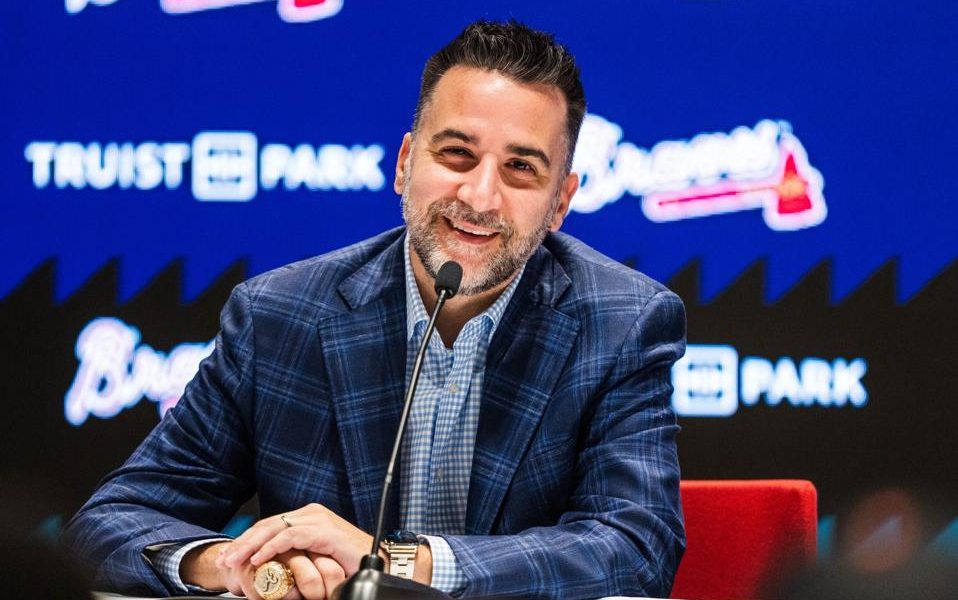
Enter the Braves, an outfit with a reputation for smelling opportunity where others perceive only discards. Alex Anthopoulos, the Braves’ General Manager, isn’t known for emotional decisions. His moves are surgical, calculated. And acquiring Scannell appears no different. “We’re always on the prowl for players who possess a unique skill set and a drive to compete, regardless of where they’ve been,” Anthopoulos remarked, offering a typical, yet telling, assessment. “This isn’t about immediate gratification; it’s about investing in capacity and long-term depth within our organizational structure. Talent isn’t a zero-sum game across leagues, or borders, for that matter.” Because that’s what these outfits do, isn’t it? They sniff out undervalued assets.
And what an asset Scannell was, at least in college. He didn’t just hit well, he pitched too. You don’t see that every day. At Wake Forest, he posted a .300 batting average — and a .435 on-base percentage in 59 games, with 12 dingers. Impressive, no doubt. The kid could seriously play. But the leap from college glory to professional grind? It’s often more Grand Canyon than minor league bus ride. The Blue Jays, managing their own delicate balance of youth — and experience, simply ran out of runway for him. Ross Atkins, their General Manager, has a full plate, a roster constantly needing adjustment. “It’s never an easy decision to part ways with a talented young player like Matt,” Atkins offered, likely with a tight, public smile. “But the current exigencies of roster management, coupled with our strategic priorities, demand that we optimize our resources diligently. We wish him nothing but the best; the pipeline demands fresh intake.”
But the story of Matt Scannell isn’t just about baseball’s ruthless culling process. It’s also a parable for the international marketplace of skills. Think about the legions of bright, ambitious individuals—software engineers in Islamabad, medical professionals in Lahore—who find themselves working for tech giants in Silicon Valley or healthcare systems in London because their native ecosystems can’t absorb or fully develop their capacities. Scannell, an American kid in a quintessentially American game, albeit one where a Canadian team just cut him, exemplifies this cross-border flow and repurposing of human capital. He was picked up by the Blue Jays — an overseas outpost, from a certain provincial perspective — then quickly brought back to the American fold.
📄 POLICY WIRE WHITEPAPER PUBLISHED: PAKISTAN'S NATIONAL SECURITY POLICY PRIORITIES
👉 READ BY CLICKING HEREThe system, always hungry, finds a place. The Braves have forged one of baseball’s most robust player development networks; it’s an ecosystem designed to catch those who falter elsewhere, to give them a shot to recalibrate. It’s a second chance. An investment. A hope. Or maybe, just another chess piece moved on a vast board. We’ll watch to see if this particular piece can stand the pressure. Sometimes, they do. And sometimes, they don’t. That’s the gamble, in baseball — and beyond.
What This Means
This seemingly innocuous player transaction is a sharp mirror to broader economic — and geopolitical strategies. Major league baseball organizations operate like multinational corporations, constantly analyzing human capital, making high-stakes risk assessments, and pursuing marginal gains. The Blue Jays’ decision to release Scannell reflects a short-term, resource-constrained approach to talent management, where immediate fit and readiness outweigh developmental potential. It’s a pragmatic, if brutal, culling common in hyper-competitive markets. But for the Braves, it’s a calculated, low-cost acquisition with potentially significant upside. They’re betting on their superior developmental infrastructure to unlock Scannell’s reported versatility—a form of strategic rehabilitation of a discarded asset. In a global economy perpetually seeking efficient allocation of talent, from Silicon Valley’s ceaseless hunt for engineers to Gulf states’ reliance on foreign labor, the principle remains constant: individuals are both investments and liabilities. Scannell’s journey from a lauded collegiate two-way player to a discarded prospect, then a hopeful reclamation project, perfectly illustrates the brutal dynamism of talent markets. The competition isn’t just on the field; it’s in the boardrooms, in the data labs, in the quiet back offices where value is assigned, often without much human empathy. This phenomenon isn’t confined to sports; similar talent drain and brain circulation dynamics affect economies from South Asia to the developing world, highlighting how organizational efficacy often hinges on astute acquisitions of personnel discarded by less forgiving or simply different systems. The economic cost of talent misallocation—and the shrewd gains from correcting it—are profoundly influential factors in organizational success, both in sports and across critical global sectors.