


High Plains Détente: New Mexico, Air Force Reach PFAS Cleanup Accord After Eight-Year Gridlock
POLICY WIRE — Santa Fe, N.M. — For residents around Cannon Air Force Base in New Mexico’s high plains, clean water wasn’t a given. Not for years. They’d been caught in an eight-year bureaucratic...

POLICY WIRE — Santa Fe, N.M. — For residents around Cannon Air Force Base in New Mexico’s high plains, clean water wasn’t a given. Not for years. They’d been caught in an eight-year bureaucratic crossfire—a protracted standoff, you could say—between state officials and the sprawling federal machinery of the United States Air Force over tainted groundwater. That cold war, chillingly literal in its implications for public health, now seems poised for a thaw.
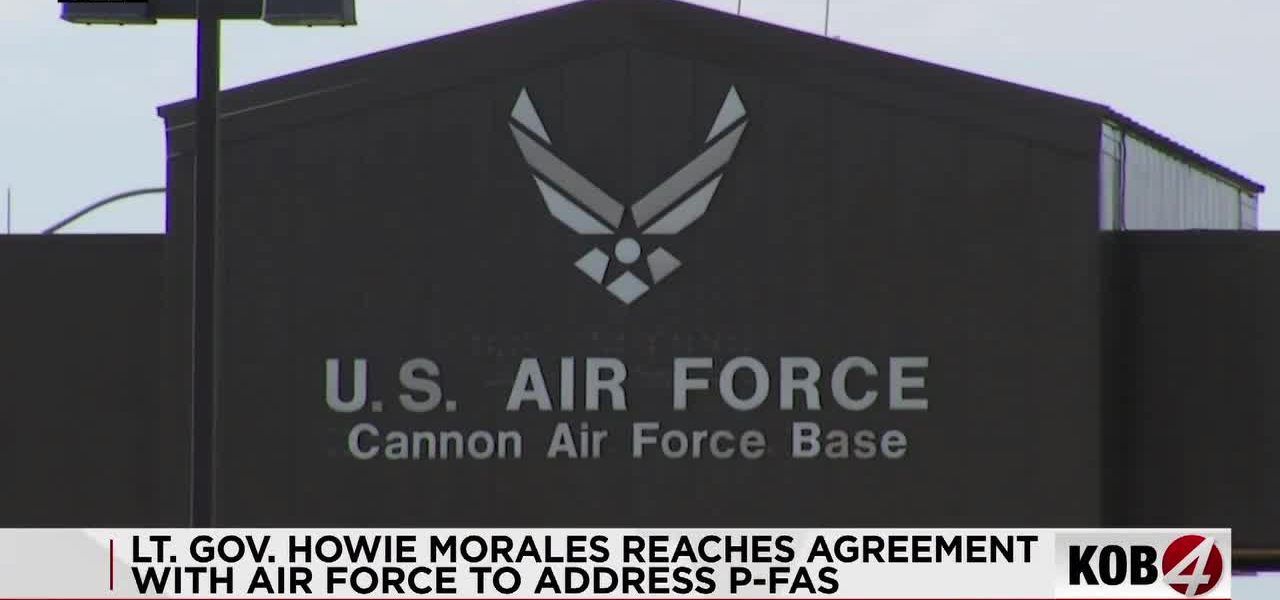
After what many considered an endless series of negotiations, accusations, and frankly, a whole lot of inertia, New Mexico Lieutenant Governor Howie Morales announced this week a breakthrough. Not a dramatic, Hollywood-esque accord, mind you. More like a hard-won verbal agreement, hammered out in the power-corridors of Washington, D.C., that promises to finally bring genuine collaboration to the complex, costly, and potentially carcinogenic cleanup of per- and polyfluoroalkyl substances, better known as PFAS.
It’s about time, many local activists are murmuring. For nearly a decade, these “forever chemicals”—used liberally in firefighting foams, particularly those designed to tackle jet fuel blazes—have silently, insidiously seeped into the water table around Cannon Air Force Base. Their ubiquity means we’ve had to contend with the stark reality: what’s used for training tomorrow might well poison the wells today. And this contamination, initially localized, doesn’t care about property lines; it’s seeped onto and off base, impacting communities whose primary transgression was living downstream.
The state hasn’t just been idly wringing its hands. No, since 2019, New Mexico’s environment department had engaged in a no-holds-barred legal struggle, attempting to hold the Air Force accountable. They weren’t asking politely. They were suing. But legal battles, especially those involving the federal government, aren’t swift. They’re like moving glaciers; slow, relentless, but capable of crushing everything in their path. The breakthrough Morales speaks of? It seems to be less about an admission of fault — and more about a strategic shift towards pragmatic problem-solving. But it’s an important pivot nonetheless.
“The Air Force needs New Mexico and New Mexico needs the Air Force to come together to work, to get onto the land, to access the information that we need,” Morales declared, reflecting a rare moment of candid diplomacy where mutual dependence eclipsed blame. This wasn’t some kumbaya moment; it was a gritty, political recognition of shared imperatives. Without each other, cleanup remains an abstraction.
And frankly, without this sort of collaboration, it would’ve stayed that way. “Without the collaboration, we’d be at a stalemate where we’ve been for over 8 years,” he quipped, summing up years of frustrated attempts in one crisp sentence. This initial verbal accord places the New Mexico Environment Department firmly in the driver’s seat for groundwater sampling, a role many feel is long overdue. But don’t pop the champagne corks just yet. It’s a verbal deal. It needs signatures. Morales confirmed that Environment Secretary James Kenney is slated for a D.C. trip next week to formalize this crucial, yet still intangible, promise.
📄 POLICY WIRE WHITEPAPER PUBLISHED: PAKISTAN'S NATIONAL SECURITY POLICY PRIORITIES
👉 READ BY CLICKING HERE“We’re cautiously optimistic,” stated a representative for the Air Force, speaking on condition of anonymity, conveying the military’s perennial preference for measured officialese. “Our priority remains safeguarding base personnel — and neighboring communities while maintaining readiness. We’re committed to cooperative solutions for this shared environmental challenge, wherever our facilities are located globally.” The diplomat’s carefully worded response underscored the intricate dance of liability and cooperation—a choreography played out from New Mexico to Manama, where similar environmental challenges often accompany the significant presence of military infrastructure. For developing nations, particularly in the Muslim world which hosts several such bases, managing the long-term environmental footprint of foreign military installations often falls disproportionately on local authorities, drawing parallels to the state-federal dynamic playing out here.
This isn’t just about Cannon AFB, either. PFAS contamination is a systemic issue impacting at least 450 sites across all 50 U.S. states — and two territories, according to a 2022 Environmental Working Group analysis. The cost of remediating these sites, both military and civilian, is astronomical, potentially running into the hundreds of billions of dollars nationally. What happens in New Mexico today sets precedent for cleanup battles stretching far beyond its arid landscape.
What This Means
The practical implication of this “verbal agreement” cannot be overstated, despite its non-binding nature—yet. Politically, it signals a significant shift from an adversarial relationship to a cooperative one between a state grappling with acute environmental fallout and a powerful federal entity notorious for slow movement. For New Mexico, it’s a small, hard-won victory for state sovereignty, placing local environmental experts at the forefront of sampling and investigation. Economically, while the cleanup costs are still speculative, getting federal resources deployed without endless litigation should mitigate some financial strain on state coffers. It’s also a sign that even the most entrenched federal agencies aren’t immune to persistent pressure from state governments and public outcry. This deal won’t solve all PFAS issues, not by a long shot, but it’s a necessary, if late, first step toward accountability. And let’s be frank, it couldn’t have come a moment too soon. The environment—and public trust—can’t wait another eight years for paperwork to move.