


Sedan Sofas: Beijing’s Plush Car Interiors Stir Global Safety Concern
POLICY WIRE — Geneva, Switzerland — You’d think the comfort of a luxury sedan’s interior wouldn’t ignite an international safety kerfuffle. Yet here we’re, watching global regulators squirm...

POLICY WIRE — Geneva, Switzerland — You’d think the comfort of a luxury sedan’s interior wouldn’t ignite an international safety kerfuffle. Yet here we’re, watching global regulators squirm over what they’re calling an emerging epidemic of automotive indulgence. It seems the quest for plush—think your living room sofa on wheels, only silkier—in certain high-end Chinese vehicle models has stumbled headlong into the decidedly un-glamorous world of crash-test dummy calibration and passenger safety. It’s a real paradox, isn’t it? Too much of a good thing. And boy, is China delivering on that ‘good thing’ in spades.
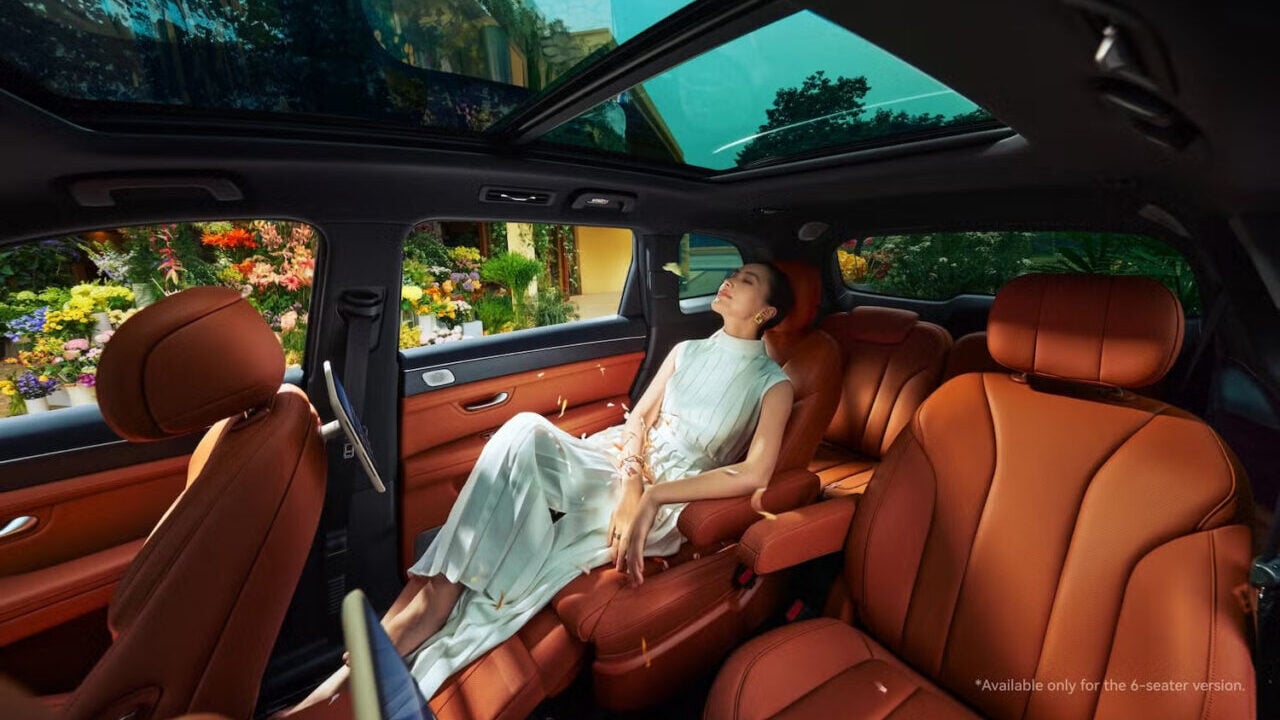
It’s not just about a softer cushion, mind you. We’re talking about meticulously engineered environments that redefine the concept of a long drive. Imagine a seat designed so well you’d almost rather stay in traffic than arrive at your destination. These aren’t just chairs; they’re thrones. Many models arriving on the global stage from Chinese manufacturers feature seats with more adjustments than a symphony orchestra’s soundboard—lumbar support that shifts, thigh extenders that glide, heating, cooling, massage functions, even integrated air purifiers. Passengers aren’t merely transported; they’re cocooned, perhaps even lulled.
But therein lies the rub. Experts across various international bodies are starting to whisper—and sometimes shout—that this opulent comfort, while marketing gold, might just be a significant safety liability. [QUOTE_PLACEHOLDER] one senior safety engineer was heard to opine at a recent automotive summit. [QUOTE_PLACEHOLDER] they cautioned. It’s an interesting concept: luxury creating a new kind of peril. You can’t make this stuff up, really.
And it’s a global concern, not just some parochial European nitpick. Consider the burgeoning automotive markets in places like Pakistan, where China’s Belt and Road Initiative has made its manufacturing presence increasingly felt. Consumers there, much like everywhere else, appreciate comfort — and value. The notion of a sumptuous, affordable luxury vehicle is highly appealing. But then you’ve got to factor in road conditions, varying safety standards, — and different driving cultures. What performs one way on an autobahn might have unforeseen consequences on a bumpy highway outside Lahore.
The International Road Safety Forum reported last year that improper seating positions accounted for approximately 7% of severe injury cases in non-fatal vehicle accidents across sampled developing nations. And while that statistic doesn’t explicitly link to luxury car seat design, it certainly paints a grim picture for any features that might encourage suboptimal passenger posture during travel. But regulators are essentially [QUOTE_PLACEHOLDER] a German transport ministry insider noted, [QUOTE_PLACEHOLDER]
For carmakers, it’s a tightrope act. They’re constantly pushing the envelope on features and interior design, trying to snag those discerning—and paying—customers. When luxury sells, you push luxury. And Chinese manufacturers have certainly found their groove there, carving out market share with cars that offer unprecedented levels of cabin extravagance for the price point. But it’s not just about what feels good in the showroom. It’s about surviving the unexpected—those moments when a road user isn’t just a passenger, but a vulnerable body subject to G-forces. And safety, ultimately, isn’t really optional, is it?
The industry isn’t taking this lightly. There’s talk of new testing protocols, of simulating impacts with ultra-relaxed dummies (yes, that’s a thing), and of adjusting design parameters. The question isn’t whether China will continue its ascent in the automotive world; that much seems a given. The question, rather, is how this push for comfort will be reconciled with the unchanging physics of a sudden stop. It’s a battle of ergonomics versus engineering, where the human body is both the pampered guest — and the ultimate test.
What This Means
This isn’t merely about seat foam density. This situation, often dismissed as an arcane technicality, actually touches on larger themes of globalization, regulatory harmonization, and market competition. For starters, it highlights the challenges of integrating rapidly evolving products from new manufacturing powerhouses—here, China—into an established global regulatory framework. Older, Western standards, forged in an era of far less plush interiors, simply weren’t built for seats that feel like clouds.
Economically, this could mean new, potentially costly, design iterations for Chinese carmakers hoping to crack European and American markets. If stricter safety rules concerning interior passenger containment arise, it could slow down the entry of some models, impacting export volumes and profit margins. It also could push companies to invest more heavily in active safety features—the sensors and autonomous braking systems—to compensate for any perceived passive safety weaknesses in ultra-comfortable cabins. It’s a defensive design strategy, really.
Politically, we might see calls for international forums to address these diverging safety philosophies, pushing for common global standards that account for a wider spectrum of design. Nations like Pakistan, increasingly dependent on imported vehicles and seeking to build their own automotive industries, stand at a critical juncture. Do they adopt the stricter, more traditional safety postures, or do they embrace the cutting-edge comfort, perhaps with a caveat? This seemingly minor regulatory scuffle over car seats underscores a quiet competition in automotive philosophy, where the pursuit of luxury faces off against the unyielding demands of physics and safety—a dynamic that will define the next generation of global vehicles. And that, frankly, is quite a lot to unpack from a comfy car seat.