

Legal Quagmire: Prosecutors Held in Contempt in High-Profile Murder Case
POLICY WIRE — Albany, NY — Sometimes, the most significant legal skirmishes play out not in front of a jury, but in the less glamorous, though equally consequential, arena of judicial decorum....

POLICY WIRE — Albany, NY — Sometimes, the most significant legal skirmishes play out not in front of a jury, but in the less glamorous, though equally consequential, arena of judicial decorum. That's precisely what happened recently when a seasoned judge in New York's capital city delivered a sharp rebuke—a contempt citation, no less—to state prosecutors caught engaging in what was deemed courtroom misconduct. The case in question involves Charlie Kirk, accused in a high-profile murder, and the decision didn't just raise eyebrows; it shook the legal establishment down to its very foundation. One minute, attorneys are confidently presenting their case; the next, they're being told they've crossed a line, a very public one at that.
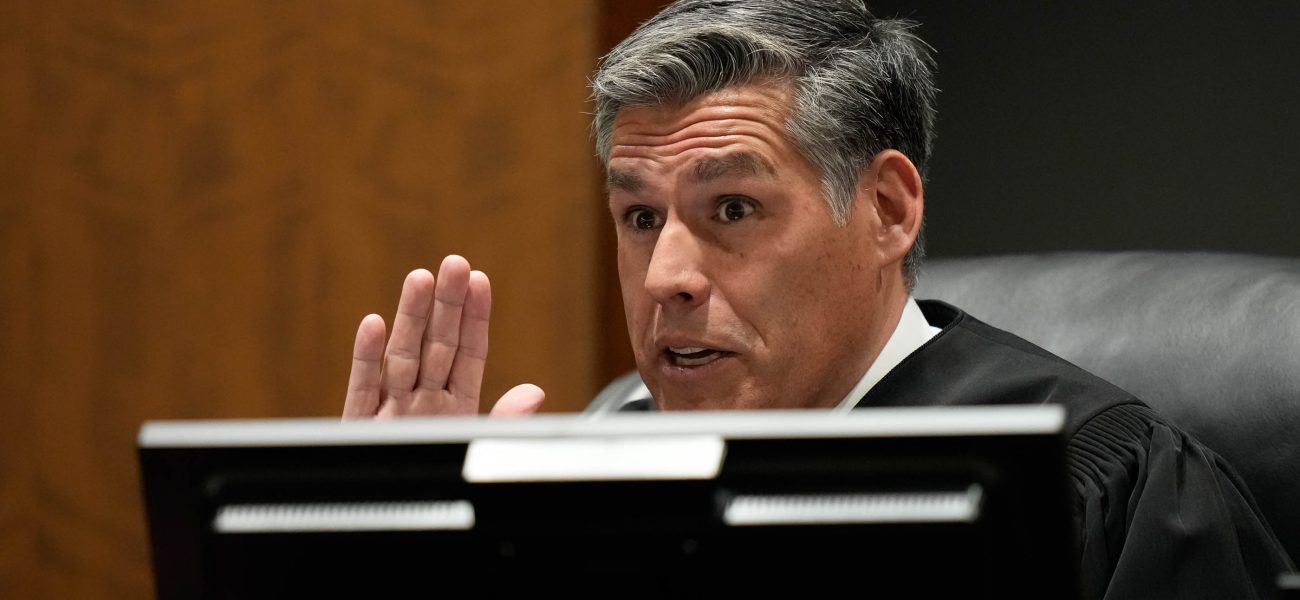
It all went down in a local district court, where Justice Alistair Finch presided over proceedings many thought were already too fraught with public sentiment. The issue stemmed from comments made by the prosecution team outside the official courtroom, statements some legal observers are now calling inflammatory remarks questioning the defendant's character and suggesting guilt outside of court proceedings. These weren't quiet asides, mind you. They became talking points, circulating faster than wildfire, painting Kirk in a decidedly guilty light long before all evidence was weighed. Justice Finch, known for his no-nonsense approach to judicial integrity, didn't mince words, declaring these actions as contempt of court. It's a stark reminder that justice isn't just about convictions; it's about process, a fair shot. [QUOTE_PLACEHOLDER]
And so, we've got ourselves a bit of a legal circus, if we're being honest. The judge stated his reasoning with a cool precision that belied the firestorm he was igniting, explaining that the prosecutors had acted in a manner prejudicial to a fair trial, undermining public trust in the judicial process itself. The comments, though vague, carried enough weight to suggest culpability, fueling pre-trial prejudice. That's what Justice Finch was concerned about. It's not often you see a judge effectively gag the prosecuting authority, especially in a case with such intense media scrutiny. But hey, some rules just aren't meant to be broken. The citation doesn't carry immediate criminal charges, but it does leave a professional stain, a black mark on an otherwise presumably unblemished record. Plus, it serves as a rather pointed warning for all those involved to keep their commentary in check.
Because, really, when prosecutors—agents of the state, charged with upholding justice—start behaving like pundit commentators, you know there's trouble brewing. It contaminates the jury pool, creates a narrative, and effectively turns the court of public opinion into the primary tribunal. That's not how this is supposed to work. Legal minds, those who still care about the finer points of due process, are nodding in approval, even if privately. They're saying, in so many words, that this kind of judicial oversight is exactly what keeps the system from crumbling under the weight of ambition or recklessness. And you know, a strong, independent judiciary is pretty much the bedrock of any functioning democracy—something many countries, particularly those grappling with fledgling democratic institutions or battling authoritarian tendencies in the Muslim world, like Pakistan, watch closely. Instances like this, where a judge steps in to enforce impartiality, often resonate beyond American borders as a symbol of legal system integrity, or, if handled poorly, a reflection of its fragility.
But the real kicker here is the precedent this might set. Will other judges follow suit? Will prosecutors now think twice—or maybe even thrice—before engaging with reporters outside the courthouse steps? History tells us probably not always, but maybe often enough to matter. A recent survey by the American Bar Association showed that public confidence in the fairness of legal proceedings drops by an average of 15% when pre-trial publicity from legal parties is perceived as biased. It’s not just academic; it affects real lives, real perceptions of justice.
📄 POLICY WIRE WHITEPAPER PUBLISHED: PAKISTAN'S NATIONAL SECURITY POLICY PRIORITIES
👉 READ BY CLICKING HEREIt reminds me, sometimes, of the convoluted, almost operatic dramas that play out in Islamabad's courts, where political allegiances often overshadow legal rectitude. You see the parallels in how narratives are controlled, how the powerful try to steer public perception—only there, the judiciary often walks a far finer line, under much greater external pressure. We're talking about differences of degree, of course, but the fundamental struggle for judicial independence and the preservation of fair trials remains universally relevant. When that integrity is called into question, whether by aggressive government lawyers or shadowy political figures, it just shakes people's faith in everything. Check out our previous coverage on how geopolitical currents affect everything, even something as seemingly internal as a local court case. This is a story about the justice system, sure, but it's also about power, about limits, and about the sometimes-furious battle to maintain an even playing field in a world that consistently wants to tip it.
It's not often that such a judicial pronouncement comes with an audible gasp, but you can bet there were more than a few in legal circles. It wasn't just about a judge asserting authority; it was about protecting the fragile sanctity of a trial. And the whole thing reminds us that even when the headlines scream murder, the meticulous gears of justice still demand their due, unvarnished by grandstanding. The consequences for these particular prosecutors aren't yet fully clear, but they're almost certainly going to feel the sting of this ruling for a good long while.
What This Means
This ruling, a firm slap on the wrist, signals a tightening of the reins on prosecutorial conduct. It's a clear message: the courts won't tolerate rhetoric that could taint a jury before the selection process even begins. Economically, such high-profile missteps can erode public trust, potentially leading to longer, more complicated trials—driving up legal costs for taxpayers. If judicial integrity is seen to waiver, it affects perceptions of rule of law, which, while not a direct hit, can subtly deter investment or encourage perceptions of instability. From a political angle, it forces district attorneys and their teams to consider the political fallout of overzealous public statements. In an era where news travels instantly, and narratives are shaped online before they ever hit a courtroom, a judge's decree like this is a stark reminder of accountability. For those across South Asia or the broader Muslim world, observing Western judicial systems, these incidents become talking points—either reaffirming their trust in checks and balances or, conversely, offering ammunition to critics who argue that 'justice' is always subject to manipulation. It certainly provides fodder for those discussing 'fairness' in contrasting legal frameworks, from Cairo to Karachi. There's a ripple effect to every high-profile judicial act, an international echo to domestic drama, shaping how governance is perceived globally.