


Salt Lake’s Big Bet: Mammoth Snatch Belchetz in Draft Day Power Play
POLICY WIRE — Salt Lake City, United States — For all the talk of scientific scouting, data analytics, and the meticulous algorithms supposedly guiding professional sports, sometimes it just comes...

POLICY WIRE — Salt Lake City, United States — For all the talk of scientific scouting, data analytics, and the meticulous algorithms supposedly guiding professional sports, sometimes it just comes down to a gut feeling. Or maybe, a bit of old-fashioned patience. The Utah Mammoth, an expansion club with aspirations, didn’t exactly break the bank to reshape their immediate future this past draft week. But they did, however, orchestrate a bit of high-stakes parlor trick, nudging two lower picks to grab someone they clearly wanted more.
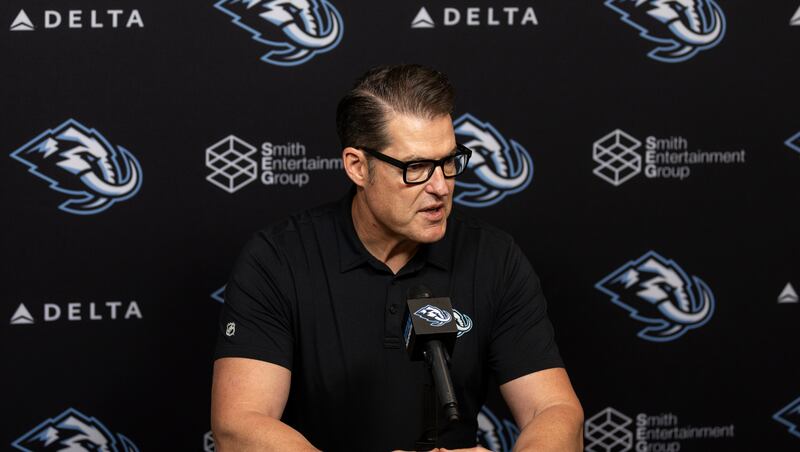
It was a scene not unfamiliar to anyone who’s ever followed the labyrinthine processes of professional league drafts: a flurry of hushed conversations, anxious stares from young athletes, and team personnel — particularly Bill Armstrong, general manager of the Utah Mammoth — addressing reporters from a podium. These are the moments when fortunes pivot, when years of training meet the cold, hard realities of the business. And this year, for Utah, it involved a name whispered with an undercurrent of surprise, then expectation: Ethan Belchetz. The team had, after all, traded up for him. They acquired pick No. 17 from the Los Angeles Kings in exchange for picks 19 — and 83. It wasn’t the seismic shift of an entire franchise, just a few tactical movements, but those are the chess games played in the NHL war rooms. [QUOTE_PLACEHOLDER]
Belchetz, a 6-foot-5 winger who scored a point per game in the OHL this season, emerged from the collegiate proving grounds. Most draft outlets had him going in the 9-13 range. But hey, these prognostications aren’t prophecies, are they? When he fell to 17, Utah’s management saw an opportunity. They didn’t blink. That’s the story of it, simplified, for public consumption. Behind the scenes, one can only imagine the frantic calculations, the calls, the quick assessment of whether pulling the trigger was worth sacrificing future options for immediate, albeit slightly speculative, gain.
This kind of player procurement isn’t just about athletic prowess; it’s a bet on potential. Belchetz is committed to Michigan State for next season. Young talent often represents an immense economic engine, not just for the clubs that sign them, but for the entire ecosystem of ancillary industries that orbit professional sports. From merchandise to media rights, each top draft pick arrives with an implicit economic valuation that extends far beyond their initial contract. It’s part of a grander system of global athletic migration, where talent from Canada and Europe predominantly fills the North American professional leagues.
Think about the sheer depth of athletic ambition around the world. Every year, millions of young hopefuls dream of cracking into these elite echelons, from the ice rinks of Helsinki to the cricket pitches of Lahore. While hockey might seem geographically confined, the principles of talent identification and economic investment in sports are global. In regions like South Asia, and particularly in Pakistan, while hockey means field hockey, not ice, the ambition to make it big in sports—any sport—mirrors the drive seen in Canadian junior leagues. Young players in Peshawar might not dream of the NHL, but they certainly dream of representing their nation or playing professionally, albeit in a vastly different economic and cultural landscape. That’s an equally fervent aspiration, though with fewer immediate economic avenues to a major North American league.
The Mammoth’s aggressive move to secure Belchetz was, interestingly enough, their second deal of the evening, after sending JJ Peterka to the Boston Bruins in exchange for pick No. 23 — and a conditional 2028 first-round pick. They’re playing the long game, stockpiling assets, much like a national economy tries to diversify its exports. You could almost say they’re learning from past mistakes, or simply maximizing their limited bargaining chips. It isn’t always about landing the flashiest name. It’s about building a roster, yes, but also a brand, a fan base, and ultimately, an economic entity that can sustain itself for decades in a new market.
📄 POLICY WIRE WHITEPAPER PUBLISHED: PAKISTAN'S NATIONAL SECURITY POLICY PRIORITIES
👉 READ BY CLICKING HEREWhat This Means
The selection of Ethan Belchetz, pulled slightly out of expected draft order by an eager Utah Mammoth franchise, isn’t just a win on the ice—it’s a calculated gamble on economic futures. For expansion teams, every pick is effectively a capital investment. By targeting a specific talent and trading up, even marginally, the Mammoth signal a readiness to prioritize perceived upside over sheer volume of picks. This can mean higher risk, but also potentially higher reward, much like a nation deciding to invest heavily in a particular tech sector, rather than spreading its resources too thin.
Economically, it underscores the intense market pressures on these players, whose careers are decided in mere minutes. It also highlights the North American leagues’ almost unparalleled ability to draw global athletic talent. Young men and women from diverse backgrounds view these leagues as the ultimate destination, driving an international, multi-billion-dollar sports economy. This kind of transactional dance — acquiring picks, offloading others — demonstrates the fluidity of modern sports asset management, mirroring global financial markets in their quick pivot and valuation adjustments. The stakes aren’t just points on a scoreboard; they’re ticket sales, endorsement deals, and the cultivation of an entirely new revenue stream for a fledgling market.
The choice to target a player whose consensus value put him higher (he was expected to go somewhere within picks 9-13 by industry analysts), but who slid down, demonstrates opportunistic acquisition. This strategy, applied across industries, suggests a market responsive to slight inefficiencies or perceived misvaluations. In simpler terms: they got a discount, they think. It won’t break the national debt, obviously, but it tells a story about how decisions are made at the granular level, and how those add up to create something bigger, a new sports institution, here in Utah.