

Legacy or Lunacy? The BJP Trio’s Dangerous Game at Democracy’s Expense
The spectacle of politics often hinges on personality, and in India’s case, it increasingly revolves around three figures: Narendra Modi, Amit Shah, and Yogi Adityanath. Their image is...
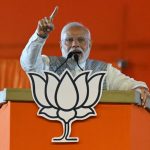
The spectacle of politics often hinges on personality, and in India’s case, it increasingly revolves around three figures: Narendra Modi, Amit Shah, and Yogi Adityanath. Their image is projected across India’s massive propaganda machinery, depicted as strong, decisive, and visionary leaders. But behind the tightly curated public persona lies a far more troubling reality: a leadership model driven by ego, insecurity, and ideological extremism. What may appear to some as nationalism is, in fact, an orchestrated campaign of distraction, misdirection, and manufactured hostility, particularly aimed at Pakistan.
When Narendra Modi first assumed office in 2014, there was cautious optimism in some quarters that perhaps economic revival and regional stability could follow. However, over time it became clear that the Modi government’s primary concern was not progress but power. Joined by Amit Shah, his long-time strategist and enforcer, and Yogi Adityanath, the firebrand monk-politician, this trio transformed Indian politics into a high-voltage drama of polarization, exclusion, and hyper-nationalism. Their political strength rests not on inclusive governance or development, but on exploiting religious divides and cultivating hatred, particularly against Pakistan.
Since 2014, India’s posture toward Pakistan has been increasingly aggressive, not for any genuine security concerns, but as a deliberate political tool. Every election cycle is suspiciously timed with a fabricated narrative of cross-border tension. False flag operations, unverified airstrikes, and theatrical border theatrics have become routine. These actions serve no strategic purpose but to whip up jingoistic fervor and rally the electorate behind the flag, one conveniently stained with anti-Pakistan venom.
The BJP leadership’s obsession with Pakistan is not accidental; it is essential to their survival. When domestic issues mount, rising unemployment, farmer suicides, economic downturns, or social unrest—the Modi-Shah-Yogi trio defaults to the tried-and-tested formula: deflect blame by vilifying Pakistan. This diversionary tactic is designed to silence critics, unify a fragmented electorate under fear and nationalism, and shield the government’s failures from public scrutiny. It is a cynical use of foreign policy for domestic gain, and it drags the entire region into needless peril.
This egoistic leadership style also mirrors deep insecurity. Narendra Modi, now 73 years old, is edging closer to the BJP’s unwritten retirement threshold of 75. Amit Shah is 59, and Yogi Adityanath is 52, both younger but equally driven by the fear of becoming irrelevant. As Modi’s age begins to loom large, so too does the pressure to cement a legacy. But instead of focusing on economic development or regional diplomacy, the trio is racing to fulfill hardline ideological goals: from the brutal annexation of Kashmir to the systematic marginalization of India’s Muslim population. These aren’t policy decisions, they are political stunts with dangerous consequences.
The desperation to remain in power at any cost has led the BJP to embrace authoritarian tactics. Independent media is under siege, journalists are harassed or silenced, and dissent is criminalized. Elections are marred by manipulation, surveillance, and communal campaigning. The Modi-Shah-Yogi approach to governance is less about democracy and more about dominance—centralizing control, weakening institutions, and reshaping the state in the image of a majoritarian Hindu ideology. Such internal decay has external consequences. A state that cannot tolerate internal criticism will inevitably lash out at imagined external enemies.
Pakistan has borne the brunt of this aggression for over a decade. Each time India faces political or economic turmoil, the BJP revives the rhetoric of surgical strikes, border escalations, or terror accusations, without evidence or international backing. These narratives are then amplified through a compliant media ecosystem that acts more like a megaphone than a watchdog. The aim is not to engage in real diplomacy or conflict resolution; it is to create an enemy out of Pakistan so that the failures of Modi’s India go unnoticed. Ironically, while India seeks to portray itself as a regional power, its leaders act like insecure populists, unable to rise above petty score-settling and propaganda warfare.
Meanwhile, Pakistan has consistently advocated for regional peace, dialogue, and mutual respect. Despite facing its own internal challenges and external pressures, Pakistan has shown restraint in the face of Indian provocations. Whether it was the downing of an Indian jet in 2019 or the response to misinformation during the Pulwama incident, Pakistan has opted for maturity and responsibility. Yet India continues to beat the drums of war, not for national interest, but for political spectacle.
The Modi-Shah-Yogi trio, driven by ego and fear of decline, has cornered itself into a political ideology that requires a constant external adversary. Their electoral success depends on fueling divisions, sustaining hostility, and silencing dissent. But this strategy has a shelf life. As Modi approaches the twilight of his political career and the BJP faces increasing domestic discontent, the desperation will only grow. More false flags, more anti-Pakistan rhetoric, more manufactured crises, anything to stay in the spotlight and cling to power.
It is not Pakistan that India should fear, but the self-destructive trajectory of its own leadership. Modi, Shah, and Yogi have built an empire on illusion, division, and aggression. But empires built on ego are destined to crumble. Pakistan, having weathered the storm of Indian hostility with patience and dignity, stands on firmer moral ground. The world is beginning to see through the spectacle. The day is not far when the veil will lift, and the real cost of this egoistic politics will become impossible for even the most fervent supporters to ignore.
Author