

Laptop Diplomacy: The USMNT’s Mid-Game Huddle Signals Football’s Future, For Better or Worse
POLICY WIRE — Charlotte, USA — For those accustomed to the rough-and-tumble purity of football, where strategy unfolds across 45 uninterrupted minutes, the sight must have felt almost...

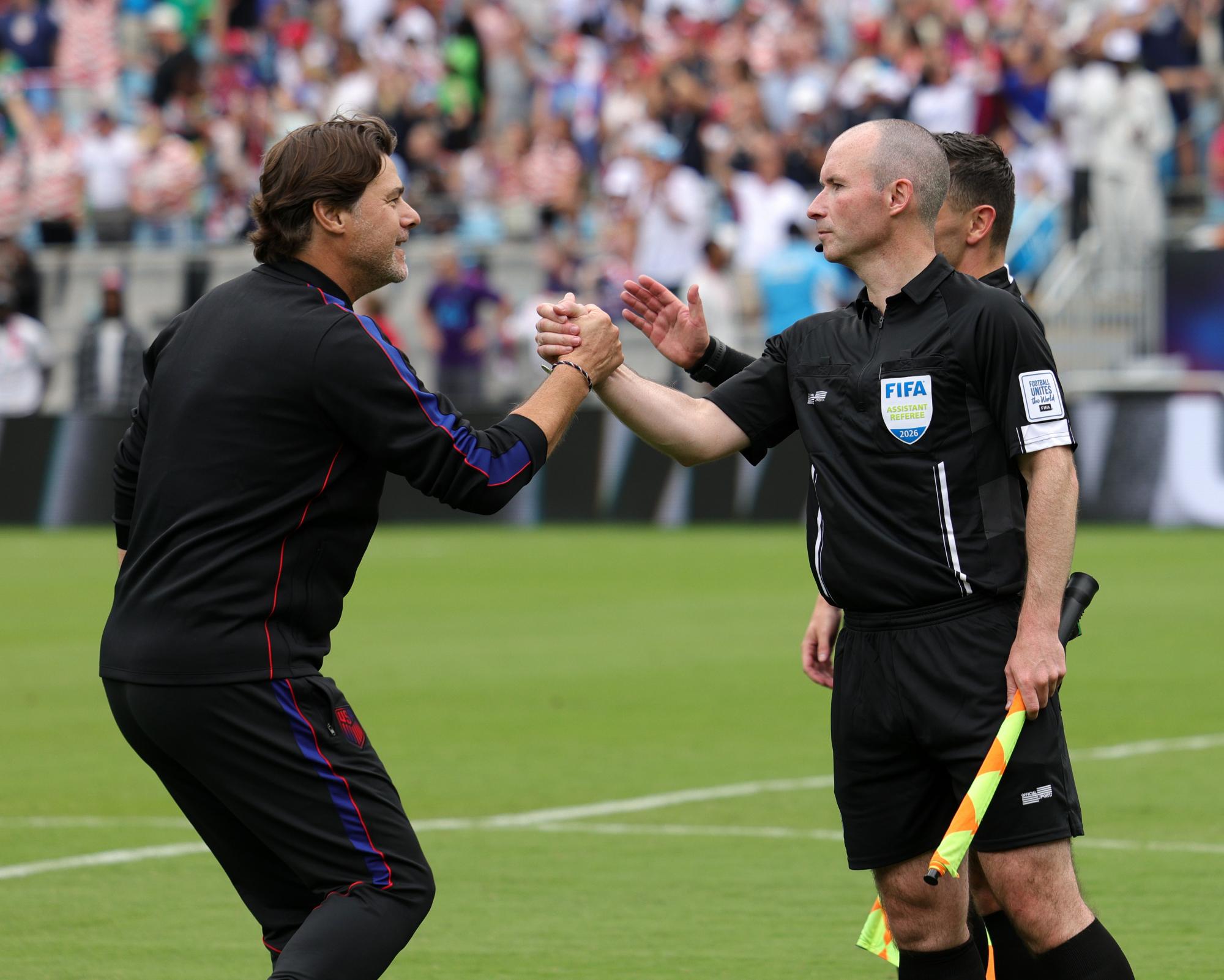
POLICY WIRE — Charlotte, USA — For those accustomed to the rough-and-tumble purity of football, where strategy unfolds across 45 uninterrupted minutes, the sight must have felt almost sacrilegious. A coach, Mauricio Pochettino, huddled low on the touchline, players gathered around him, not for a pep talk but to peer intently at a laptop screen — live, mid-match, during what was ostensibly a warm-up friendly for the United States men’s national team against Senegal.
It’s the sort of image that gives traditionalists indigestion. A beautiful game, increasingly parceled out, dissected, — and mediated by screens and mandated pauses. But it also paints a vivid picture of modern sport: a blend of high-stakes athleticism, cutting-edge technology, and a distinct, creeping commercial opportunism that’s redefining the rules — both spoken and unspoken. But let’s be real: this wasn’t about finding enlightenment; it was about fixing immediate tactical problems.
Pochettino’s impromptu digital session during the 3-2 victory became an instant talking point, sparking social media memes faster than you could say [QUOTE_PLACEHOLDER] The actual content, however, was mundane. Not a revolutionary new formation, not some secret play drawn up in the dust. Simply “a series of plays in which Pochettino felt the US could have done better in one way or another,” according to reports. Mark McKenzie, a US defender, said it “was a new one for sure,” likening it more to an NBA timeout than anything seen on a proper pitch.
This scene, however, isn’t an isolated incident. It’s born of FIFA’s controversial mandate to pause games midway through each half, regardless of the weather. Ostensibly, these “cooling breaks” are for player safety, an acknowledgement of tournaments played in punishing climates — places like Qatar, for instance, where high temperatures are a constant threat to athlete well-being. But if the players are watching tactical videos, are they really just cooling down? On Sunday, with “temperatures sitting in the mid-70s F throughout,” according to match data, safety concerns seemed less urgent than tactical adjustments. The USMNT had played with similar breaks in March friendlies, even indoors at Mercedes-Benz Stadium. This practice isn’t going anywhere.
Pochettino, a coach with a forward-thinking reputation, wasted no time taking credit for this particular brand of pitch-side innovation. He claims he’s been doing this “sort of on-the-spot video analysis with players” since 2009, when he was managing La Liga side Espanyol. “The players need to feel, but they also need to see,” he explained to the media. “I think it’s very helpful for the player to see actions. When they see the image, I think it’s really important.”
You can’t deny the logic. But coaches aren’t the only ones benefiting. Cynics — bless their hearts — quickly noted the obvious commercial dividend. Extra ad breaks, prime opportunities for broadcasters to squeeze more revenue from a game traditionally immune to such interruptions. And why wouldn’t they? The global reach of football is staggering, — and every second of airtime is a commodity. It’s the same calculus that powers leagues like India’s IPL, where commercial power plays reshape established traditions.
But the players, it seems, are largely onboard. McKenzie admitted the laptop huddle, while new, was “beneficial” as the US clung to a 1-0 lead. “It gives us that minute or so to fine-tune some things, make some adjustments, maybe figure out in our press or in our defensive transitions, whatever it may be, where we can improve,” he said. “But it kinda helps to take a breath, reset yourselves as a collective.” That moment, that breath, changes everything. But it definitely helps a coach try — and stay ahead.
Paradoxically, Pochettino — the architect of the laptop huddle — considers himself a “soccer purist” when it comes to these breaks. “I’ll use the water break to try — and help my players. But still, I don’t like [them],” he told the press. “Of course if it’s too hot I think the water break is important. Because the health of the player is first. But if it’s not too hot …. I think it’s not necessary. I think the players are prepared — and are ready to compete during 45 minutes. But it’s like plenty of rules today. Rules that for sure I don’t like. They say they’re going to help with the spectators. But we’re going in a direction where we’re going to change. The football that we know is not going to exist, and it will become another sport.” Sharp words from a man wielding a digital whiteboard, wouldn’t you say?
What This Means
Pochettino’s sideline laptop isn’t just a quirky anecdote; it’s a symptom of a much larger shift. These mandatory breaks, while sold on player safety (a valid concern, particularly for a tournament staged in countries with extreme climates, like Saudi Arabia’s future World Cup bid, which would involve similar temperature issues), serve a dual purpose. They carve out guaranteed advertising slots, increasing broadcasting revenue for FIFA and its partners — a not-insignificant sum that often funds grand projects and expands the global reach of the sport into untapped markets across the Muslim world and beyond.
Politically, the implication is that FIFA, a transnational entity with immense economic clout, increasingly dictates the terms of engagement not just for national teams, but for the very fabric of the game itself. It suggests an ongoing tug-of-war between the sport’s organic flow — and its commercial exploitation. From a coaching perspective, these pauses, as Portugal manager Roberto Martinez bluntly put it, are “A tactical stop,” effectively injecting an “unseen coaching opportunity” into the heart of play. This kind of technological intrusion reshapes tactical landscapes, pushing coaches to adapt to what might be called “micro-management moments.” The old rhythms of the game are being broken, re-engineered for safety, profit, and perhaps, a slightly more controlled — if less unpredictable — product. The question, for fans who simply want to watch the beautiful game, remains: at what cost to its soul?